Brazil's Union Progressista Federation to Withhold Presidential Endorsement from Flávio Bolsonaro
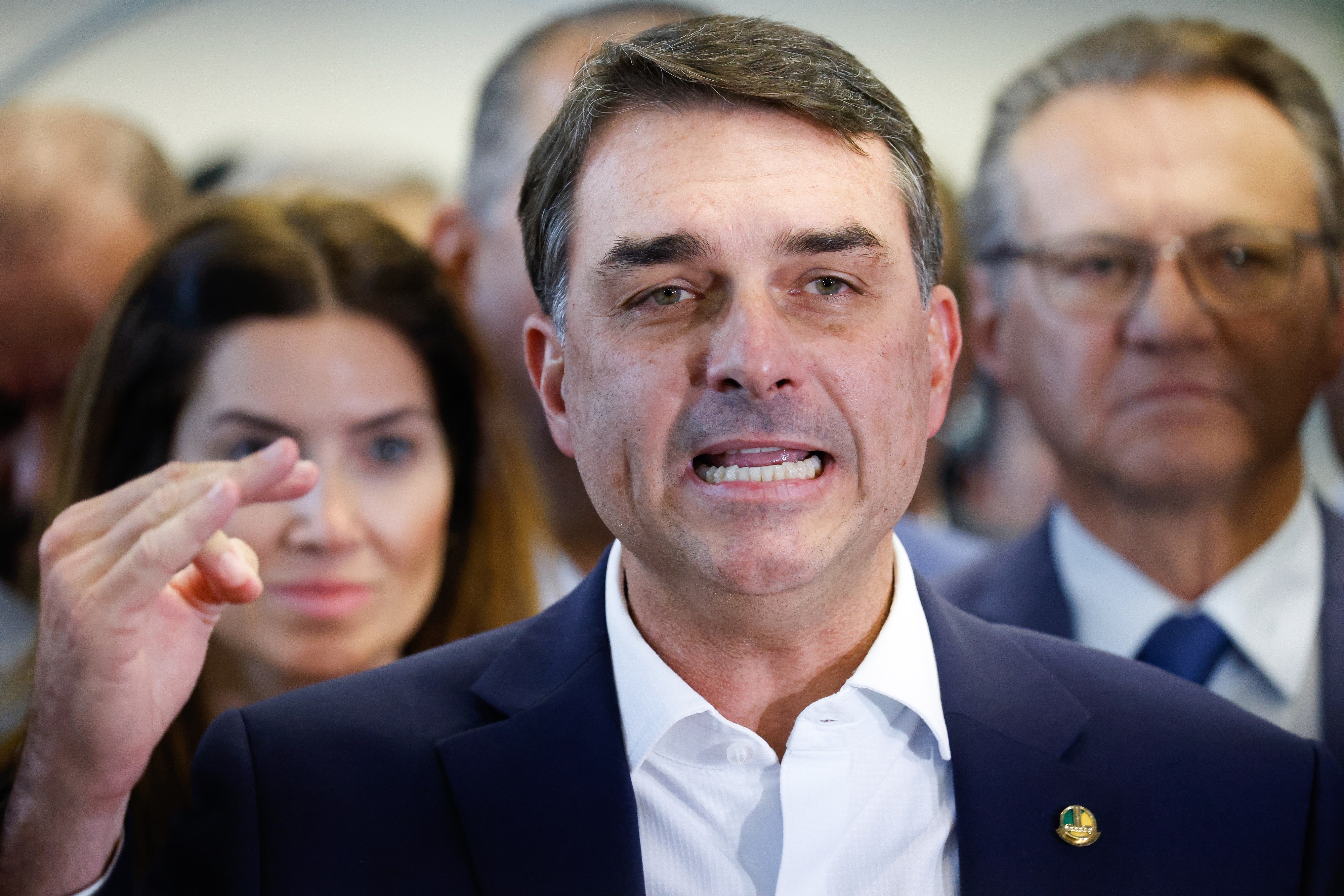
The political federation formed by Brazil's União Brasil and Progressistas (PP) parties will not endorse Senator Flávio Bolsonaro's presidential candidacy. This decision stems from recent strains between Bolsonaro and federation leaders, as well as pressure from state-level party officials advocating for neutrality in the presidential race. The federation, which requires member parties to act jointly nationally for at least four years, is allowing its state chapters to independently choose their preferred presidential candidate. The Progressistas party had already expressed dissatisfaction with Bolsonaro following federal police investigations into businessman Daniel Vorcaro and Banco Master in May, as party president Senator Ciro Nogueira reportedly expected a public defense from Bolsonaro that did not materialize. Earlier, Nogueira was even considered as a potential vice-presidential running mate for Bolsonaro. More recently, União Brasil president Antonio Rueda was reportedly displeased after the arrest of Márcio Canella, a former mayor and allied candidate for the Senate, who was found with a rifle in his car. Canella's explanation that the rifle belonged to his security detail was not substantiated with evidence, and Bolsonaro's expected public statement of support also did not occur. Additionally, party members, particularly from the Northeast, have urged neutrality, fearing that a national endorsement of Bolsonaro could jeopardize local candidacies in regions where President Luiz Inácio Lula da Silva holds significant support. Despite this national stance, the Progressistas in São Paulo plan to support Bolsonaro to bolster the Senate bid of state Public Security Secretary Guilherme Derrite, who is running against André do Prado, Bolsonaro's preferred Senate candidate in the state. Datafolha polls show Simone Tebet and Marina Silva leading in the São Paulo Senate race, with Derrite and Prado trailing.
The decision by the União Brasil and Progressistas federation to withhold national endorsement from Flávio Bolsonaro's presidential bid highlights the complex interplay of national political ambitions and regional electoral considerations. This strategic move suggests a pragmatic assessment of Bolsonaro's potential to alienate key voter blocs and hinder local candidacies, particularly in areas with strong support for the incumbent president. The federation's approach of allowing state-level autonomy, while maintaining national neutrality, reflects a decentralized power structure that prioritizes adaptability to diverse local political landscapes. This situation underscores the evolving dynamics of Brazilian party politics, where coalition-building is increasingly influenced by the need to balance ideological alignment with pragmatic electoral outcomes, especially in the context of upcoming senatorial elections where party strength at the state level is crucial.
AI-generated to prompt reflection — not editorial opinion, not advice, not a statement of fact. How this works.