Brazil's UP Party Nominates Camila Falcão for Governor of Pernambuco
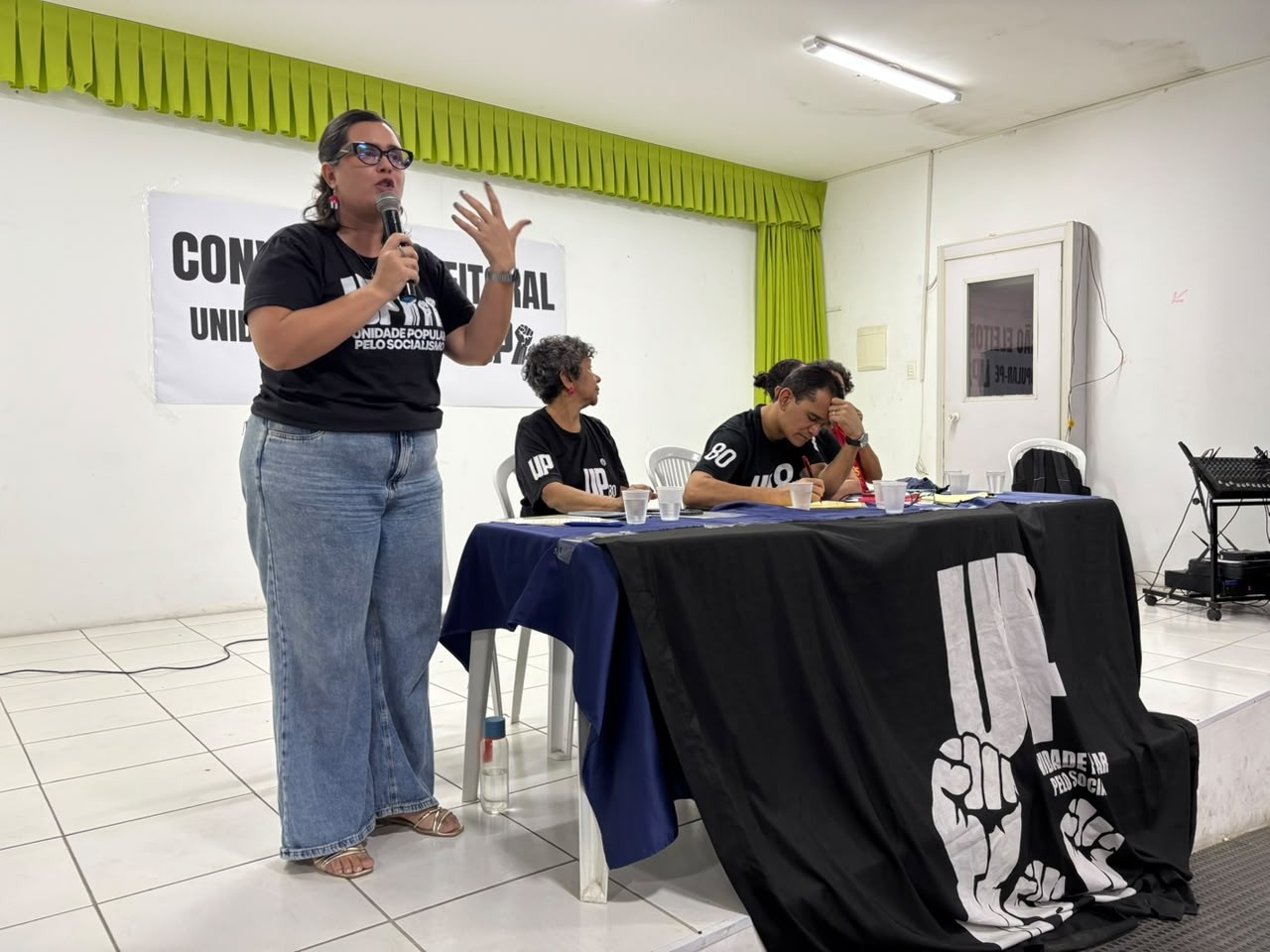
The Unidade Popular pelo Socialismo (UP) party has officially nominated Camila Falcão as its candidate for governor of Pernambuco in the 2026 elections. The announcement was made during the party's state convention held at Fundação Cecosne in Recife's Madalena neighborhood. Falcão, a historian, popular educator, and activist, also serves as the state vice-president of the UP, a party she helped found. The UP's ticket will consist solely of party members, with Marcelo Pessoa, a union activist and party leader, running for vice-governor. For the two Senate seats, the UP has put forward Samuel Timóteo, director of the Caruaru construction workers' union, and Gorett Bitu, an economist and member of the Olga Benário Women's Movement. The party also announced candidates for federal and state legislative positions, including Matheus Araújo and Madu Silva for federal deputy, and Jéssica Natália and Paulo Fernando for state deputy. This marks the first time the UP will field a full slate of candidates for all positions in Pernambuco. Falcão, originally from Vitória de Santo Antão, has a background in student activism and has held leadership roles in student organizations, including the DCE at UFRPE and the UEP. She is also a coordinator for the Olga Benário Women's Movement, a feminist and Marxist group. In her convention speech, Falcão emphasized that the UP represents workers, women, and youth, criticizing what she described as a "false democracy" where smaller parties like the UP receive significantly less funding than larger parties. She argued that true democracy is hindered by the wealthy elite's control and called for working people and marginalized groups to reclaim their political voice.
The Unidade Popular pelo Socialismo's nomination of Camila Falcão signals a strategic effort to consolidate a distinct socialist platform within the Brazilian political landscape, particularly in Pernambuco. By presenting a full slate of candidates, the party aims to increase its visibility and organizational capacity, challenging the established party finance system and advocating for a more inclusive representation of working-class and marginalized communities. The party's critique of "false democracy" and unequal party funding highlights systemic issues in campaign finance and political access, prompting consideration of electoral reforms that could foster greater competition and reduce the influence of established financial interests. As Brazil navigates evolving social and economic challenges, the UP's emphasis on grassroots mobilization and representation of underrepresented groups offers a perspective on alternative governance models, inviting voters to consider the trade-offs between established political structures and emerging ideological movements.
AI-generated to prompt reflection — not editorial opinion, not advice, not a statement of fact. How this works.