Brazil's UP Party Nominates Gal Leite for Governor of Pará
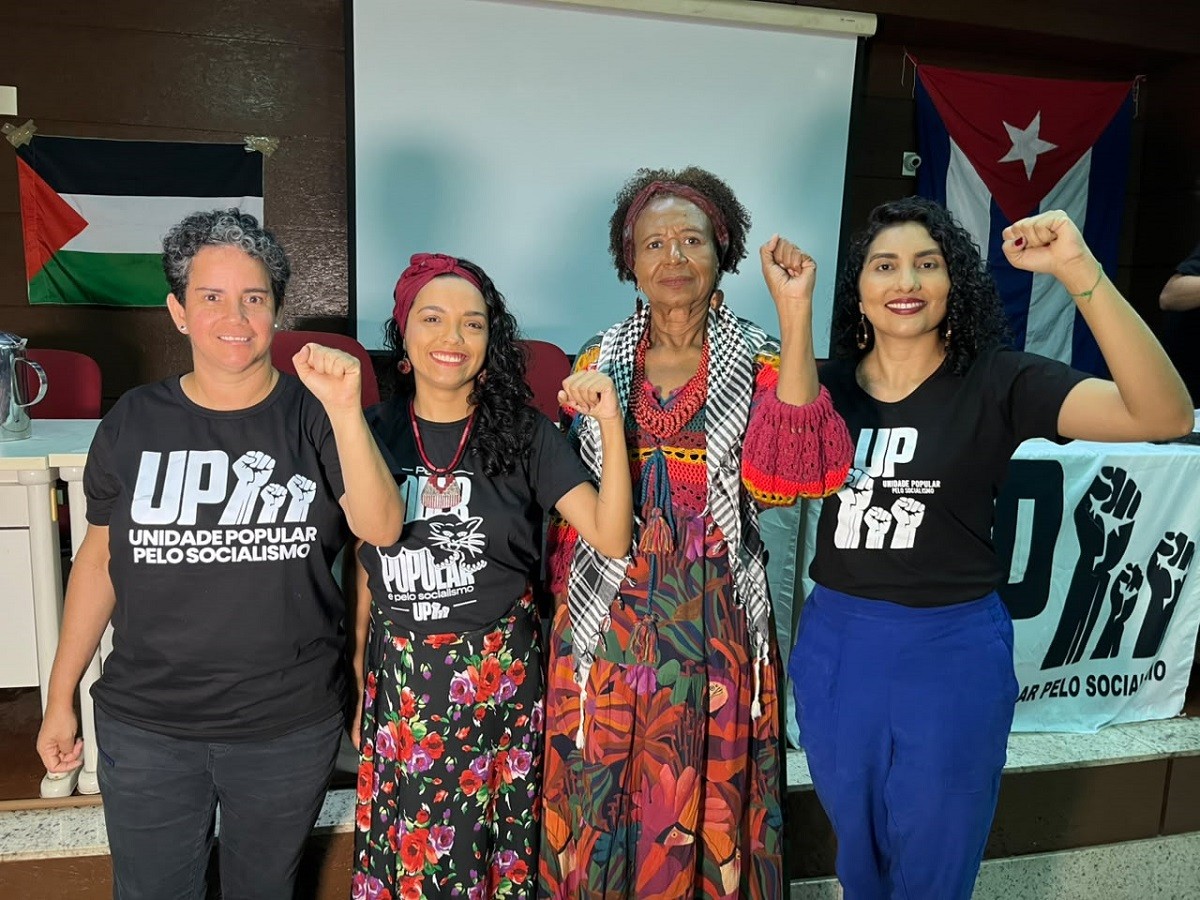
The Unidade Popular (UP) party has officially nominated Gal Leite as its candidate for governor of Pará state in Brazil. The decision was finalized during a convention held on Thursday, August 30th, at the Urban Workers' Union in Belém. Leite, 62, is a retired civil servant and holds a degree in pedagogy from the Federal University of Pará (UFPA). She has a long history of union activism, currently representing the North region in the national leadership of the Class Struggle Movement (MLC) and serving as president of the SUAS Workers' Union. Her campaign platform emphasizes the re-nationalization of public utilities, including the Pará Sanitation Company and electricity services. She also expressed opposition to the construction of a new Data Center in the Amazon region, citing high electricity costs for residents despite the presence of hydroelectric power plants. During the convention, the UP party also nominated Karen Suellen for vice-governor and Fernanda Lopes for the Senate. Lopes highlighted her focus on defending workers' rights, advocating for the implementation of a 6x1 work schedule law to reduce working hours and increase leisure time. The party also announced four proportional candidacies for state and federal deputy positions. The convention season for candidate nominations runs until August 5th, with registration deadlines at the Superior Electoral Court (TSE) by August 15th, and the official campaign commencing on August 16th for the October 4th elections.
The Unidade Popular party's nomination of Gal Leite for governor of Pará reflects a platform centered on re-nationalizing public services and challenging existing economic structures, particularly concerning resource management and labor rights. This approach, emphasizing state control over utilities and advocating for reduced working hours, positions the party as a distinct alternative to mainstream political and economic policies. The campaign's focus on issues like electricity costs and worker exploitation in the Amazon region highlights a strategy to mobilize voters concerned with social equity and the impact of large-scale infrastructure projects. The UP's platform suggests a critique of privatization trends and a call for a more equitable distribution of economic benefits, potentially resonating with segments of the electorate feeling marginalized by current market dynamics. This nomination signals a commitment to a more interventionist economic model, aiming to address perceived inequalities and environmental concerns through state-led initiatives.
AI-generated to prompt reflection — not editorial opinion, not advice, not a statement of fact. How this works.