Brazil's Workers' Party Nominates Fernando Haddad for São Paulo Governor
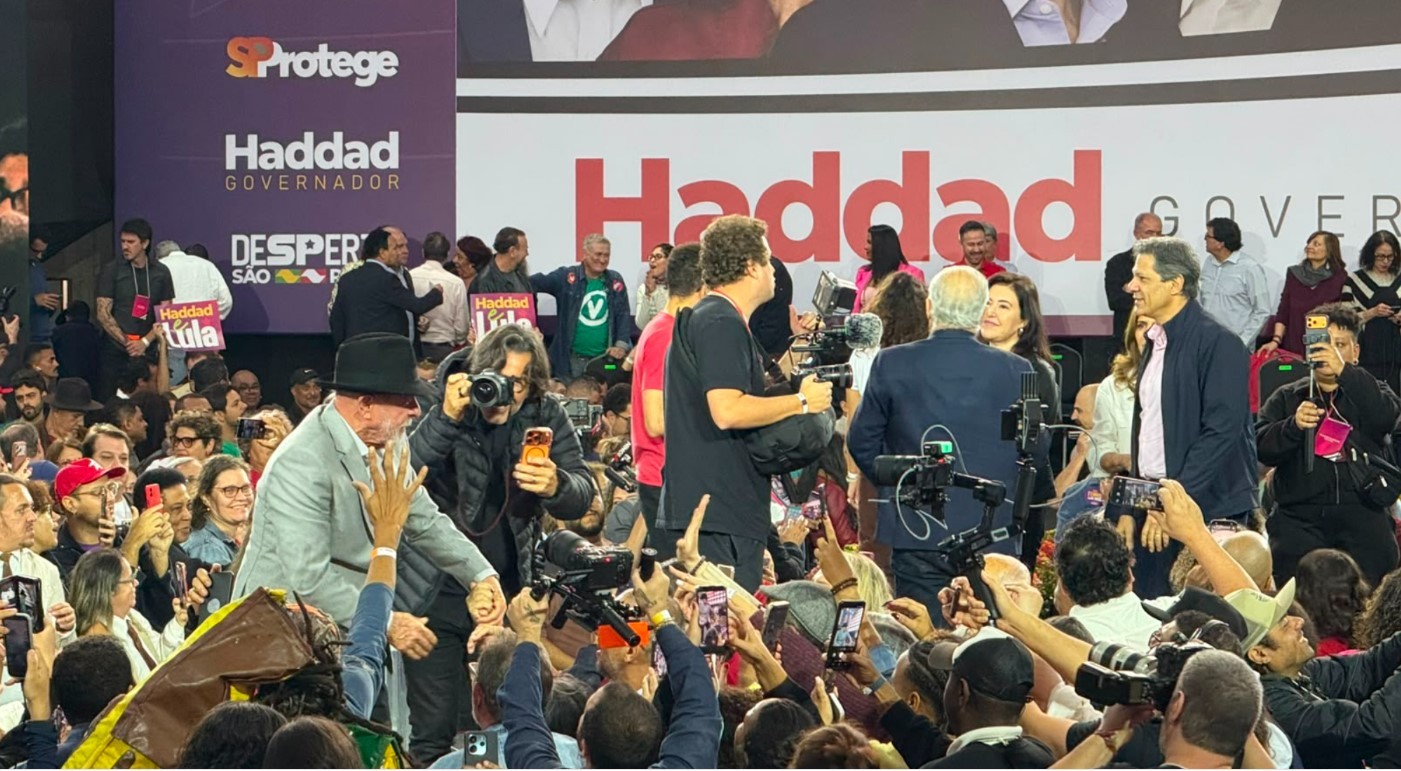
The Workers' Party (PT) officially launched Fernando Haddad's candidacy for governor of São Paulo state on Saturday, May 25th, during a convention held in Campinas. Haddad, an attorney and political science professor, is seeking the governorship for the second time. Prominent figures attending the event included President Luiz Inácio Lula da Silva, Vice President Geraldo Alckmin, and senatorial pre-candidates Simone Tebet and Marina Silva. Haddad previously served as the mayor of São Paulo and was the Minister of Finance until March of this year. The convention marks the beginning of the electoral process, with candidate registrations due by August 15th and the official campaign commencing the following day. Brazilians will vote for president, governor, senators, federal deputies, and state deputies on October 4th. Haddad has a long career in public service, having joined the PT in the 1980s and holding positions such as special advisor to the Ministry of Planning and Minister of Education under Lula and Dilma Rousseff. He was elected mayor of São Paulo in 2012 but lost his re-election bid in 2016. In 2018, he ran for president, reaching the second round, and in 2022, he competed for the São Paulo governorship, ultimately losing to Tarcísio de Freitas. He then served as Minister of Finance before stepping down to pursue the gubernatorial race again.
The Workers' Party's nomination of Fernando Haddad for governor of São Paulo represents a strategic move to leverage his established political profile within a key Brazilian state. This nomination, supported by top party leadership including President Lula da Silva, signals an intent to consolidate PT's influence and present a familiar, experienced candidate. Haddad's prior roles as mayor, minister of education, and minister of finance provide a deep well of public service experience, but also a record that has faced electoral challenges. The upcoming election will test the party's ability to mobilize its base and appeal to a broader electorate in a competitive political landscape, considering the evolving dynamics of Brazilian governance and economic policy in the coming decade.
AI-generated to prompt reflection — not editorial opinion, not advice, not a statement of fact. How this works.