Brazil's World Cup Exit: Loss to Norway Highlights Identity Crisis and Tactical Missteps
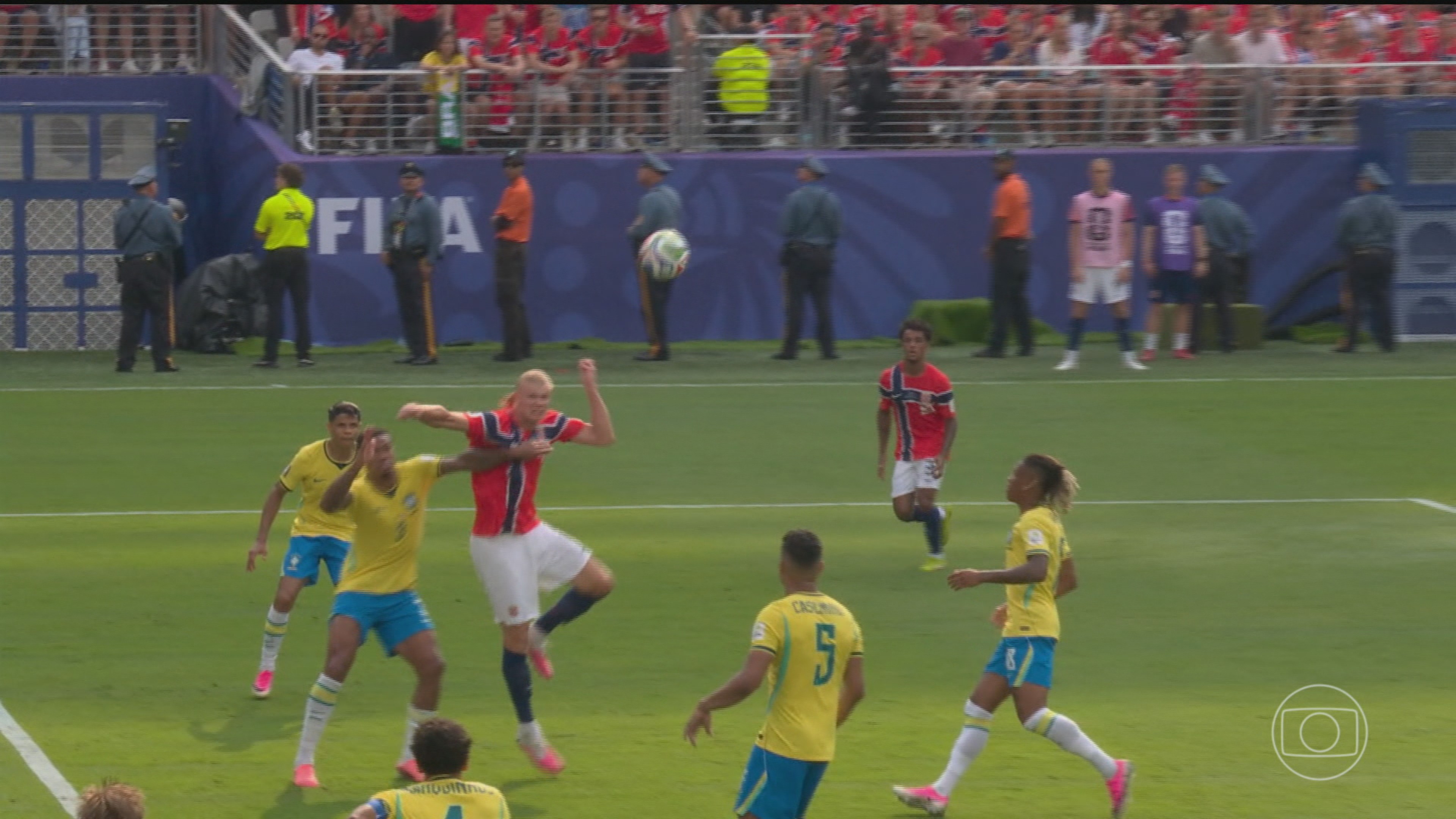
Brazil's elimination from the World Cup, marked by a defeat against Norway, has exposed a significant departure from the team's traditional playing style, characterized by a lack of ball possession and low intensity. In the decisive match, Norway dominated possession, completing 683 passes compared to Brazil's 347. The Norwegian team controlled the game for approximately 5 minutes before scoring through Haaland, with Brazil only having the ball for 18.5 minutes in the entire second half compared to Norway's 31 minutes. This marked the only World Cup game where Brazil had less possession than their opponent, resulting in their lowest possession statistic in 60 years.
Despite finishing with more shots than Norway, Brazil's strategy of waiting in their own half for counter-attacks, as implemented by coach Carlo Ancelotti, ultimately failed. Commentators like Ana Thaís Matos and Caio Ribeiro suggested that the initial lineup left Brazil vulnerable in midfield, and that the team's reactive approach, rather than a proactive one, was a strategic error. The team's reliance on counter-attacks was questioned, especially given Norway's collective strength and midfield control, orchestrated by Martin Odegaard.
Analysts have pointed to a potential identity crisis within the Brazilian team, deviating from their historical identity of dominant play and ball control. Coach Ancelotti's preference for a counter-attacking style, observed in his previous coaching tenures, was noted, but the decision to cede possession to Norway in a World Cup match was deemed a significant risk. Looking forward, there is a recognized need to address deficiencies in key positions, particularly full-backs and midfielders, with the absence of a player like Odegaard being highlighted as a critical gap.
The analysis of Brazil's World Cup elimination reveals a tension between historical team identity and contemporary tactical approaches. The data indicates a strategic choice to adopt a reactive, counter-attacking style, which, while employed by coach Carlo Ancelotti in successful past endeavors, proved ill-suited against a Norway team that excelled in possession-based play. This outcome prompts reflection on how national football federations balance established team philosophies with the adaptive strategies of modern coaching, especially in high-stakes tournaments. The future success of the Brazilian team may hinge on its ability to integrate tactical flexibility with its ingrained identity, potentially by developing players capable of executing both dominant possession and effective transitions, thereby mitigating risks associated with ceding control to capable opponents.
AI-generated to prompt reflection — not editorial opinion, not advice, not a statement of fact. How this works.