Brazil's World Cup Win: Political Boon or Bust for Presidential Candidates?
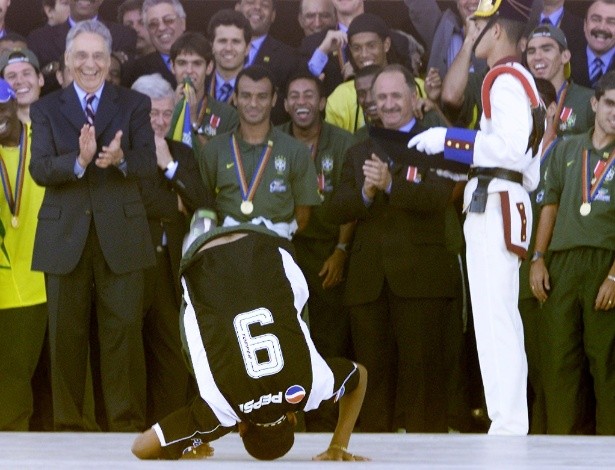
With the Brazilian national football team set to play Norway in the 2026 World Cup Round of 16, just three months before the presidential elections, experts are weighing the potential political impact of a victory or defeat. Historically, football has held significant social sway in Brazil and has been leveraged for political gain, notably during the military dictatorship. Today, the question arises whether the pursuit of a sixth World Cup title could influence the upcoming presidential elections.
According to electoral behavior specialist Renata Coelho, a World Cup title could subtly bolster the image of the incumbent president through emotional transference, fostering a temporary sense of national satisfaction that extends to the government. Philosopher Gustavo Javier Castro concurs, stating that major victories can create collective euphoria and reinforce national identity, potentially offering indirect gains to sitting governments in terms of public perception and social mood. However, both experts caution against hasty conclusions, emphasizing that economic, social, and institutional contexts are the primary drivers of electoral outcomes. Coelho notes that the positive emotional effect of a title is short-lived and quickly dissipates when daily realities resurface. She points to the 1994 World Cup win, coinciding with the launch of the Real Plan, as a clear instance where favorable conditions amplified the positive sentiment, benefiting Fernando Henrique Cardoso. Yet, she stresses that a title primarily potentiates existing positive conditions rather than creating them.
Regarding defeats, Coelho suggests they have a more memorable and lasting emotional impact than victories. She cites the 1950 loss to Uruguay as a national trauma and the 7-1 defeat to Germany in 2014 as a metaphor for shame and failure, even being referenced in political discourse surrounding the impeachment of Dilma Rousseff. However, Coelho clarifies that not all defeats have direct electoral consequences. A heavy loss doesn't change votes on its own but can act as an emotional trigger, reactivating pre-existing dissatisfactions and providing a vocabulary for voters to articulate their feelings. Castro echoes this, explaining that in times of economic dissatisfaction or intense polarization, sports defeats can become symbolically incorporated into broader political discourse as metaphors for disorganization or loss of national prestige.
Looking ahead to the 2026 World Cup, experts believe its political influence will differ from previous tournaments due to increased media fragmentation and changing generational relationships with the national team. While football's ability to halt the entire country has diminished, it continues to shape public mood and debate, albeit in a more divided manner. Castro observes that the impact is now more fragmented, heavily influenced by social media. Coelho adds that the unifying emotional force of the national team has waned, with individual players now acting as brands and influencers who engage directly with millions online. The collective mood generated by the team's performance in 2026 will depend not only on the results but also on the protagonists and how these events are perceived by a deeply polarized electorate already carrying pre-existing grievances.
The intersection of national sporting events and political outcomes in Brazil presents a complex interplay of emotional resonance and underlying socio-economic factors. While a significant sporting victory can generate temporary national euphoria and a positive emotional transference towards the incumbent government, its impact on electoral decisions is likely superficial and short-lived, particularly in the absence of favorable economic and social conditions. Conversely, major defeats can serve as potent emotional triggers, amplifying existing public dissatisfaction and becoming symbolic metaphors within political discourse, especially in a polarized environment. The increasing fragmentation of media consumption and the rise of individual player influence through social media suggest that the unifying power of the national team may be diminishing, leading to a more individualized and less cohesive national response to both victories and defeats. Future electoral strategies may need to account for this shift, recognizing that while collective emotional experiences can influence public mood, they are unlikely to fundamentally alter electoral trajectories without addressing the core concerns of the electorate.
AI-generated to prompt reflection — not editorial opinion, not advice, not a statement of fact. How this works.