Brazil Senator Flávio Bolsonaro Addresses US Trade Tariffs Hearing
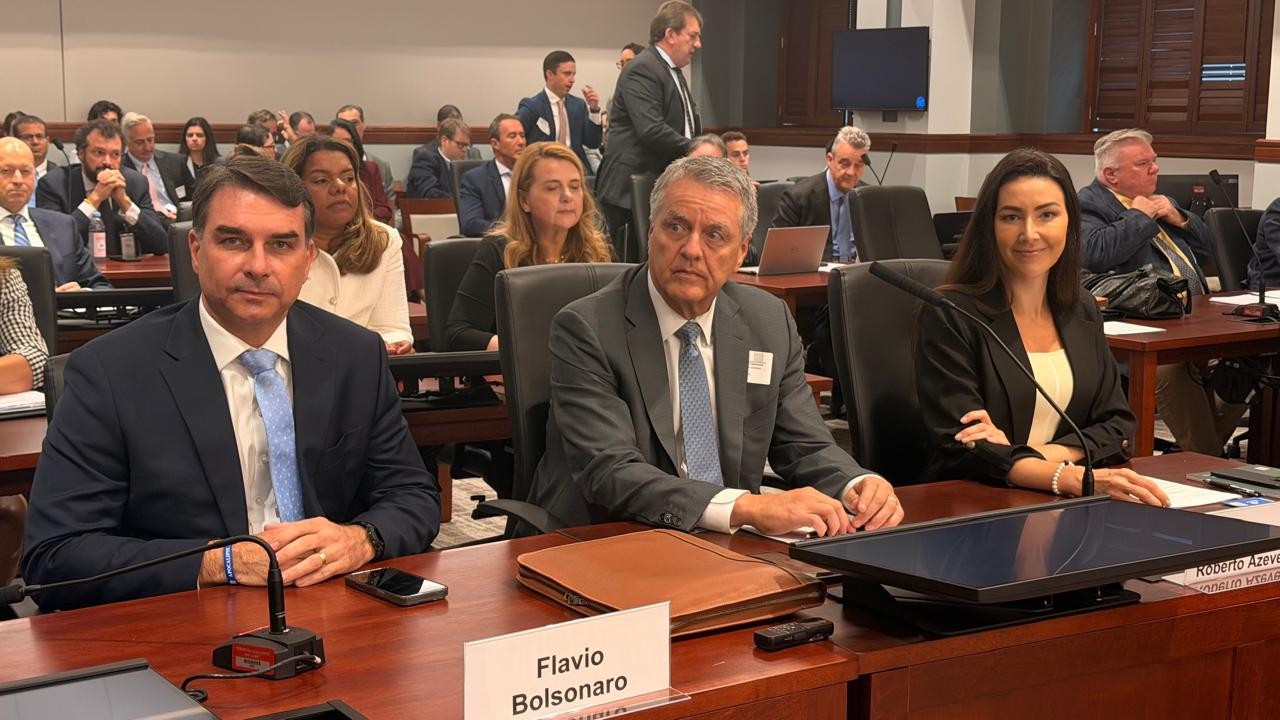
Senator Flávio Bolsonaro, a presidential hopeful, participated in a public hearing hosted by the U.S. Trade Representative's Office (USTR) regarding proposed tariffs on Brazilian products. During his presentation, Bolsonaro focused on three key issues: social media regulation, corruption in Brazil, and the defense of the Pix instant payment system. He also reiterated his call to postpone any tariff implementation until after Brazil's elections. Notably, Bolsonaro did not address several topics mentioned in the USTR's "Section 301" investigation, including preferential tariffs, market access for ethanol, deforestation, and intellectual property protection. The USTR's investigation, initiated in early June, identified certain Brazilian policies as "irrational" or "restrictive" to American trade, leading to a proposal for a 25% additional tariff on Brazilian goods. The investigation's report cited concerns about Pix, digital platform regulation, trade agreements, illegal deforestation, ethanol market access, intellectual property, and anti-corruption policies. Bolsonaro argued that the current moment is the "worst possible" for imposing new tariffs and suggested they would benefit opposition candidate Lula. He also criticized President Lula and the Supreme Federal Court (STF). While the USTR's report detailed issues like Brazil's 2017 halt to balanced tariff treatment for U.S. ethanol, Bolsonaro acknowledged tariff asymmetry and proposed a zero-tariff agreement for ethanol and sugar. Regarding deforestation, he agreed that enforcement, not legislation, is the problem, advocating for a "convergence, not confrontation" program. On intellectual property, he recognized issues with patent analysis delays and proposed a mechanism to adjust patent terms. He also stated a belief in fair and reciprocal trade, suggesting Brazil seeks alternatives to Mercosur's limitations on bilateral trade agreements with the U.S.
Senator Flávio Bolsonaro's participation in the U.S. trade hearing presented a strategic focus on domestic political concerns and popular initiatives like Pix, while sidestepping complex trade disputes such as ethanol market access and deforestation. This approach appears calibrated for electoral advantage rather than comprehensive trade negotiation, potentially signaling a divergence between political rhetoric and the practical needs of Brazil's international commerce. The U.S. action, framed within Section 301 of its Trade Act, highlights a pattern of using trade policy to address perceived market access barriers and regulatory issues, reflecting a broader global trend of leveraging economic tools for policy objectives. Brazil's official responses, emphasizing adherence to WTO rules and highlighting progress in areas like intellectual property, underscore the intricate balance between national sovereignty, regional trade blocs, and international trade norms. The differing priorities suggest a need for more integrated policy development in Brazil, where economic diplomacy is aligned with national development strategies to navigate such international trade challenges effectively over the next decade.
AI-generated to prompt reflection — not editorial opinion, not advice, not a statement of fact. How this works.