Brazil Senator Flávio Bolsonaro Raises Election Integrity Concerns Amidst Campaign Struggles
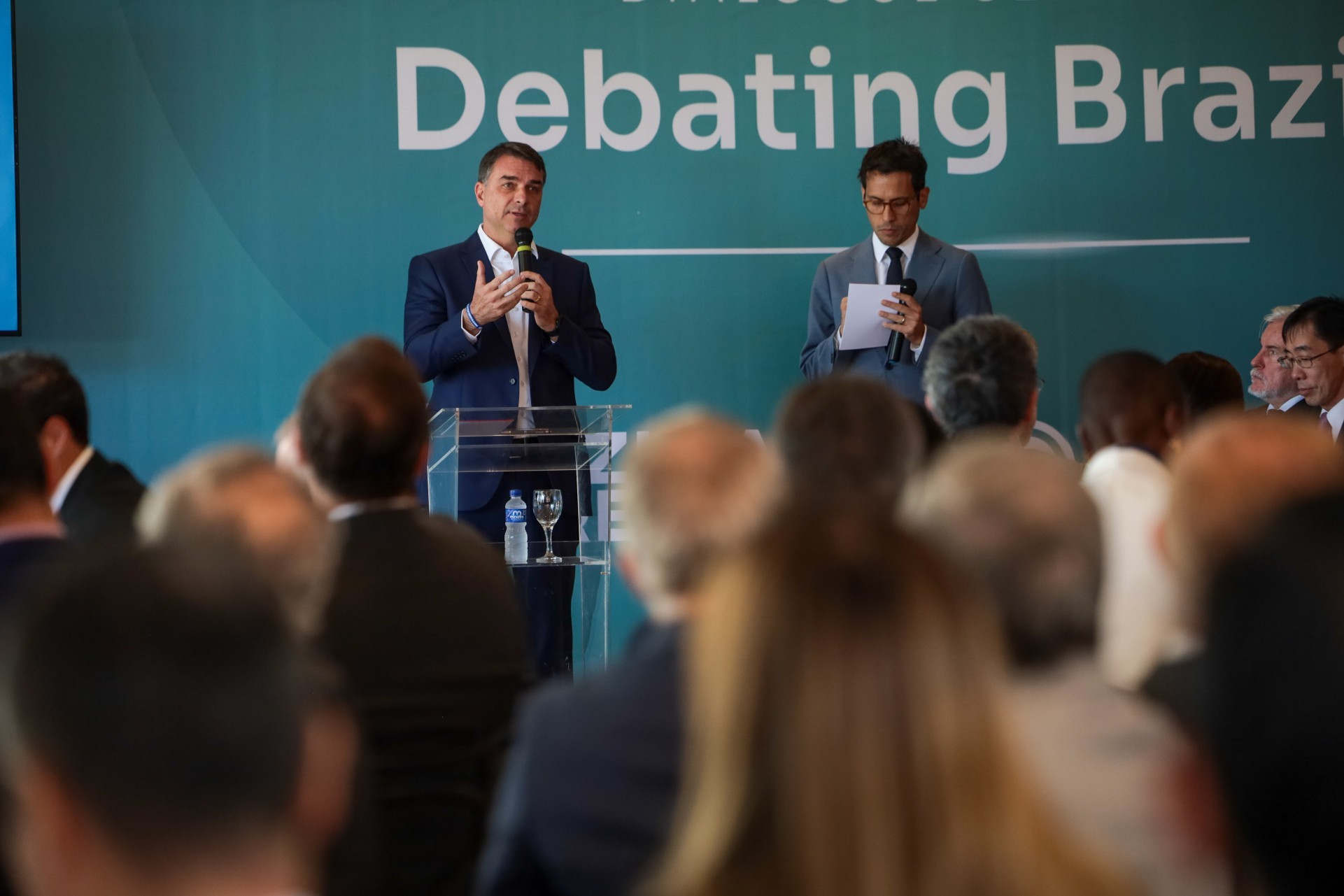
Senator Flávio Bolsonaro, a presidential pre-candidate, recently held a private meeting in Brasília with representatives from approximately 40 countries. During this event, he claimed that Brazil uses voting machines manufactured by the Venezuelan company Smartmatic. Bolsonaro cited a CIA report alleging Smartmatic's involvement in fraud during Venezuela's 2012 elections, a claim previously refuted by Brazil's Superior Electoral Court (TSE), which does not use Smartmatic machines. While denying he is questioning the Brazilian electoral system, Bolsonaro urged attending nations to send international observers to monitor Brazil's upcoming elections. He stated that many machines used in Brazilian elections are from the same company, echoing a recurring discourse from his father, former President Jair Bolsonaro. This incident occurs during a challenging period for Bolsonaro's pre-candidacy, as he faces difficulties in securing alliances beyond his own Liberal Party (PL) for the upcoming party conventions. Key parties like União Brasil, Progressistas, and Republicanos are still negotiating formal adhesion, which would grant him crucial airtime for the electoral campaign. The campaign has also been affected by other crises, including a controversial request for funds from banker Daniel Vorcaro to finance a film about Jair Bolsonaro, which reportedly impacted voter intentions. Furthermore, a public rift with his stepmother, former First Lady Michelle Bolsonaro, over disagreements concerning elections in Ceará, has exposed Flávio Bolsonaro's struggles with female voters, an electorate where he performs weakest. In this context, Senator Tereza Cristina (PP), considered a potential vice-presidential running mate, has indicated she does not intend to accept the position. While Bolsonaro's statements on voting machines are unlikely to sway his core supporters, they may alienate non-Bolsonarist right-wing voters and independent electors, a demographic crucial for his campaign's growth.
Senator Flávio Bolsonaro's recent remarks regarding voting machines, made during an event with international representatives, appear to align with a pattern of questioning electoral integrity, reminiscent of his father's rhetoric. This strategy, deployed amidst significant campaign challenges such as difficulty forming alliances and negative public perception stemming from financial and familial disputes, risks alienating centrist and independent voters essential for electoral expansion. The invocation of foreign intelligence reports and unsubstantiated claims about election technology, even when officially debunked, can serve to mobilize a committed base while simultaneously creating doubt among undecided segments of the electorate. Such tactics, particularly in the lead-up to elections, highlight the tension between solidifying core support and broadening appeal, a common dilemma in competitive political landscapes. The long-term impact of such discourse may contribute to a broader erosion of trust in democratic institutions, a trend observable in various global contexts, and could necessitate robust public information campaigns to counter misinformation and reinforce electoral confidence.
AI-generated to prompt reflection — not editorial opinion, not advice, not a statement of fact. How this works.