Brazil vs. Norway: A Look at the Squad Valuations Ahead of World Cup Match
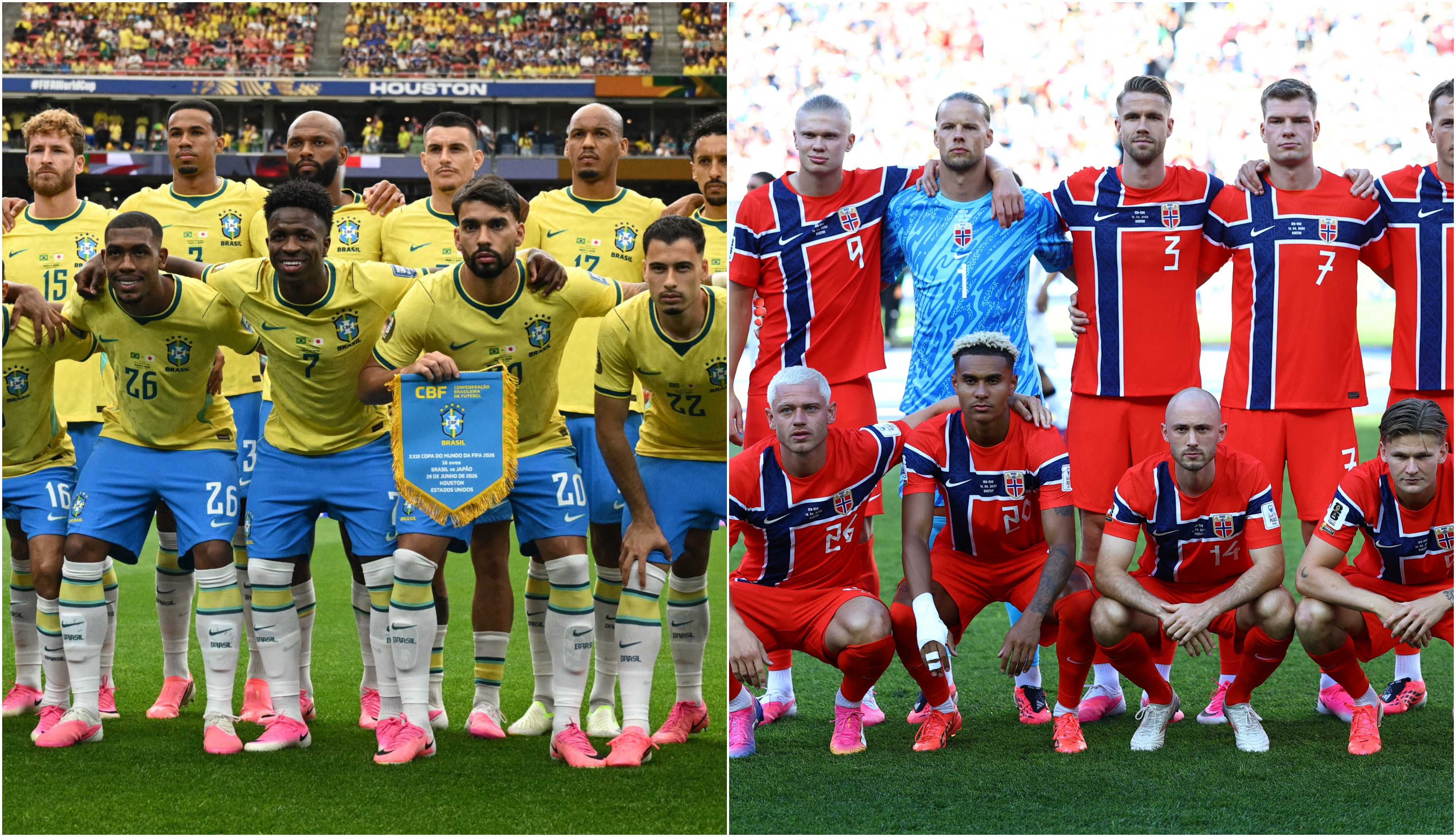
As Brazil prepares to face Norway in the Round of 16 of the 2026 World Cup on Sunday, November 5th at 5 PM Brasília time, a comparison of squad market values reveals significant differences. Norway's team, led by star striker Erling Haaland, is valued at 589.9 million euros (R$ 3.49 billion), making them the most valuable opponent Brazil has faced thus far in the tournament. This valuation places the Norwegian team ninth globally, just behind the Netherlands. However, Brazil's squad, managed by Carlo Ancelotti and featuring Vini Jr., boasts a considerably higher valuation of 928.2 million euros (R$ 5.5 billion), ranking them sixth among the world's most valuable national teams. The valuations, sourced from Transfermarkt and reflecting data from July 1st, consider factors such as player age, performance, potential, contract length, salary, and transfer fees. The individual matchup between Vini Jr. and Erling Haaland is also a point of interest, with Haaland, valued at 200 million euros (R$ 1.18 billion), being the most expensive player in the match. Vini Jr. follows closely at 140 million euros (R$ 828.03 million), representing approximately 15% of Brazil's total squad value. Brazil's squad appears more balanced, with 14 players valued over 20 million euros, unlike Norway, where Haaland accounts for about 34% of their team's value, and 18 players are valued under 20 million euros.
This analysis highlights the economic disparity in football talent, with Brazil's squad exhibiting a more evenly distributed high valuation compared to Norway's, which is heavily influenced by Erling Haaland. This contrast suggests different team-building philosophies and talent development pipelines. While individual star power can elevate a team's market value significantly, a broader base of highly valued players may indicate greater squad depth and resilience. In the context of a major tournament like the World Cup, such financial metrics offer one lens through which to view team potential, though on-field performance remains the ultimate determinant of success. Future football economics may see further consolidation of value around a few elite players, or a trend towards more balanced, globally distributed talent pools.
AI-generated to prompt reflection — not editorial opinion, not advice, not a statement of fact. How this works.