Brazilian activist detained in Iceland reassures family, says police are 'kind'
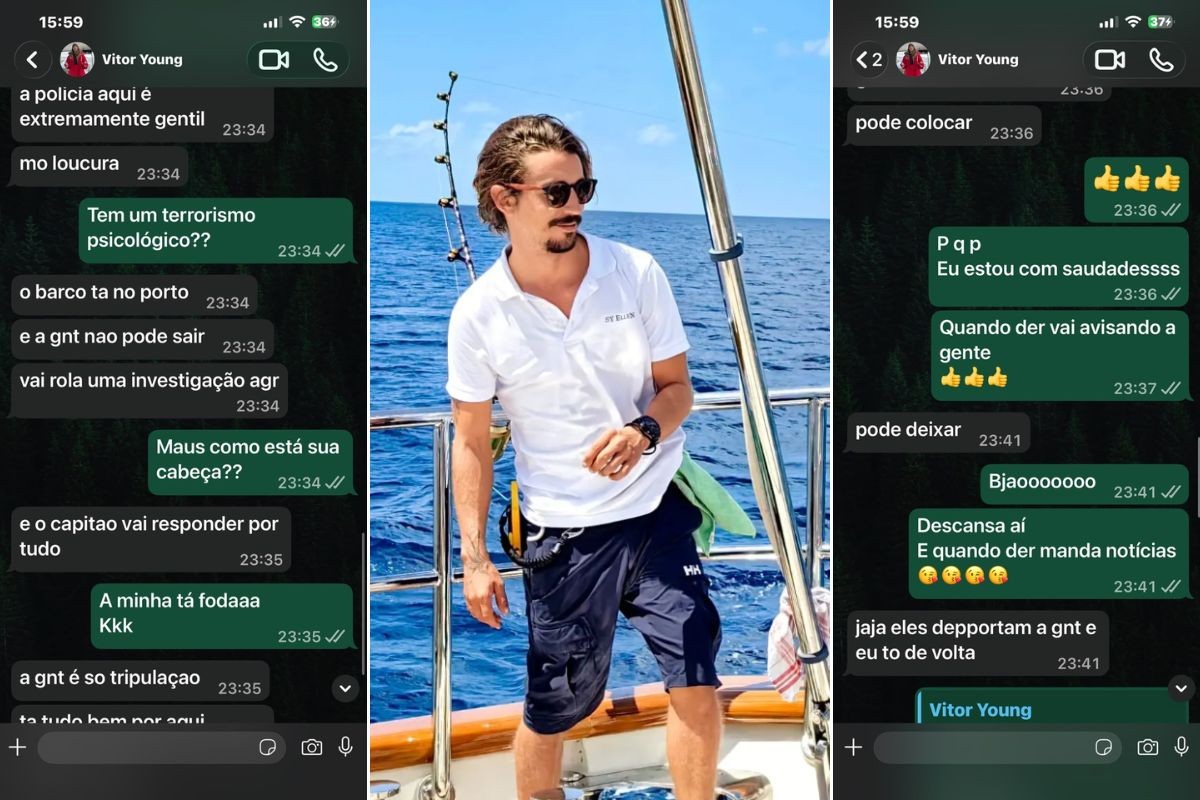
Vitor Young, a 32-year-old Brazilian sailor, is among four Brazilians detained in Iceland following an interception by the Coast Guard of a boat involved in anti-whaling activism. Young sent messages to his family assuring them that the police were "extremely kind" but had confiscated their phones and prevented the crew from leaving the vessel. The incident occurred on Thursday, May 30th, and was disclosed on Saturday, June 1st, after the environmental organization Sea Shepherd Brasil reported the group had been held by Icelandic authorities for nearly 40 hours and requested assistance from the Brazilian government. The boat, named Bandero, was on a mission called Operation 86, led by the international NGO Captain Paul Watson Foundation, which claims the interception happened after the group disrupted a whale hunt. Vitor's father clarified that his son was hired solely as a boatswain and had no involvement with the NGO or environmental causes, having previously worked on private vessels for about 15 years. Young was authorized to use a laptop and contacted his family on Friday, May 31st, explaining that the police had interrogated the crew for over 24 hours and given them four weeks to resolve the situation, with options including ship seizure and deportation or return by sea. The other detained Brazilians are Victor Calixto (23, sailor), Lucas Barbosa (28, cook), and Rui Amorim (52, ship's doctor). The Brazilian Ministry of Foreign Affairs, through its embassy in Oslo, is in contact with Icelandic authorities to gather information and provide consular assistance. The Bandero's crew also included 17 other individuals from ten countries. The captain has been arrested, and the vessel was escorted to Reykjavík, Iceland's capital.
This incident highlights the complex intersection of maritime law, environmental activism, and international relations. The detention of the crew, including individuals with no direct affiliation to the activist group, raises questions about the scope of legal responsibility for vessel operations. While the activist organization frames the crew's actions as heroic, Icelandic authorities likely view them as a disruption of lawful activities, potentially involving violations of maritime or environmental regulations. The Brazilian government's involvement underscores the challenges of providing consular assistance when citizens are detained abroad under potentially contentious circumstances. Future actions by Iceland and the involved NGOs could shape the legal precedents for such activism and the enforcement of maritime regulations, potentially influencing the operational calculus for both environmental groups and national coast guards in similar situations.
AI-generated to prompt reflection — not editorial opinion, not advice, not a statement of fact. How this works.
