Brazilian Airports Handle 65.2 Million Passengers in H1 2026
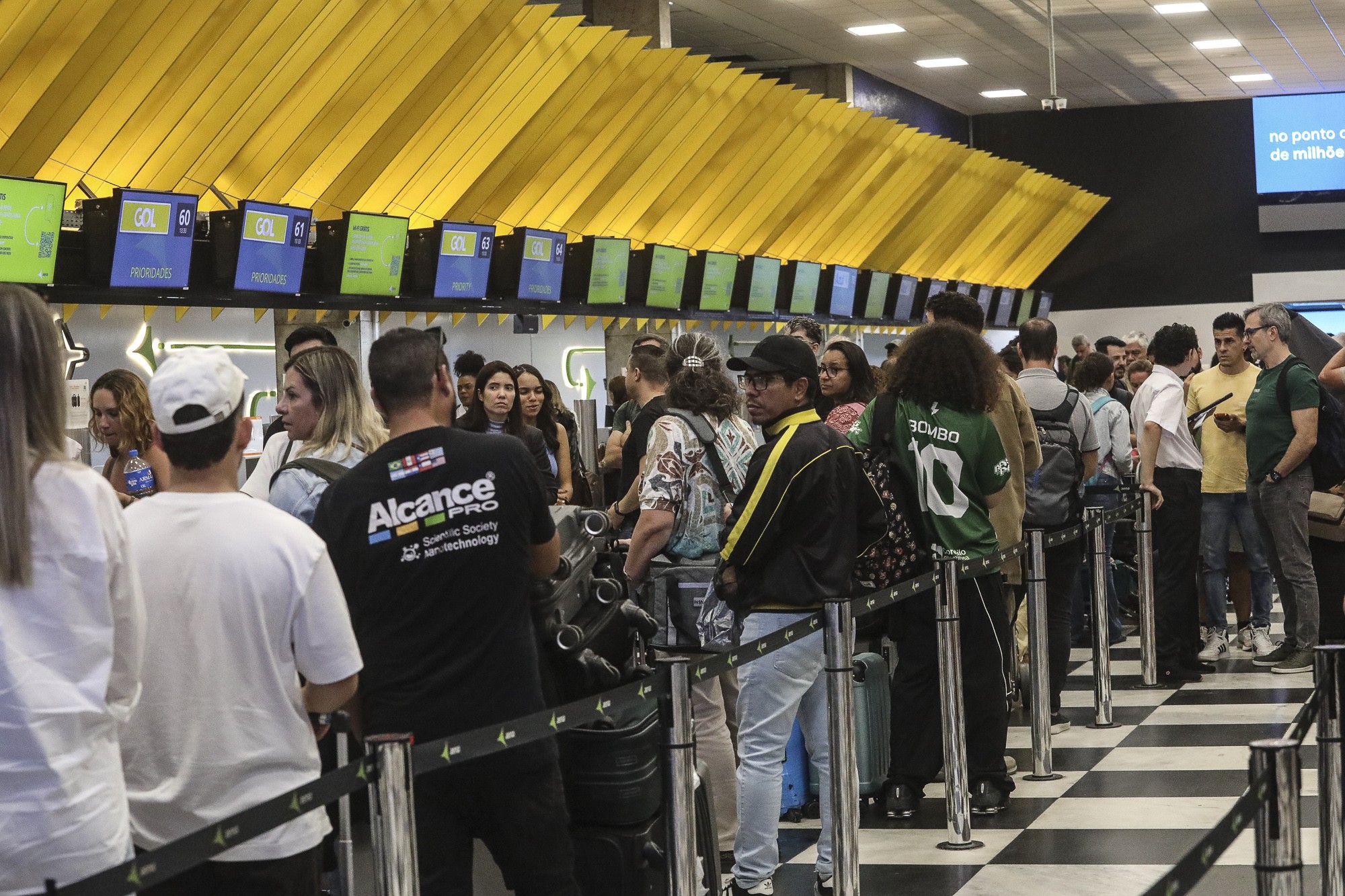
Brazilian airports saw 65.2 million passengers pass through in the first half of 2026, according to the National Civil Aviation Agency (Anac). This figure represents a 5.4% increase compared to the same period in 2025. Of the total passengers, 50.2 million traveled on domestic flights and 15 million on international flights, indicating growth in both market segments. The international segment maintained a higher growth rate than the domestic one throughout the semester.
In June 2026 alone, Brazilian airports handled 10.3 million passengers, a slight decrease of 0.9% compared to June 2025. This contrasts with May 2026, which saw a 2.5% increase year-over-year. Domestic travel in June accounted for 8.1 million passengers, while international travel comprised 2.2 million. Demand for air transport, measured by passenger numbers and distance, rose by 0.2% domestically and 1% internationally compared to June 2025. Meanwhile, air carrier supply, based on available seats and flight distance, increased by 3.3% domestically and 2.3% internationally.
The reported passenger traffic figures for Brazilian airports in the first half of 2026 indicate a robust recovery and expansion in air travel demand, exceeding previous year's performance. The growth, particularly in international travel, suggests a rebound in global connectivity and economic activity. However, the slight dip in June's passenger numbers warrants attention, potentially reflecting seasonal fluctuations or emerging economic headwinds. The differing growth rates between domestic and international markets, alongside the divergence between passenger demand and available seat capacity, highlight complex dynamics in airline capacity management and pricing strategies. Future analysis should monitor whether the June dip is an anomaly or a precursor to broader market shifts, considering the interplay of economic conditions, consumer confidence, and airline operational decisions in shaping the trajectory of air travel over the next decade.
AI-generated to prompt reflection — not editorial opinion, not advice, not a statement of fact. How this works.