Brazilian amateur astronomer captures meteor shower in São Paulo countryside
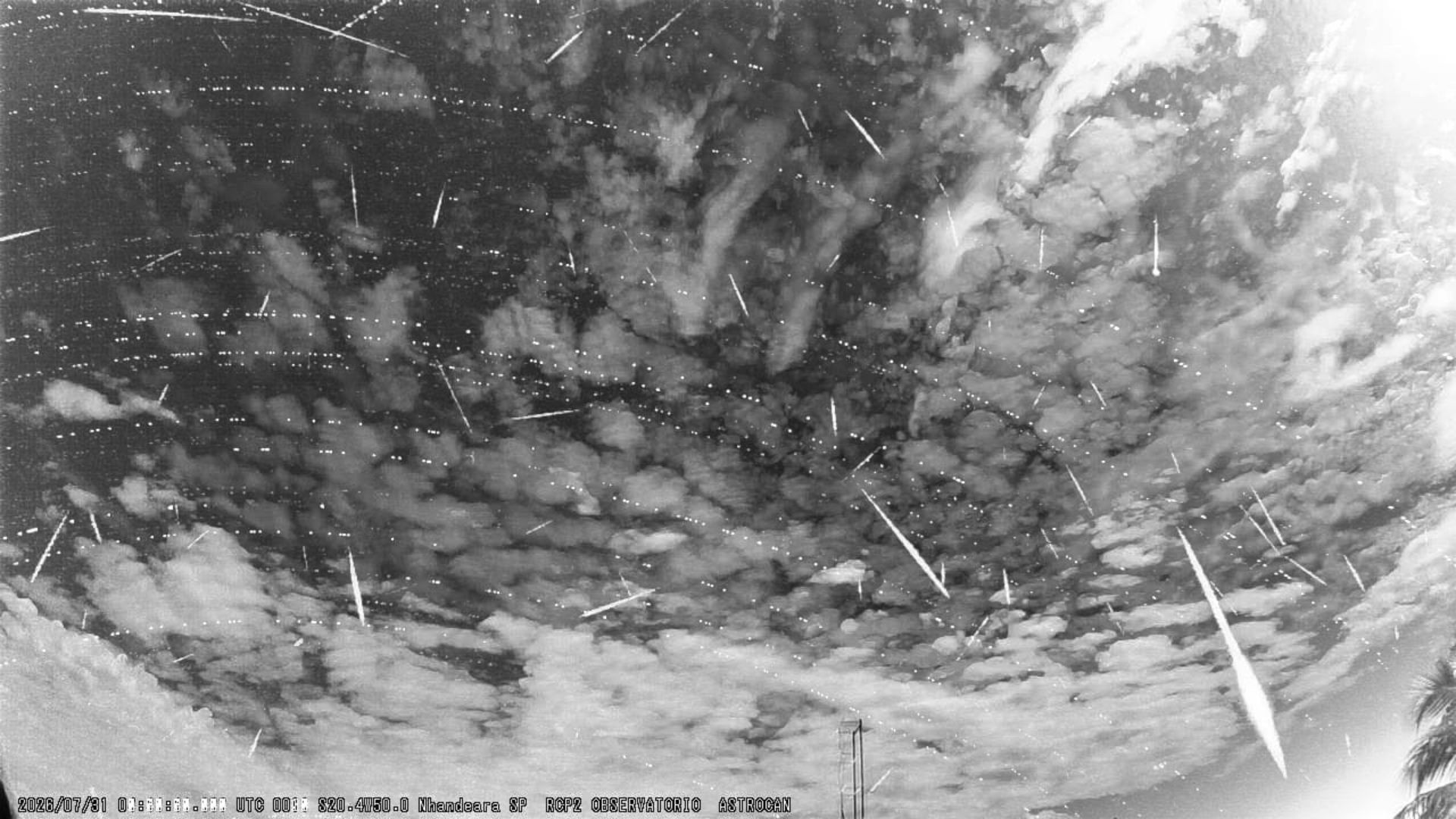
An amateur astronomer from Nhandeara, in the interior of São Paulo, Brazil, has captured images and videos of a meteor shower that lit up the sky over Brazilian territory on Friday, July 31st. According to the Brazilian Space Agency (AEB), the peak of the event occurred during the early morning hours, with an estimated 25 meteors per hour. Renato Poltronieri, co-founder of the Brazilian Meteor Monitoring Network (Bramon), explained that meteor showers, commonly known as "shooting stars," happen annually when Earth passes through regions of space containing fragments left by comets or asteroids. Poltronieri, who has been observing and documenting meteor showers for years, successfully captured the phenomenon with cameras installed atop his home and observatory in Nhandeara. Despite cloudy conditions, the meteors left ionized trails that were recorded by his equipment. The event was visible to the naked eye, without the need for telescopes or binoculars. In the Southern Hemisphere, the Delta Aquarids are the primary shower observed during this period, alongside the Alpha Capricornids, known for slower, sometimes colorful meteors, and the Perseids, which begin their activity around this time. Meteors enter Earth's atmosphere at speeds ranging from 40,000 to 260,000 km/h, causing small particles to heat up intensely and create luminous trails. A meteor brighter than Venus is classified as a bolide.
This event highlights the accessibility of astronomical observation, even with amateur equipment and in less-than-ideal weather conditions. It underscores the role of citizen science in contributing to our understanding of celestial phenomena. The annual nature of meteor showers, driven by Earth's predictable orbit, offers a consistent opportunity for public engagement with space science. Future advancements in sensor technology and data processing could further enhance the capabilities of amateur astronomers, potentially leading to more frequent and detailed observations. This also presents an opportunity for educational institutions and space agencies to leverage such public interest for broader scientific outreach and data collection initiatives.
AI-generated to prompt reflection — not editorial opinion, not advice, not a statement of fact. How this works.