Brazilian author releases first 'lean novel' on leadership and people management
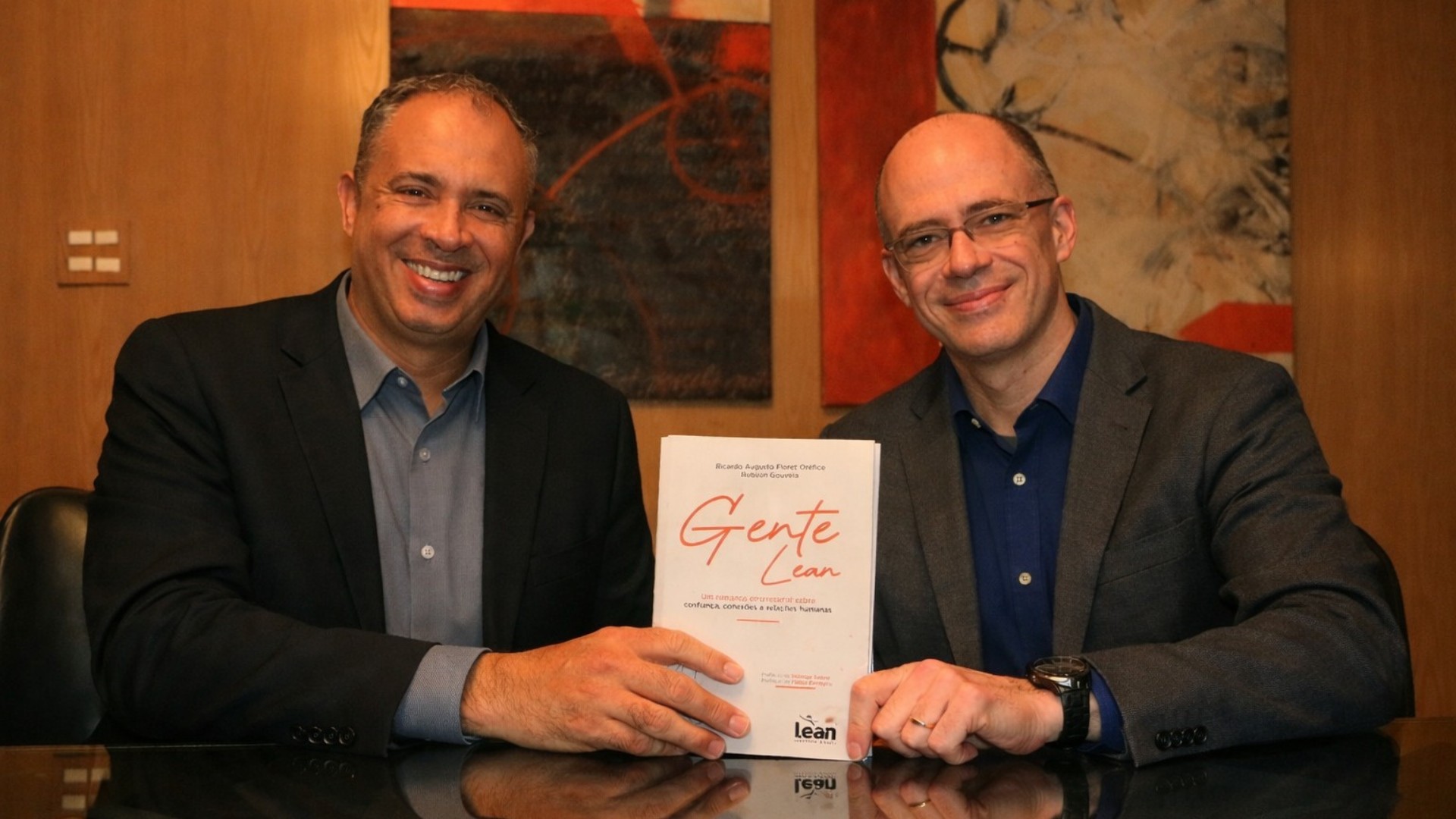
Robson Gouveia, a Brazilian author from Sorocaba, has launched "Gente Lean," the country's first 'lean novel,' co-authored with Ricardo Oréfice, ombudsman at Itaú Unibanco. This innovative work departs from traditional business management literature, which often relies on technical concepts and methodologies. Instead, "Gente Lean" uses a fictional narrative to explore crucial aspects of leadership and people management, aiming to teach these principles through storytelling. The book follows the fictional journey of Cristina, a new director at a large corporation struggling with excessive pressure, fear of mistakes, and poor inter-team communication. Her character strives to transform the organizational culture by emphasizing active listening, trust, and valuing employees. Gouveia chose fiction strategically, believing that people connect more deeply with stories than abstract concepts, allowing management principles to be illustrated through relatable challenges. The 'lean novel' format adapts the lean management system, inspired by the Toyota Production System, focusing on waste elimination, process improvement, and people development. Unlike technical books, it employs a fictional plot to convey ideas on leadership, organizational culture, problem-solving, and human development. While similar works are popular internationally, "Gente Lean" is noted as the first Brazilian book to centralize the lean system within its narrative. The authors advocate that sustainable results stem from environments where employees can openly discuss issues, propose solutions, and learn without fear of reprisal. Gouveia highlights that the most significant waste in organizations is often untapped human potential, citing instances of talented individuals whose contributions were overlooked. The book also delves into psychological safety and the leader's role in fostering engaged teams, arguing that sustainable success relies on cultivating environments where individuals feel empowered to speak up, question, admit errors, and suggest improvements without fear of humiliation. This approach, Gouveia contends, leads to earlier problem detection, better decision-making, and increased innovation, ultimately becoming a competitive advantage rather than just an employee well-being issue.
This 'lean novel' approach to business management education represents a strategic shift towards narrative-driven learning, acknowledging that emotional engagement often facilitates the adoption of complex organizational principles. By framing leadership and people development within a fictional context, the authors aim to bypass the cognitive resistance sometimes associated with purely technical or theoretical business literature. The emphasis on psychological safety and valuing human potential addresses systemic issues prevalent in many corporate cultures, where fear of reprisal can stifle innovation and productivity. As artificial intelligence continues to automate tasks, the uniquely human aspects of leadership—empathy, communication, and fostering collaborative environments—are likely to become even more critical differentiators for organizational success in the coming decade. This narrative format could prove effective in cultivating a more human-centric approach to management, potentially leading to more resilient and adaptable organizations.
AI-generated to prompt reflection — not editorial opinion, not advice, not a statement of fact. How this works.