Brazilian Company Bizu Space Develops Liquid-Fuel Rocket for Satellite Launches
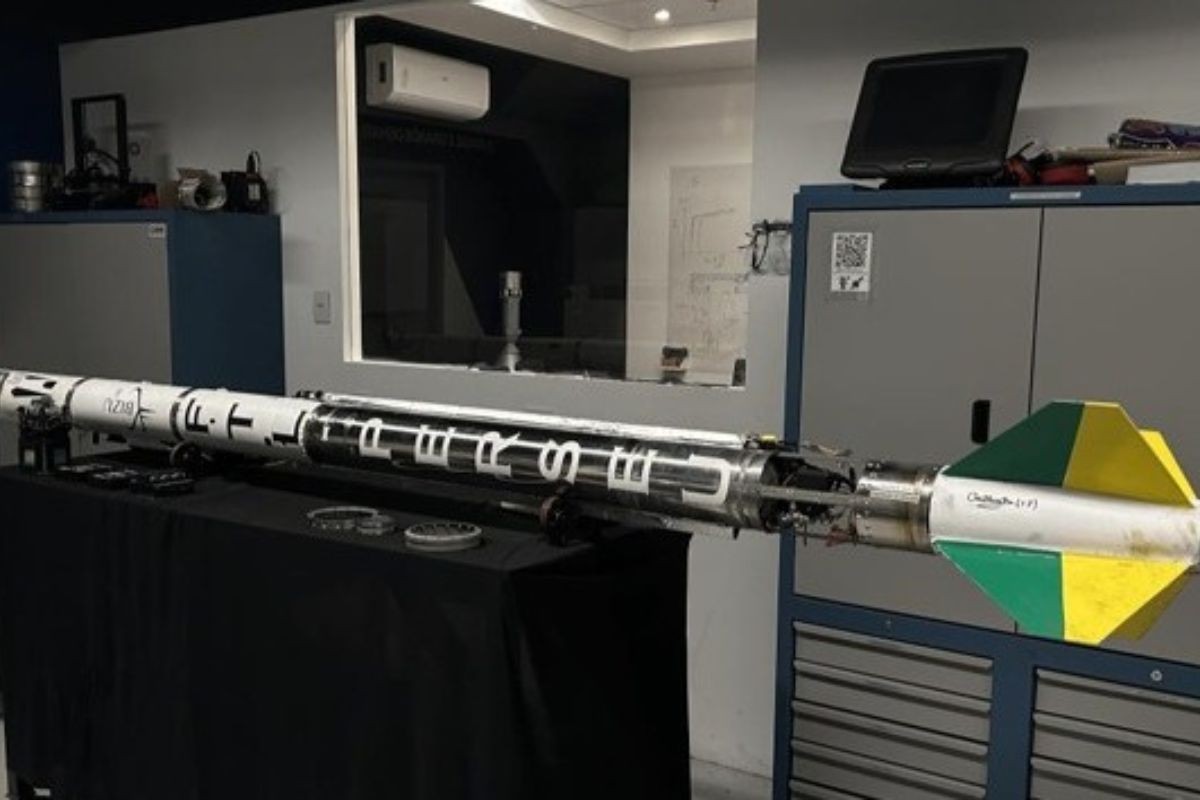
Bizu Space, a company based in São José dos Campos, São Paulo, has developed a liquid-fuel propulsion system for rockets, a significant step towards Brazil's future independence in launching satellites. This technology was successfully tested in its first experimental flight on May 29th in Virgínia, Minas Gerais, with the FTL-Perseu rocket. According to Bizu Space, this marks the first Brazilian rocket powered exclusively by liquid fuel. Mariana Marciano, a chemical engineer at Bizu Space, explained that liquid fuel offers superior control and precision compared to current Brazilian technologies. She highlighted that while Brazil currently develops satellites, it relies on foreign rockets for orbital deployment, a dependency this innovation aims to reduce. The successful test is seen as a crucial advancement for the Brazilian Space Program, potentially paving the way for more ambitious goals, including future human spaceflight. The Brazilian Space Agency (AEB) acknowledged the importance of liquid-fuel propulsion for enhanced performance and precision in modern launch vehicles. However, the AEB also emphasized that achieving full autonomy in satellite launches requires the development of additional technologies, robust infrastructure, and sustained long-term investment. The agency noted that liquid propulsion systems reduce reliance on foreign technology, which can be subject to international restrictions, thereby enabling Brazil to develop more complex space systems. This development aligns with other ongoing efforts, such as the MLBR rocket project, where companies from the Paraíba Valley are involved, with potential future integration of Bizu Space's liquid-fuel engine.
The development of liquid-fuel rocket technology by Bizu Space represents a strategic advancement for Brazil's space program, addressing critical dependencies on foreign launch capabilities. This innovation, validated by an experimental flight, enhances precision and control, aligning with global trends in modern launch systems. While a significant step, achieving full satellite launch autonomy necessitates a broader ecosystem of technological development, infrastructure investment, and long-term policy commitment, as noted by the Brazilian Space Agency. The system's potential scalability, from satellite deployment to future human spaceflight, underscores the foundational importance of mastering such propulsion technologies. This initiative highlights the interplay between private sector innovation and national strategic goals in the evolving landscape of space exploration and utilization.
AI-generated to prompt reflection — not editorial opinion, not advice, not a statement of fact. How this works.