Brazilian Company Develops Infrared Light Helmet for Mental Health and Neurological Disorders
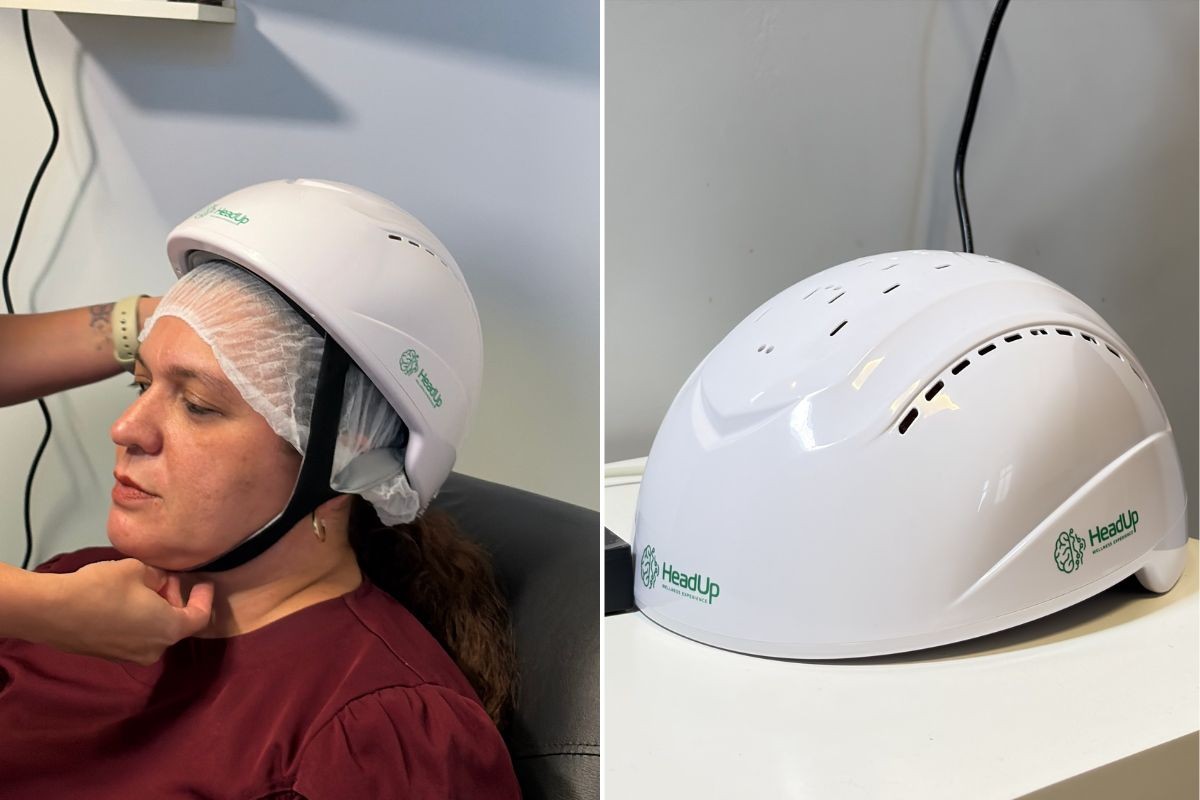
Santos Tecnologia, a company based in Santos, São Paulo, has developed a novel medical device called HeadUp, which utilizes transcranial photobiomodulation with infrared light to stimulate brain regions. This helmet is the first medical equipment developed in Brazil exclusively for mental health applications. The technology employs infrared light to target and stimulate specific areas of the brain, offering a complementary therapy for conditions such as depression, anxiety, migraines, Parkinson's disease, and Alzheimer's disease. While photobiomodulation is established in aesthetic applications, its use in medical devices for mental health is relatively new in the Brazilian market. Santos Tecnologia invested over R$ 10 million in the development of HeadUp, collaborating with educational and research institutions like the Universidade de Pernambuco (UPE) and the Universidade Federal do Rio Grande do Sul (UFRGS). The device has received certifications from Brazil's National Health Surveillance Agency (Anvisa) and the National Institute of Metrology, Quality and Technology (Inmetro). Neurologist Juarez Harding explained that the helmet emits low-intensity infrared light that penetrates the scalp to reach brain tissue, aiming to boost cellular activity and reduce inflammation associated with neurological diseases. Harding emphasized that HeadUp is a supplementary treatment and requires a physician's recommendation. One patient, 45-year-old receptionist Camila Alves de Carvalho, reported a significant reduction in chronic migraine frequency, experiencing a 70% decrease in severe crises and a marked improvement in her quality of life. The company is also exploring the equipment's use within the public healthcare system (SUS) through studies in Pernambuco and aims for international expansion, engaging in scientific exchanges with institutions in the United States, including the University of Massachusetts. HeadUp is designed for low operational cost, portability, and ease of clinical use, potentially facilitating widespread adoption.
The development of the HeadUp helmet represents an innovative approach to integrating photobiomodulation technology into mainstream mental health and neurological treatment paradigms. By focusing on non-invasive, complementary therapies, the technology addresses a growing demand for accessible and potentially lower-cost interventions. The device's potential for portability and ease of use suggests a future where such treatments could be more widely distributed, even in resource-limited settings. As research progresses, particularly in clinical trials for various neurological and psychiatric conditions, understanding the long-term efficacy and optimal application protocols will be crucial for its integration into standard medical practice. The interplay between technological advancement, regulatory approval, and patient outcomes will shape the trajectory of this technology in the evolving landscape of healthcare.
AI-generated to prompt reflection — not editorial opinion, not advice, not a statement of fact. How this works.