Brazilian Environmental Police Seize Wild Palm Hearts, Shut Down Illegal Processing Plant
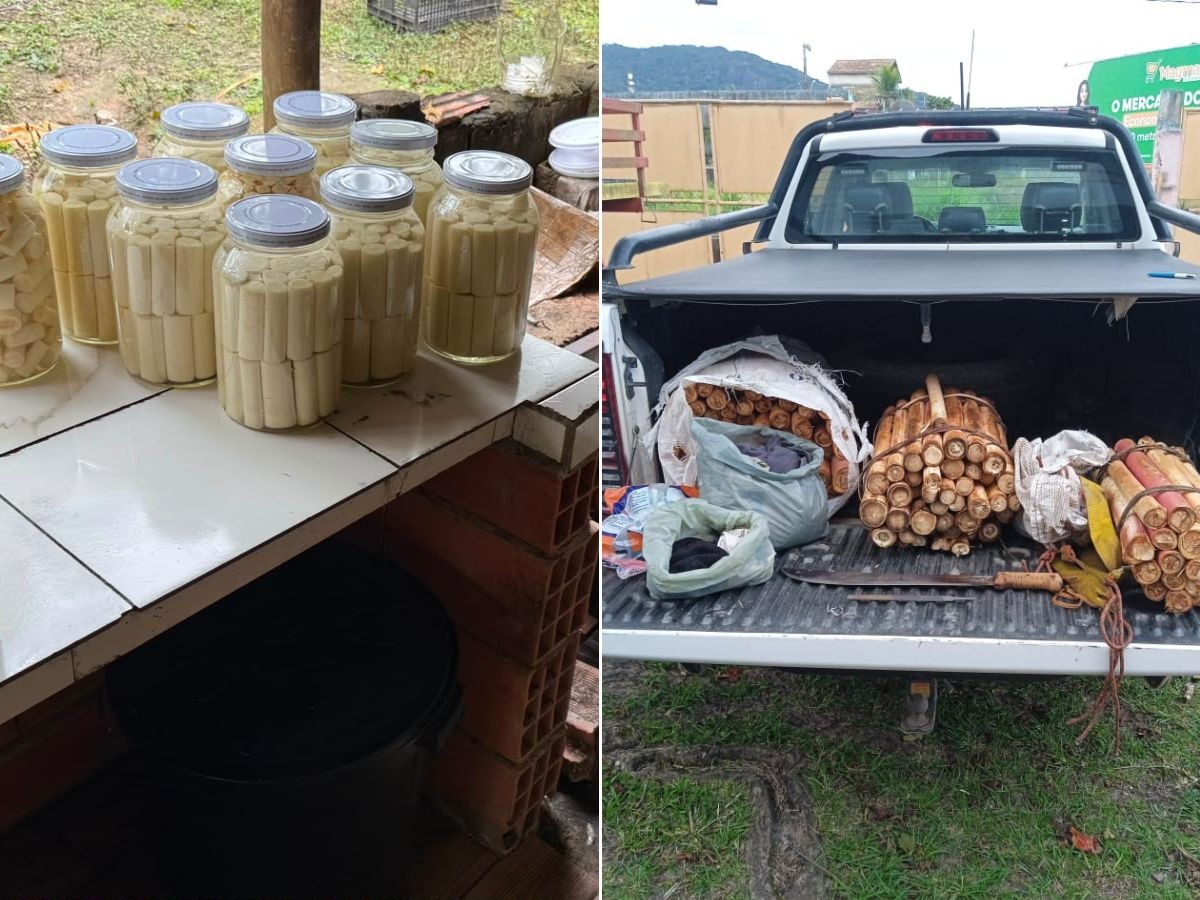
The Environmental Military Police in São Paulo, Brazil, conducted two separate operations last Thursday, November 30th, resulting in the seizure of over 100 wild juçara palm heart stalks and the closure of an illegal processing factory. In Iguape, authorities found 144 freshly cut juçara palm heart stalks on the side of a dirt road. The individuals responsible fled into a wooded area, leaving behind cutting tools and clothing. These stalks were subsequently donated to a community institution. In a separate incident in Iporanga, police raided a clandestine factory following an anonymous tip. At this location, officers confiscated 66.6 kilograms of preserved palm hearts, contained in 37 unlabeled jars. The factory also possessed dozens of empty jars, a 100-liter industrial cauldron, and a burner. The owner, who was operating the illegal facility, was taken to the Civil Police station and issued an administrative fine of R$ 39,960. This penalty was doubled due to the use of the juçara palm, a species classified as endangered. Both cases are being investigated under Brazil's Environmental Crimes Law, which prohibits the unauthorized extraction, transport, processing, and storage of plant products. Criminal investigations are ongoing to identify and hold all parties involved accountable.
These seizures highlight the ongoing challenges in enforcing environmental regulations against illegal resource extraction and processing, particularly concerning endangered species like the juçara palm. The dual enforcement actions, one resulting in flight and the other in apprehension and significant fines, underscore the varying risks and operational methods employed by those engaged in illicit activities. The doubling of the fine for utilizing an endangered species points to a tiered penalty structure designed to deter the exploitation of vulnerable ecosystems. Future efforts may benefit from enhanced intelligence gathering and community engagement to disrupt these clandestine operations more effectively, especially given the potential for these activities to contribute to broader ecological degradation and the loss of biodiversity.
AI-generated to prompt reflection — not editorial opinion, not advice, not a statement of fact. How this works.