Brazilian Fan Plans 'Tetra' Tattoo for Argentina's World Cup Victory
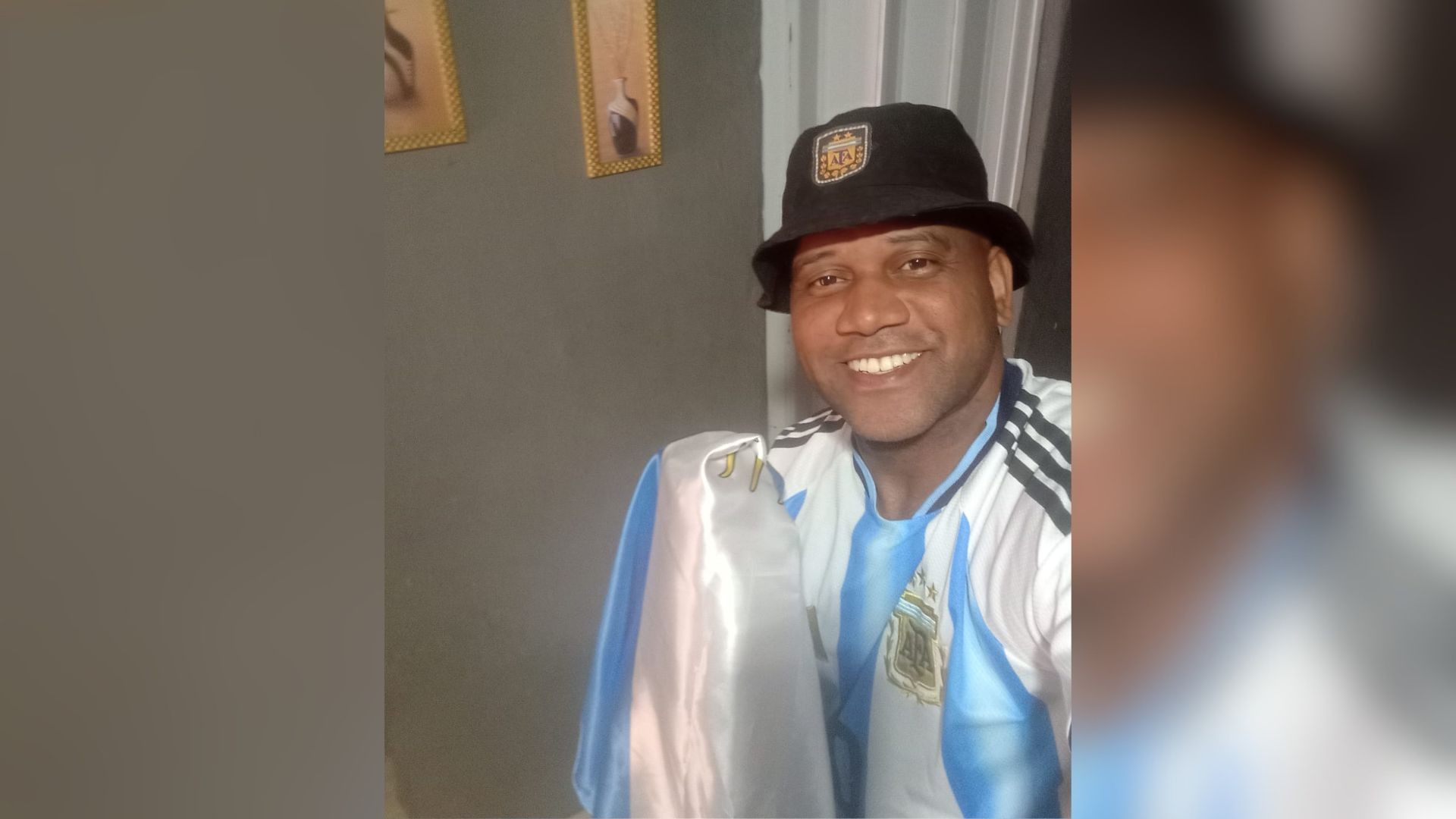
Leandro Borges, a 38-year-old security guard from Uberaba, Brazil, is confident Argentina will win their fourth World Cup title on Sunday, December 19th. Despite acknowledging the difficulty of facing Spain in the final, Borges has already arranged to get a tattoo celebrating the potential victory. He has previously shown his dedication to Argentinian football by getting a tattoo of Diego Maradona's name, the Argentinian Football Association (AFA) acronym, and the River Plate club crest. Borges also accurately predicted Argentina's 2-1 semifinal win against England, including the timing of the winning goal. For the final, he anticipates a close match, possibly decided by penalties, and predicts a 1-0 victory for Argentina, with a goal potentially scored by Leandro Paredes or Julian Alvarez. His strong support for Argentina is met with skepticism by his family, who call him 'crazy' for rooting for Brazil's historical rival, though they respect his passion. Borges's fascination with Argentinian football began at age 13, drawn by the team's grit and the fans' passion. His admiration extends beyond football to Argentinian culture, language, and cuisine, and he dreams of visiting Argentina despite never having been there.
This narrative highlights an individual's deep emotional investment in a foreign national sports team, transcending typical geopolitical rivalries. Such fervent fandom, while personal, can reflect broader cultural exchanges and the globalized nature of sports fandom. The story also implicitly touches upon the power of predictive belief and the psychological comfort derived from anticipating positive outcomes, especially in high-stakes events. From a systems perspective, the persistent appeal of national teams and their narratives, even to non-citizens, underscores the effectiveness of sports as a soft power tool and a vehicle for cultural influence. Looking forward, as AI continues to shape media consumption and fan engagement, the nature of such cross-border allegiances may evolve, potentially becoming more curated or algorithmically influenced, but the fundamental human drive for belonging and shared emotional experience through sports is likely to endure.
AI-generated to prompt reflection — not editorial opinion, not advice, not a statement of fact. How this works.