Brazilian Farmer Cultivates Rare Vanilla Valued at $1,100 per Kilo Using Manual Pollination and Spiders
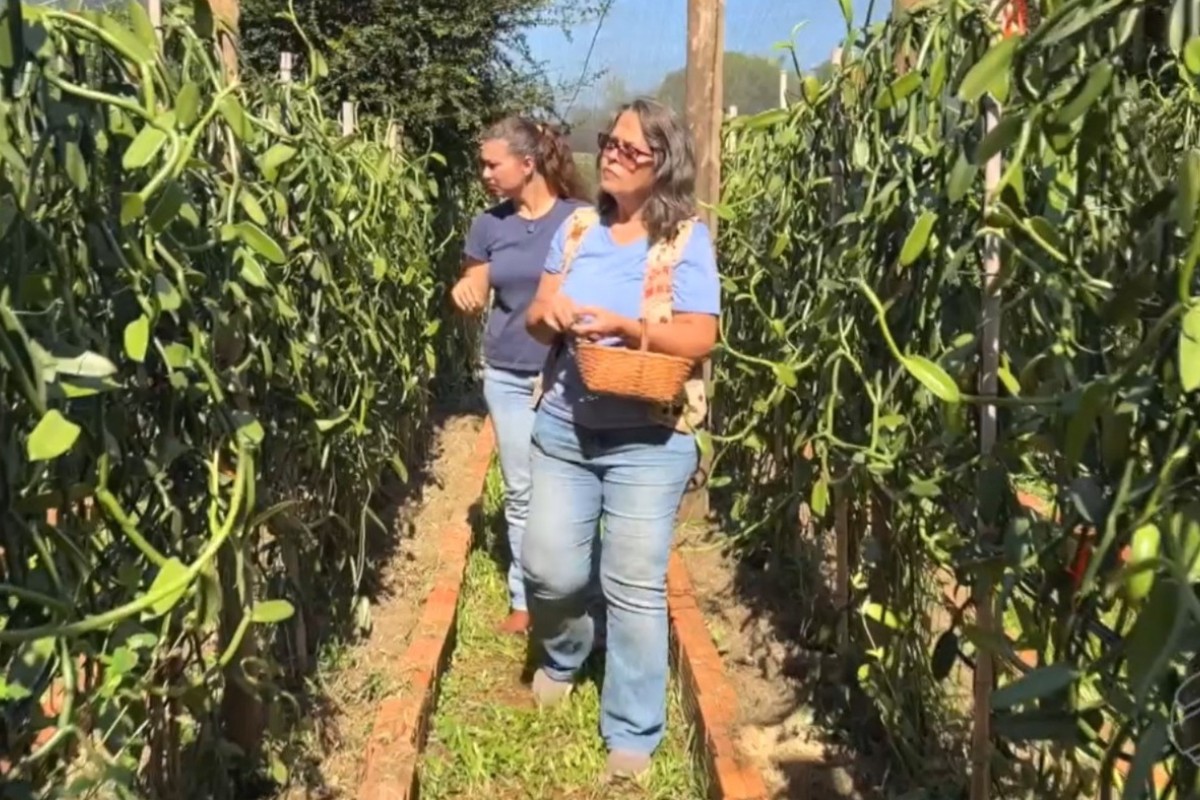
A farmer in Campo Grande, Mato Grosso do Sul, Brazil, is cultivating vanilla, a rare and highly valuable spice that can fetch up to R$6,000 (approximately $1,100 USD) per kilogram. Miska Thomé is growing the plant in a protected environment, employing biological pest control methods to minimize the use of agricultural chemicals. Despite its high market value, vanilla cultivation is uncommon in Brazil due to intensive management requirements and significant challenges, from seedling production to pollination and plant development. The vanilla orchid, native to Mexico, relies on natural pollinators that are absent in Brazil, necessitating manual pollination of each flower, which only remains open for a single day. The process involves carefully transferring pollen from the male to the female part of the flower, after which the stem transforms into a bean. These beans require approximately nine months to mature for harvest, during which temperature, humidity, and light must be precisely controlled. Agronomist Letícia Oliveira, who is advising Thomé, notes that the protected cultivation aims to replicate the species' natural habitat with a nutrient-rich substrate and proper support for growth. Biological control is also a key component, with spiders being utilized to manage pests like stink bugs, moths, and caterpillars, thereby reducing reliance on chemical pesticides. A significant hurdle to expanding production is the limited availability of seedlings with known origins and good genetic quality, which directly impacts productivity and adaptation. Following harvest, the beans undergo a months-long curing process, involving sun-drying, resting in shade, and storage, to develop their characteristic aroma and quality. Despite these obstacles, there is optimism for the growth of vanilla cultivation in Mato Grosso do Sul.
This initiative highlights the potential for high-value niche agriculture in regions like Brazil's Cerrado, leveraging controlled environments and innovative biological pest management. The manual pollination process underscores the labor-intensive nature of producing certain luxury goods, presenting a trade-off between high per-unit value and scalability. The reliance on biological controls, such as using spiders, demonstrates a forward-thinking approach to sustainable farming, reducing chemical inputs and potentially creating more resilient ecosystems within cultivation. Challenges in seedling supply and adaptation to local climate conditions point to systemic issues in agricultural R&D and infrastructure for specialized crops. Looking ahead, advancements in controlled environment agriculture and plant biotechnology could offer pathways to overcome these bottlenecks, potentially making such high-value crops more accessible and economically viable on a larger scale, while also considering the long-term ecological impacts of intensive, protected cultivation.
AI-generated to prompt reflection — not editorial opinion, not advice, not a statement of fact. How this works.