Brazilian Federal Police Incinerate Nearly 4 Tons of Cocaine Seized in Atlantic
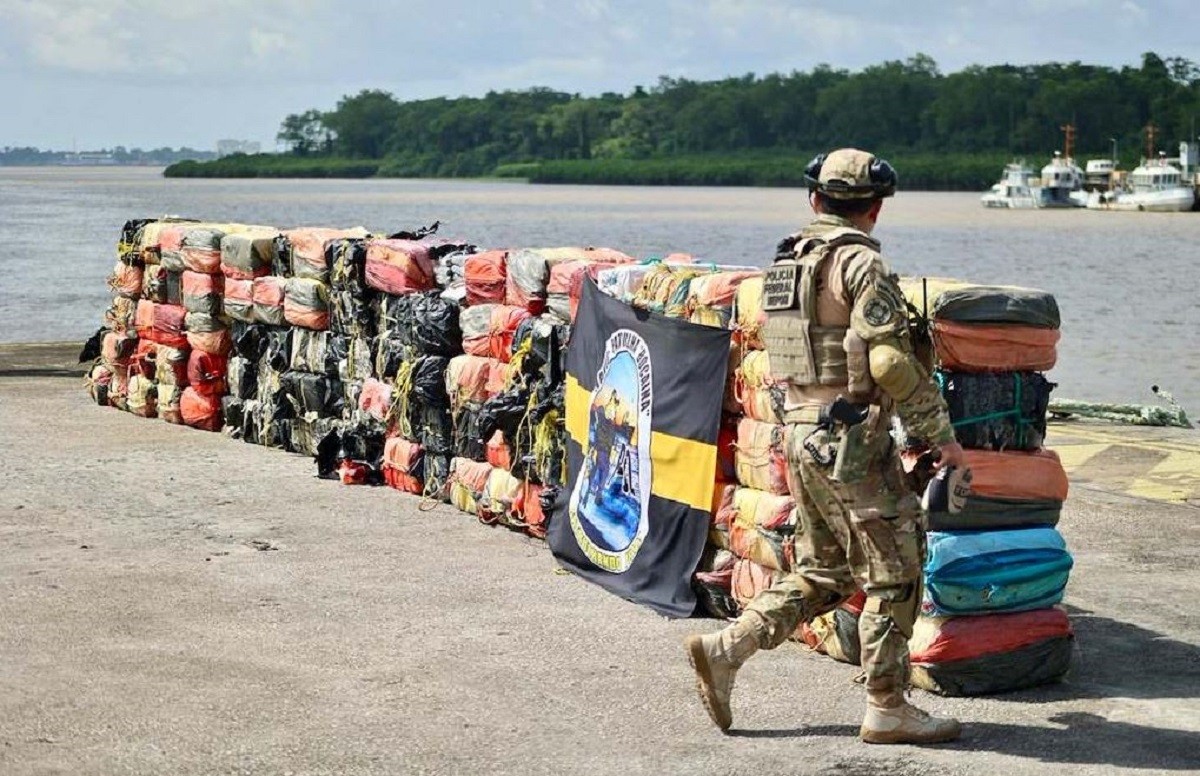
Brazil's Federal Police (PF) incinerated approximately 4.1 tons of illicit drugs in the Greater Belém region of Pará state on Friday, May 24th. The majority of the seized substances, totaling 3.7 tons of cocaine, were apprehended in international waters on July 8th. This significant seizure was the result of a joint operation involving the PF and the Brazilian Navy, with crucial support from U.S. agencies, including the Drug Enforcement Administration (DEA) and the Joint Interagency Task Force South (JIATF-South). The cocaine was discovered hidden in over 100 packages aboard a wooden fishing vessel. Four crew members were arrested during the operation and subsequently transported to the PF's Belém headquarters. The investigation, led by PF Regional Superintendent Alexandre de Andrade Silva, aims to identify further accomplices and the drug's intended distributor. The fishing boat, believed to have departed from Pará and possibly destined for Guinea, Africa, was intercepted approximately 1,500 kilometers off the coast of Pará. In addition to the 3.7 tons of cocaine, the PF also incinerated smaller quantities of cocaine and marijuana from two other unrelated operations, bringing the total incinerated to 4.1 tons. The incineration process followed all legal and safety protocols, including expert examination and judicial authorization.
This operation highlights the complex international dynamics of drug trafficking and interdiction efforts. The involvement of U.S. agencies underscores a shared strategic interest in combating illicit drug flows originating from or transiting through South America. The scale of the seizure and subsequent incineration demonstrate the significant resources dedicated to drug enforcement, while also raising questions about the overall effectiveness of interdiction in stemming the global supply of narcotics. Future considerations may involve examining the economic incentives driving drug production and trade, as well as evaluating the long-term impact of such seizures on market dynamics and the potential for traffickers to adapt their methods. The collaboration between Brazilian and U.S. authorities represents a pragmatic approach to a persistent transnational challenge, focusing on disrupting supply chains.
AI-generated to prompt reflection — not editorial opinion, not advice, not a statement of fact. How this works.