Brazilian Federal Police Uncover $4.5 Million Bribery Scheme Targeting Public Officials
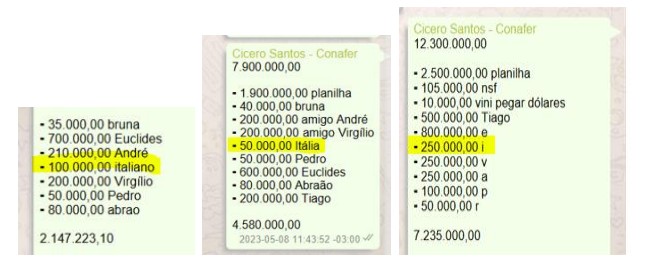
Brazil's Federal Police (PF) have detailed a significant bribery scheme involving at least R$ 24.6 million (approximately $4.5 million USD) paid to public officials. The PF's report, part of the 'Sem Desconto' operation, revealed that these payments were disguised with codenames such as 'Heróis' (Heroes), 'Notáveis' (Notables), or 'Amigos' (Friends) by the perpetrators of a fraud against the National Institute of Social Security (INSS). According to the PF, high-ranking INSS officials and key politicians received substantial and regular bribes. The report emphasizes that this institutional corruption was essential for the smooth operation of the fraud, which affected over 600,000 victims and generated thousands of legal and administrative complaints. The findings were presented to Supreme Federal Court (STF) minister André Mendonça, the rapporteur for the investigation. The case will now be forwarded to the Prosecutor-General's Office (PGR) for a decision on whether to file charges, request dismissal, or order further investigation. The PF's report, seen by g1, also indicates that payment recipients were identified in financial accountability records maintained by Carlos Roberto Ferreira Lopes and Cícero Marcelino de Souza Santos, associated with the National Confederation of Family Farmers and Family Rural Entrepreneurs (Conafer). Message exchanges confirmed the regular transfer of funds to various public agents, including references to 'ITALIANO,' 'ITALIA,' or 'I,' identified as INSS President Alessandro Antonio Stefanutto. Messages between Cícero and Carlos Lopes suggest that the President of Conafer directed these illicit payments.
This investigation into alleged bribery within Brazil's INSS highlights the critical nexus between institutional corruption and the perpetuation of large-scale fraud. The use of codenames for illicit payments suggests a deliberate effort to obfuscate the direct involvement of public officials, thereby creating layers of plausible deniability. The scale of the alleged fraud, impacting over 600,000 individuals, underscores the systemic vulnerabilities that can arise when governance mechanisms are compromised by financial incentives. Moving forward, understanding the specific control failures and the effectiveness of oversight bodies will be crucial. Future reforms may need to focus on enhancing transparency in public procurement, strengthening whistleblower protections, and implementing more robust digital audit trails to detect and deter such sophisticated schemes in the evolving landscape of public administration.
AI-generated to prompt reflection — not editorial opinion, not advice, not a statement of fact. How this works.