Brazilian Federal Police Uncover Drug Ring Hiding Narcotics in Air Conditioners
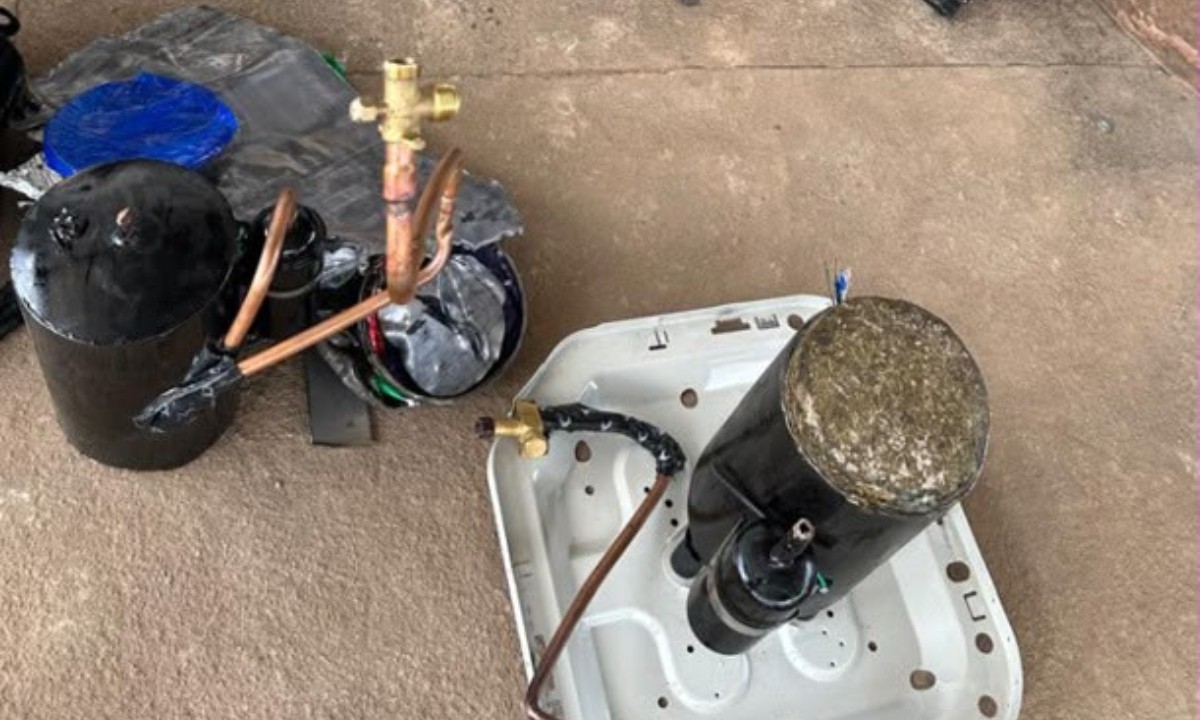
The Brazilian Federal Police (PF) launched Operation Sordida Ventis on Tuesday, May 7th, to dismantle an international criminal organization involved in drug trafficking, money laundering, and criminal association. The group operated in the states of Amazonas and Rondônia, with connections extending to Brazil's Southeast region. The investigation was initiated following a seizure by the Federal Highway Police (PRF) in Humaitá, southern Amazonas. During a traffic stop, a vehicle carrying imported air conditioning units was intercepted due to irregularities in its fiscal documentation. Federal Police officers are executing three search and seizure warrants and two pre-trial detention orders in Manaus, issued by the 4th Federal Criminal Court of the Amazonas Judiciary Section. The seized air conditioning units were sent for analysis by the Federal Revenue Service in Porto Velho. During the inspection, approximately 63.4 kilograms of drugs and vials of cannabidiol oil were discovered concealed within specially adapted compartments inside the air conditioning units. The Federal Police also identified a second method used by the criminal group: drugs and foreign-made rifles were found hidden within a shipment declared as household moving goods. The individuals involved face charges including international drug trafficking, criminal association, and money laundering. The operation's name, Sordida Ventis, directly references the group's method of hiding narcotics within air conditioning units to evade law enforcement.
This operation highlights the evolving tactics employed by transnational criminal organizations to circumvent detection. The use of sophisticated concealment methods, such as integrating narcotics into imported consumer goods like air conditioning units, demonstrates a strategic adaptation to interdiction efforts. The investigation's success, stemming from a routine traffic stop revealing documentation discrepancies, underscores the critical role of diligent enforcement and inter-agency cooperation. Moving forward, authorities may need to enhance technological surveillance and risk-based profiling of cargo, particularly for high-volume imported goods, to counter such adaptive criminal enterprises. The dual use of these concealment methods, also applied to household goods, suggests a systemic approach to smuggling that requires continuous innovation in investigative techniques to disrupt these networks.
AI-generated to prompt reflection — not editorial opinion, not advice, not a statement of fact. How this works.