Brazilian Federal Public Ministry Demands Action on Illegal Mining in Indigenous Territory
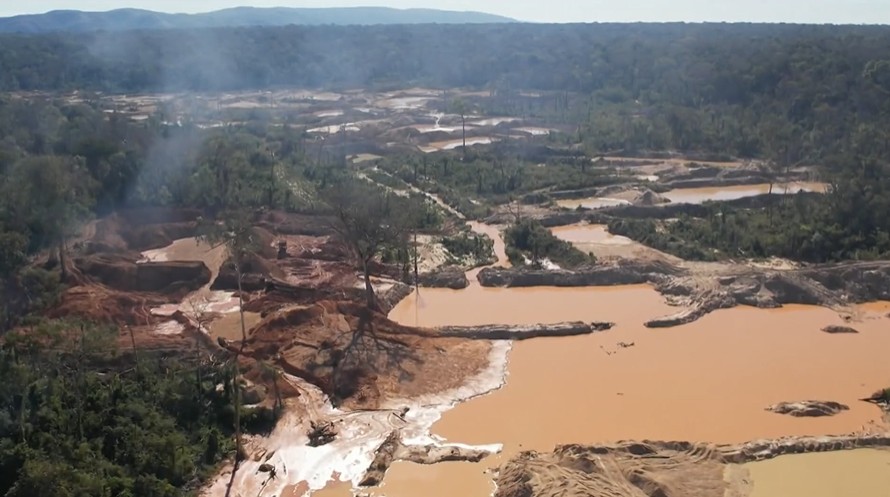
The Federal Public Ministry (MPF) has initiated an administrative procedure to monitor compliance with a court order mandating measures against illegal gold mining in the Sararé Indigenous Land, located in Mato Grosso, Brazil. The MPF is demanding explanations from the federal government regarding its actions in the region, which has become one of the most devastated indigenous territories in the country due to illegal gold extraction. This exploitation has intensified over the past two years, exacerbated by the presence of members of the criminal faction Comando Vermelho. The MPF has requested that the Union, the National Indian Foundation (Funai), the National Mining Agency (ANM), the Brazilian Institute of Environment and Renewable Natural Resources (Ibama), and the National Institute of Colonization and Agrarian Reform (Incra) provide information within 15 days. This information should detail the steps taken to comply with a 2022 court decision that ordered the creation and execution of an action plan to combat illegal mining in Sararé. The MPF opened this new procedure after observing that the court's sentence has not been effectively implemented and that there appears to be a lack of coordination in protecting the indigenous land. The initiative also addresses a request from the Public Prosecutor's Office in Cáceres, which seeks support in defining strategies and overseeing the implementation of the action plan. Investigations indicate that the Cururu mine, a major illegal gold extraction site within the indigenous territory, is now controlled by the Comando Vermelho faction. Despite several operations in 2025 that destroyed mining equipment and camps, monitoring data reveals 1,814 alerts of mining activity in Sararé, the highest number among Brazilian indigenous lands. Security forces note that the area's proximity to the Bolivian border makes it a strategic route for drug trafficking. Since 2022, criminal groups have expanded their activities in the territory, and in 2024, they began financing their operations through illegal gold mining.
The Federal Public Ministry's action highlights a critical governance failure in protecting indigenous lands from illegal resource extraction and organized crime. The prolonged non-compliance with judicial orders, despite repeated interventions and monitoring, suggests systemic issues in inter-agency coordination and enforcement capacity. The involvement of a powerful criminal faction like Comando Vermelho in financing its operations through illegal mining points to a dangerous nexus between environmental crime and broader illicit economies. This situation raises questions about the effectiveness of current regulatory frameworks and enforcement mechanisms in remote and ecologically sensitive areas. Future strategies will need to address not only the immediate environmental and security threats but also the underlying economic incentives that drive both illegal mining and organized crime, potentially requiring enhanced technological surveillance, community-based resource management, and more robust cross-border cooperation to disrupt these illicit financial flows and protect vulnerable territories.
AI-generated to prompt reflection — not editorial opinion, not advice, not a statement of fact. How this works.