Brazilian Federal Public Prosecutor's Office Investigates Pesticide Contamination in Indigenous Land
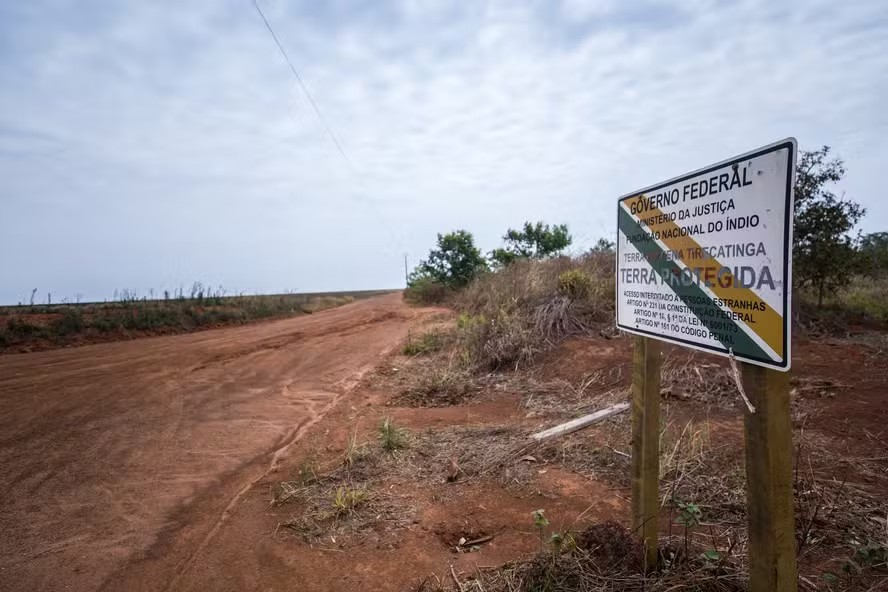
The Federal Public Prosecutor's Office (MPF) has launched an inquiry into suspected agricultural pesticide contamination within the Tirecatinga Indigenous Land in Sapezal, Mato Grosso. This investigation stems from a study conducted by the Federal University of Mato Grosso (UFMT), which found pesticide residues in 88% of medicinal plant samples cultivated by the Nambiquara people. The UFMT study identified substances such as carbofuran, which is banned in Brazil and the European Union, alongside atrazine, chlorpyrifos, thiamethoxam, and acetamiprid. Indigenous leaders have reported health issues within the community, including respiratory illnesses, severe headaches, and spontaneous abortions, although a direct link to the pesticides has not yet been confirmed. The Tirecatinga Indigenous Land, demarcated in 1983, is home to 244 residents according to the 2022 IBGE Census. Sapezal is noted as the second-largest user of agricultural pesticides in Mato Grosso. The MPF's inquiry aims to assess potential contamination, monitor plant-based food consumption, investigate irregular aerial spraying near the indigenous area, and identify measures to mitigate health and environmental impacts.
This investigation highlights the critical intersection of agricultural practices, environmental health, and indigenous rights in Brazil. The MPF's inquiry into pesticide contamination in the Tirecatinga Indigenous Land, supported by UFMT research, raises systemic questions about regulatory oversight and enforcement concerning agricultural inputs, particularly in ecologically sensitive areas. The presence of banned substances and reported health issues among the Nambiquara community underscore the potential for externalities from intensive agriculture to disproportionately affect vulnerable populations. Moving forward, a key challenge will be to balance agricultural productivity, which is vital for regional economies, with the imperative to protect indigenous territories and public health, necessitating robust monitoring, transparent data sharing, and potentially revised land-use policies to prevent future environmental and health crises.
AI-generated to prompt reflection — not editorial opinion, not advice, not a statement of fact. How this works.