Brazilian investigation points to ice and spatial disorientation in 2018 helicopter crash
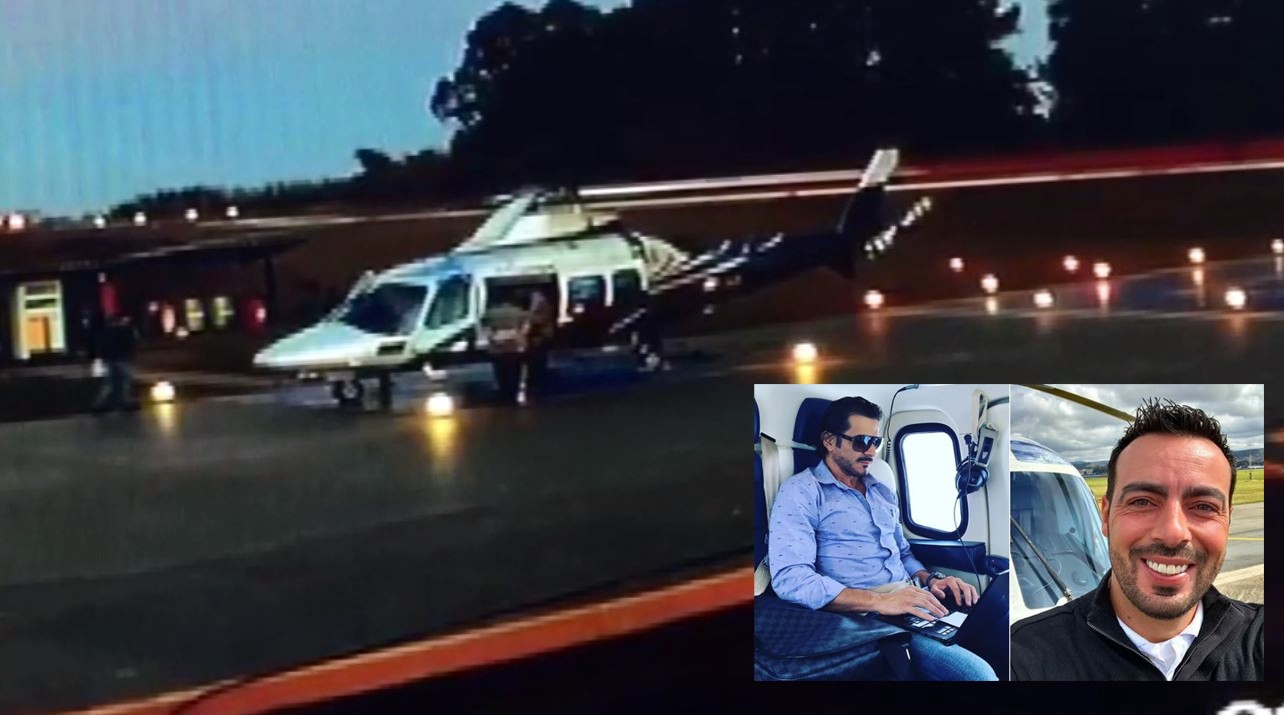
A final report by Brazil's Center for Investigation and Prevention of Aeronautical Accidents (Cenipa) has concluded that mechanical failure was not a cause of the PR-JMB helicopter crash on June 16, 2018, in Espírito Santo do Dourado, Minas Gerais. The crash tragically killed businessman Márcio Bissoli, 50, and pilot Luiz Gustavo Araújo Soares, 39. The investigation's primary hypotheses for the loss of control are the formation of ice during flight and pilot spatial disorientation, potentially acting alone or in combination. These conditions were deemed capable of causing a loss of control in flight. The helicopter had departed from Nova Lima, Minas Gerais, en route to Congonhas Airport in São Paulo. Approximately 52 minutes after takeoff, the pilot requested a transition from visual flight rules (VFR) to instrument flight rules (IFR) and ascended to FL100 (around 10,000 feet). A significant meteorological warning (SIGMET) for severe icing conditions was active along the flight path at the altitude the aircraft was flying. Crucially, the helicopter was not certified for operation in known icing conditions. Weather analysis indicated high humidity and temperatures near 0°C at that altitude, which could lead to performance degradation, increased vibrations, and erroneous instrument readings. Radar data in the final minutes showed erratic directional changes and a rapid descent, consistent with spatial disorientation, especially during night flight with limited visual references. The pilot declared an emergency about 17 seconds before losing radar contact. Engines were found to be functioning and producing power at impact, with no abnormalities detected in hydraulic systems, rotors, engines, or fuel. The report identified flight planning as a contributing factor, as it exposed the aircraft to a route with predicted icing despite its operational limitations. A lack of recent simulator training for the pilot on that specific helicopter model was also noted as an undetermined contributing factor, alongside adverse weather, spatial disorientation, and pilot decision-making. Cenipa classified the incident as a "loss of control in flight" following a rapid operational deterioration.
This investigation highlights the critical interplay between operational planning, aircraft limitations, and environmental conditions in aviation safety. The decision to fly a non-certified aircraft through a known severe icing corridor, even with a pilot declaring IFR, suggests a potential miscalculation of risk or overestimation of the aircraft's capabilities. The report's emphasis on spatial disorientation, particularly in conjunction with instrument flight and potential icing effects, underscores the persistent challenge of maintaining pilot situational awareness in complex environments. Future aviation systems may need enhanced automated systems to detect and alert pilots to icing conditions or even to take partial control in critical disorientation events, especially as flight operations increasingly occur in challenging weather and at higher altitudes. The finding regarding pilot training also points to the ongoing need for robust recurrent training protocols, particularly for advanced aircraft operating in demanding conditions.
AI-generated to prompt reflection — not editorial opinion, not advice, not a statement of fact. How this works.