Brazilian Justices Demand Stronger TSE Response to Election System Attacks
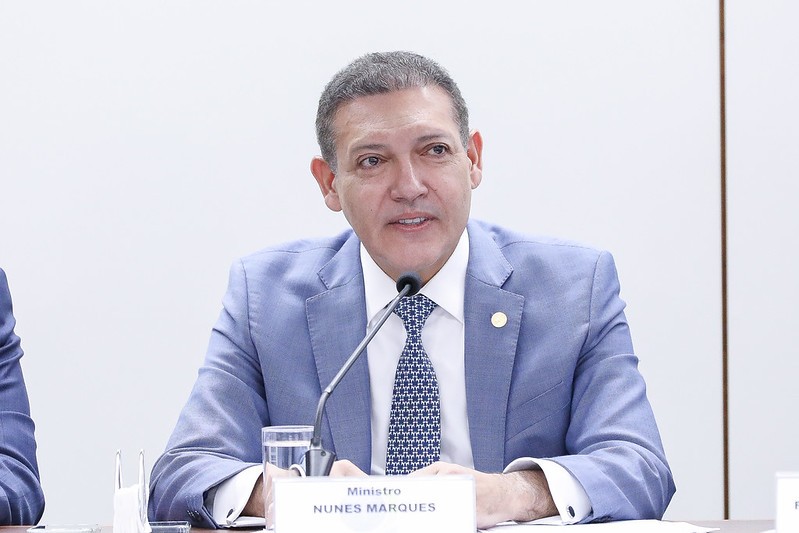
Ministers from Brazil's Supreme Federal Court (STF) and Superior Electoral Court (TSE) have strongly criticized recent statements made by Flávio Bolsonaro regarding electronic voting machines, deeming them "grave" and "absurd." The controversy escalated following the denial of visas by the Itamaraty (Ministry of Foreign Affairs) to two advisors of U.S. Secretary of State Marco Rubio. These ministers believe that TSE President Nunes Marques should issue a more forceful condemnation of the attacks on Brazil's electronic voting system and the alleged U.S. mission to undermine it. They found the TSE president's initial statement to be "timid and weak," failing to adequately reflect the seriousness of the situation. The expectation is that President Marques will convey this message more robustly during a meeting with ambassadors scheduled after the judicial recess. According to The Washington Post, the two U.S. State Department officials intended to visit Brazil to raise questions about the integrity of the Brazilian electoral system. They had requested a meeting with Nunes Marques, which was not scheduled due to the judicial recess, but proceeded with their trip to meet with political and religious leaders. Both U.S. officials are described as young, far-right individuals, with one having a history of being sent on missions to support right-wing candidacies and influence local electoral processes in other countries.
The Brazilian judiciary's strong reaction underscores concerns about foreign interference and the integrity of its electoral processes. The incident highlights the tension between national sovereignty in electoral matters and international engagement. The judiciary's demand for a firmer stance from the TSE president suggests a strategic imperative to bolster public confidence in the voting system amidst political challenges. Future electoral integrity frameworks may need to balance transparency with robust defenses against disinformation campaigns, particularly in an era where digital influence operations are increasingly sophisticated and potentially destabilizing to democratic institutions globally.
AI-generated to prompt reflection — not editorial opinion, not advice, not a statement of fact. How this works.