Brazilian Meteorite Exploded Mid-Air, Forging Massive Serra da Cangalha Crater
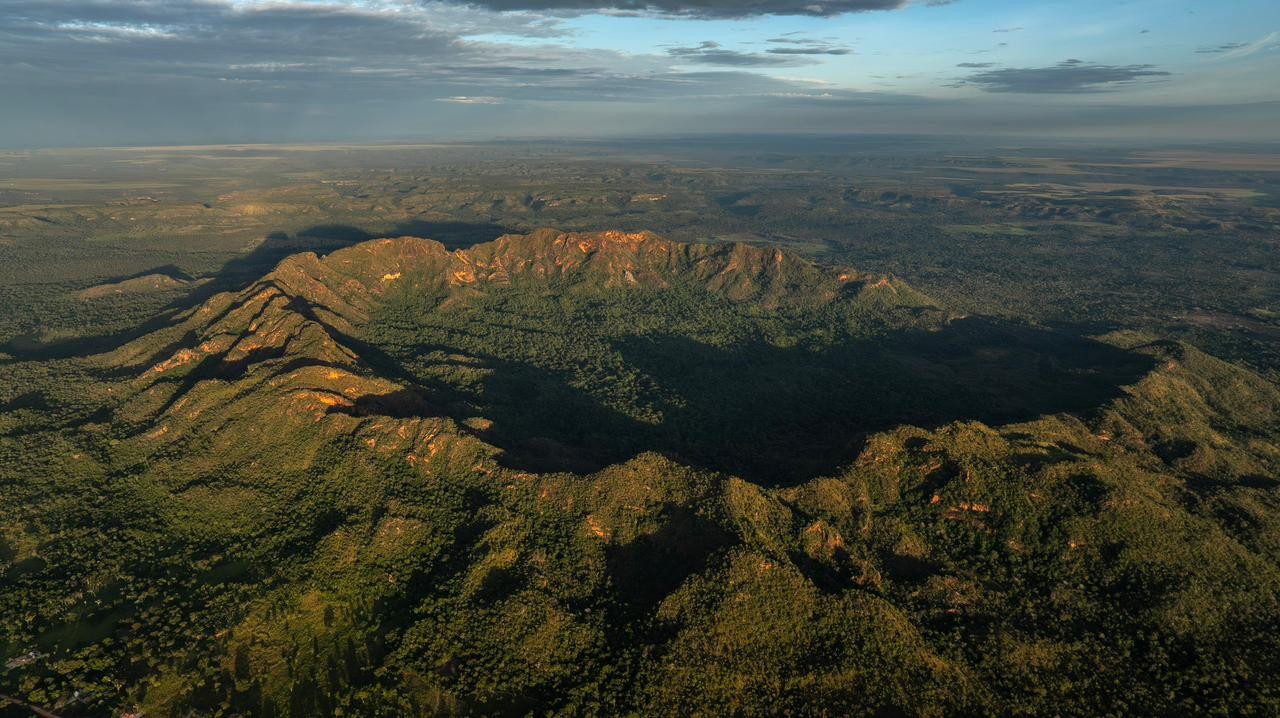
Approximately 300 million years ago, a meteorite weighing around 20,000 tons disintegrated before reaching the ground in what is now Campos Lindos, Tocantins, Brazil. The immense energy released by this aerial explosion deformed the rocks of the Parnaíba Sedimentary Basin, creating the Serra da Cangalha, one of Brazil's largest impact craters. This geological structure, measuring 13.7 kilometers in diameter and over 400 meters in height, exhibits concentric rings on its surface, visible in satellite imagery, analogous to ripples on water. Geologist Fernando de Morais of the Federal University of Tocantins (UFT) explained that the meteorite's energy release, despite not making ground contact, was sufficient to shape the landscape. Initially identified in the 1970s as a dome, further analysis of deformed rocks confirmed its origin as an impact crater. The Serra da Cangalha is now recognized as a geological monument with significant geotourism potential, featuring trails, waterfalls, caves, and paramotor flights. The local municipality is working with landowners to improve access and promote tourism, aiming to establish Campos Lindos as a destination for scientific and natural wonders. The crater's popular name, "cangalha," derives from its resemblance to a horse's saddle when viewed from the side, a local tradition that has become synonymous with the site.
The formation of the Serra da Cangalha crater, driven by an atmospheric meteorite explosion, highlights the profound geological impact of celestial events. While the event itself occurred millions of years ago, its preservation and potential for geotourism underscore the value of natural scientific heritage. The municipality's efforts to promote the site reflect a growing global trend of leveraging unique geological formations for economic development and public education. Future management will need to balance increased visitor access with the imperative of preserving this rare, intact impact structure, ensuring its scientific integrity and aesthetic appeal for generations to come. This case also serves as a reminder of the dynamic processes that have shaped Earth's surface, often through forces originating beyond our planet.
AI-generated to prompt reflection — not editorial opinion, not advice, not a statement of fact. How this works.