Brazilian Military Police Officer Arrested After Brutally Assaulting and Threatening Teenager
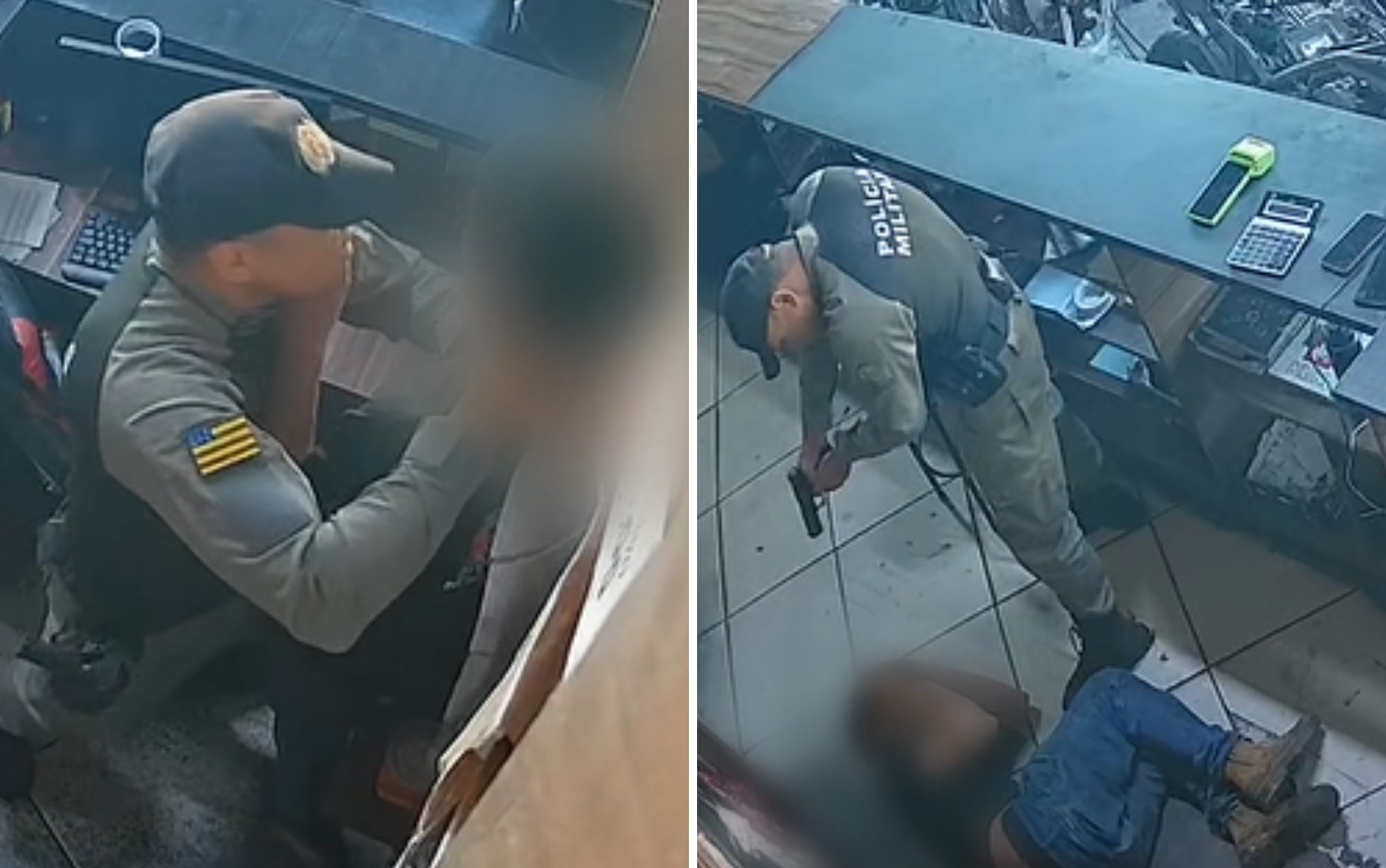
A Military Police officer in Catalão, Goiás, Brazil, has been arrested after security footage captured him violently assaulting and threatening a 16-year-old employee at an auto parts store. The incident occurred on Thursday, November 16th, around 7:30 AM, as the teenager was arriving to open the store. The officer entered the premises, confronted the boy, pushed him against a wall, and proceeded to slap him repeatedly while shouting death threats. The officer repeatedly asked why the teenager was "staring at the police," to which the boy responded that he was only there to work and had not been staring. The officer's threats included phrases like "You have to die!" and "If you look at me again in your life, I will kill you." He also threatened to shoot the teenager and demanded he leave the city. The victim's mother stated that her son, who has worked since age 11, suffered rib injuries and a bleeding face, expressing her distress at witnessing the unprovoked assault. The Military Police issued a statement confirming they were aware of the videos and had initiated legal, administrative, and disciplinary proceedings to investigate the facts. They emphasized that they do not condone misconduct by their officers and are committed to accountability and transparency.
The incident highlights a critical breakdown in police conduct and accountability, raising questions about the training and oversight mechanisms within the Military Police. The officer's alleged actions, captured on video, suggest a potential abuse of power stemming from an unjustified perceived slight, escalating into severe physical assault and death threats. This behavior starkly contrasts with the public's expectation of protection and adherence to due process. The swift arrest and initiation of disciplinary proceedings by the Military Police are positive steps, demonstrating a commitment to addressing such egregious misconduct. However, the long-term implications involve rebuilding public trust and ensuring that such incidents are not indicative of systemic issues. Future considerations should focus on de-escalation training, psychological evaluations for officers, and robust independent oversight to prevent recurrence and uphold the integrity of law enforcement.
AI-generated to prompt reflection — not editorial opinion, not advice, not a statement of fact. How this works.