Brazilian 'Mini Haaland' Switches Allegiance to Norway After Brazil's World Cup Exit
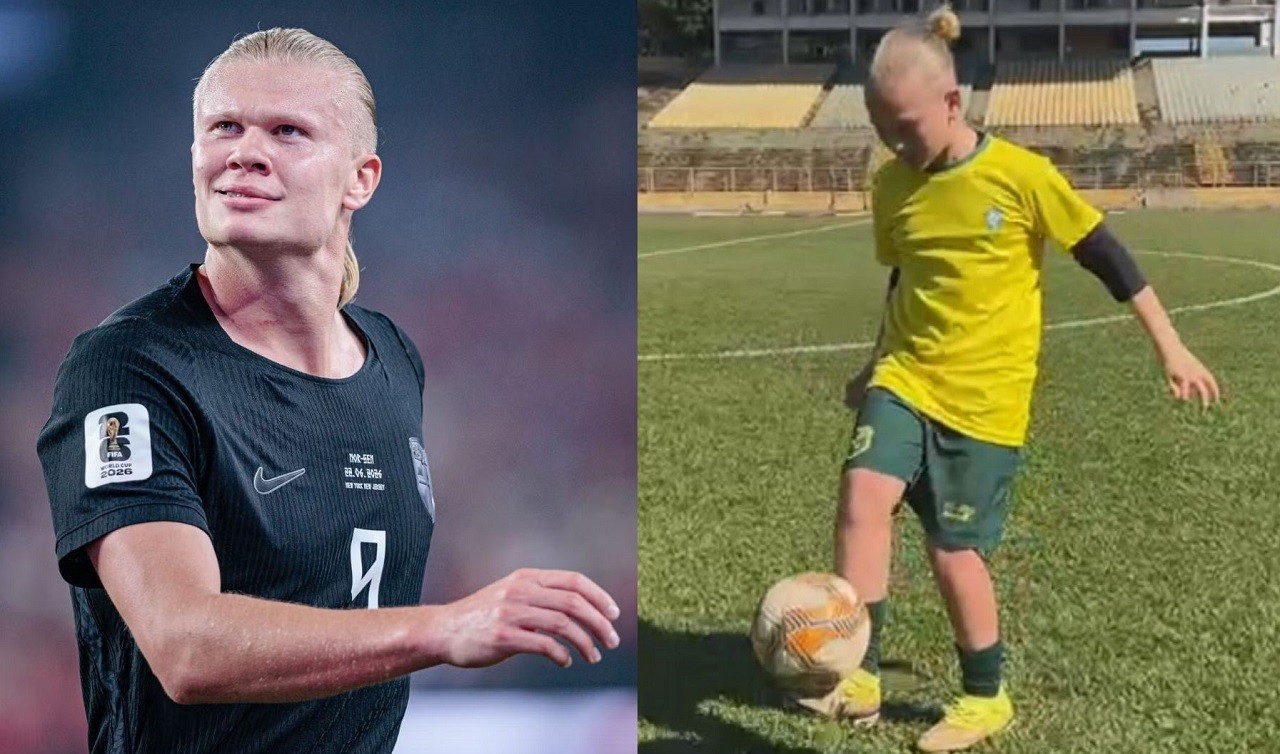
An 11-year-old boy from Jaú, São Paulo, Brazil, known as 'Mini Haaland' for his striking resemblance to Norwegian footballer Erling Haaland, has declared his support for the Norwegian national team in the ongoing World Cup. Heitor Geraldo, who previously cheered for Brazil, announced his new allegiance after his home country was eliminated from the tournament. He expressed his admiration for his idol, Haaland, and stated his hope for Norway to win the upcoming match. The Norwegian team is set to face England in the quarterfinals on Saturday, December 11th, at 6 PM Brasília time, at Miami Stadium. 'Mini Haaland' plays as a forward in the youth academy of XV de Jaú, mirroring his idol's position and jersey number. His online fame grew after a video imitating Erling Haaland's distinctive gait went viral, garnering over 5 million views. The nickname 'Mini Haaland' was already in use by his friends and family for years, stemming from his decision at age 7 to grow his hair out to enhance the resemblance. The viral video idea originated from his father, Carlos Eduardo de Oliveira, who saw a trend and proposed it to Heitor and his sister. Heitor's football journey includes stints in the youth academies of Ferroviária and a trial with Flamengo, though his family chose to remain in Jaú due to a lack of cost-of-living support for relocation. The Norwegian team, featuring stars like Martin Ødegaard, is preparing for their crucial quarterfinal clash against England, led by Harry Kane and Jude Bellingham.
This narrative highlights the passionate, yet fluid, nature of sports fandom, particularly among young enthusiasts. The boy's shift in allegiance from Brazil to Norway, driven by admiration for a star player, illustrates how individual idolization can transcend national identity in the context of global sporting events. It also underscores the powerful influence of social media in creating and amplifying niche personalities, turning a local resemblance into a viral phenomenon. From a broader perspective, this event touches upon the globalization of sports culture, where player recognition and online trends can foster international allegiances, potentially shaping future fan bases and the commercial landscape of football.
AI-generated to prompt reflection — not editorial opinion, not advice, not a statement of fact. How this works.