Brazilian parents name baby 'Haaland' on day of Norway's World Cup elimination
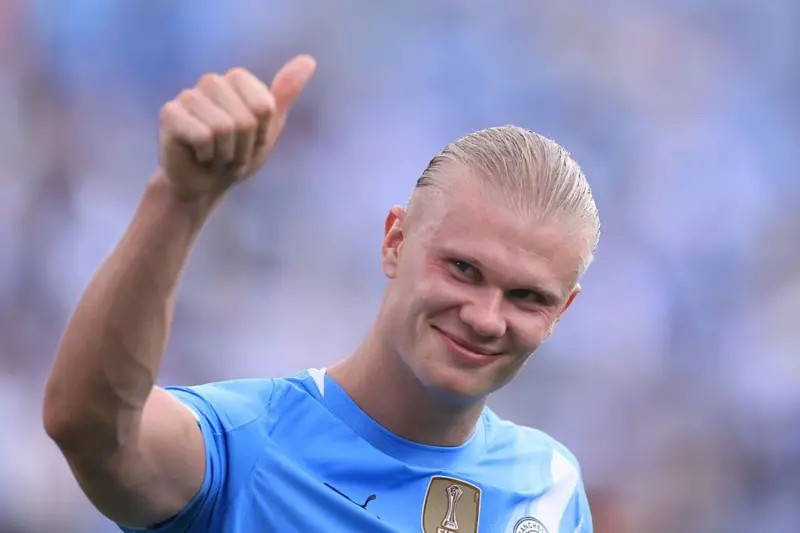
In Timbó, Santa Catarina, Brazil, a baby boy was born and registered under the name 'Haaland' on the same day Norway, the home country of football star Erling Haaland, was eliminated from the 2026 World Cup. The Norwegian team lost 2-1 to England in the quarterfinals on Saturday, November 11th. The Brazilian 'Haaland' was officially registered on Tuesday, November 14th, marking the third child with this name in the current year, according to Arpen Brasil, the National Association of Notaries and Civil Registrars. The other two 'Haalands' were born on May 28th in Mossoró, Rio Grande do Norte, and São Paulo de Olivença, Amazonas. Civil registry data indicates that the name 'Haaland' began appearing in 2020, with a total of 89 children registered with the name since then. Erling Haaland was a standout player for Norway, scoring seven goals in the tournament, including two against Brazil in the round of 16. Devanir Garcia, president of Arpen-Brasil, noted that names of football players often surge in popularity during periods of significant sporting achievement. He explained that football, like soap operas and music, is a major influence on Brazilian daily life and can impact significant family decisions, such as naming children. The year 2024 saw a notable increase in registrations, coinciding with Haaland breaking Norway's all-time goal-scoring record, previously held since 1937. The trend mirrors the phenomenon observed with the name 'Neymar', which gained widespread popularity, particularly from the 2010s onwards, following the global ascent of Brazilian footballer Neymar Jr. A study in São Paulo revealed a concentration of 'Neymar' registrations in 2011, correlating with his peak performance for Santos and the Brazilian national team.
The registration of a child named 'Haaland' in Brazil, coinciding with the Norwegian player's World Cup exit, highlights the powerful cultural influence of global sports figures on personal identity choices within Brazil. This phenomenon, also observed with 'Neymar', demonstrates how athletic success can transcend sports, embedding itself into the cultural fabric and influencing familial decisions. From a systems perspective, this trend illustrates the intersection of media, popular culture, and demographic patterns, where international sporting narratives are rapidly adopted and localized. The increasing number of 'Haaland' registrations suggests a growing global recognition of the player and a potential long-term impact on naming conventions, reflecting how contemporary figures can shape generational identities in the digital age. This phenomenon also underscores the interconnectedness of global events and local customs, where international sporting outcomes can have tangible, albeit symbolic, repercussions on the ground.
AI-generated to prompt reflection — not editorial opinion, not advice, not a statement of fact. How this works.