Brazilian Presidential Candidates Rush to Finalize Vice-Presidential Picks Before Deadline
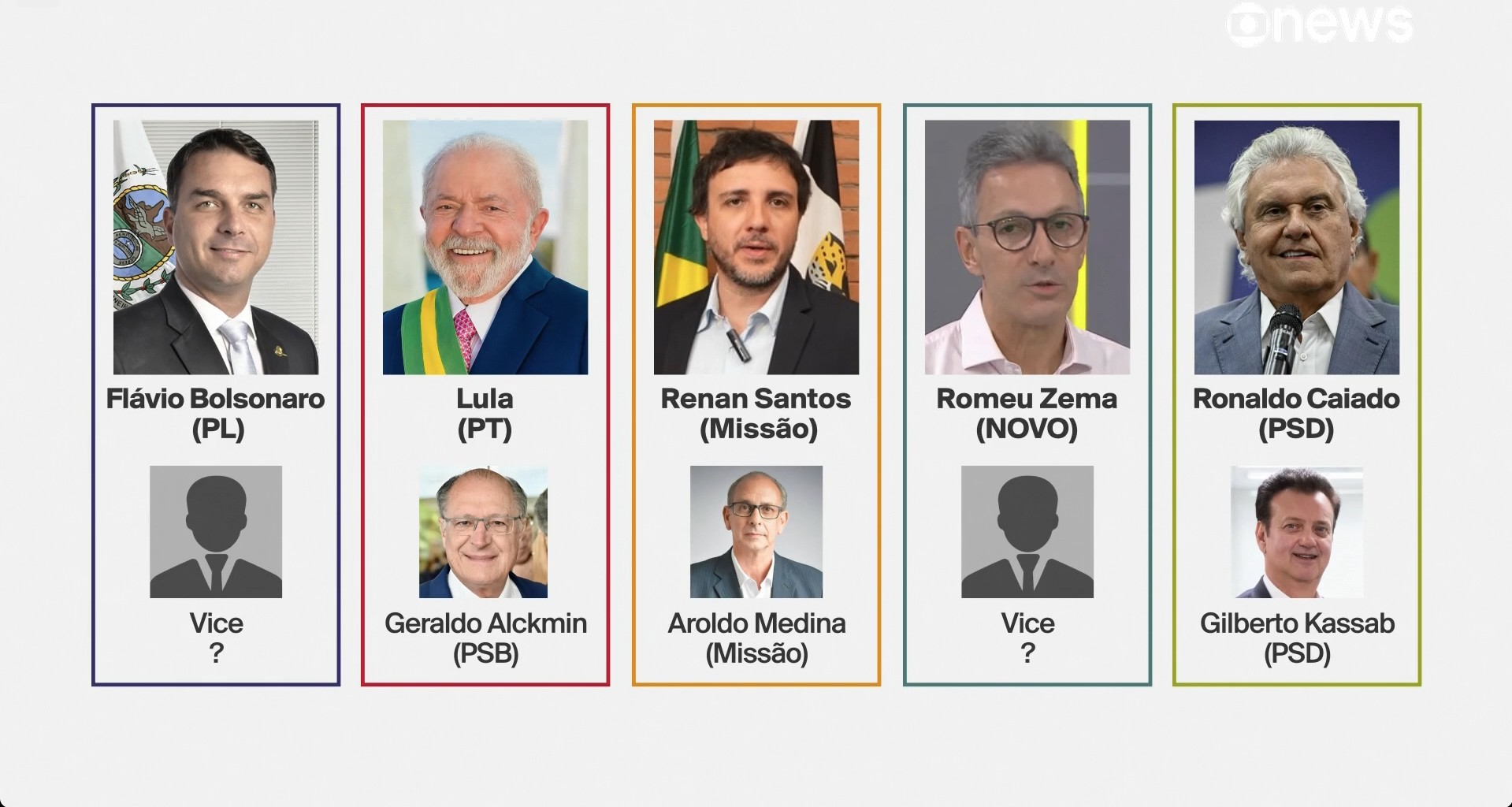
With only three days remaining until the August 5 deadline for party conventions, two prominent presidential candidates in Brazil, Flávio Bolsonaro (PL) and Romeu Zema (Novo), have yet to announce their vice-presidential running mates. Both are engaged in negotiations with other parties to finalize their ticket compositions. Meanwhile, incumbent President Luiz Inácio Lula da Silva (PT) will seek re-election with Geraldo Alckmin (PSB) as his vice, reprising their 2022 partnership. Ronaldo Caiado (PSD) and Renan Santos (Missão) have opted for 'pure-blood' tickets, meaning their vice-presidential candidates are from their own parties. Caiado will run with Gilberto Kassab, the current PSD chairman, while Santos will be paired with Aroldo Medina. The selection of a vice-presidential candidate is a strategic move aimed at attracting voters who might not initially support the presidential nominee and securing additional campaign airtime on radio and television. Lula's alliance with Alckmin in 2022 was seen as broadening his campaign's appeal to a 'broad front,' including business leaders who might have otherwise supported other candidates. Flávio Bolsonaro's campaign is reportedly seeking a female vice-presidential candidate to appeal to women, who constitute 52.8% of the electorate. A meeting with Senator Tereza Cristina (PP-MS) showed promise, but her party ultimately decided to remain neutral in the national election. Potential candidates like Daniela Marques and Renata Abreu are also being considered, but their parties, Republicanos and Podemos respectively, may also opt for neutrality to protect state-level alliances. Romeu Zema's party, Novo, confirmed his candidacy but is still undecided on a vice. Previous overtures to former Supreme Court Justice Joaquim Barbosa and businessman Geraldo Rufino did not materialize. The prevailing expectation is that Zema will select a vice from within the Novo party, forming a 'pure-blood' ticket. Caiado's choice of Kassab is intended to solidify the PSD's commitment to his campaign and present a neutral platform for voters disillusioned with national polarization. The Missão party is running Renan Santos with Aroldo Medina, emphasizing an anti-establishment message.
The intense final days before Brazil's convention deadline highlight the critical role of vice-presidential selections in shaping electoral strategies. Candidates are balancing the need to broaden appeal, attract specific voter demographics, and secure campaign resources against the complexities of inter-party alliances and the desire for party autonomy. The pursuit of 'broad front' tickets, as seen with Lula and Alckmin, versus 'pure-blood' tickets, as explored by Caiado and potentially Zema, reflects differing approaches to coalition-building and ideological purity. As the election unfolds, the effectiveness of these vice-presidential choices in consolidating support and navigating Brazil's polarized political landscape will be a key factor in determining electoral outcomes over the next decade, particularly in how they influence perceptions of stability and governance.
AI-generated to prompt reflection — not editorial opinion, not advice, not a statement of fact. How this works.