Brazilian Prosecutors Investigate Suspected Nazi Symbology at Juiz de Fora School
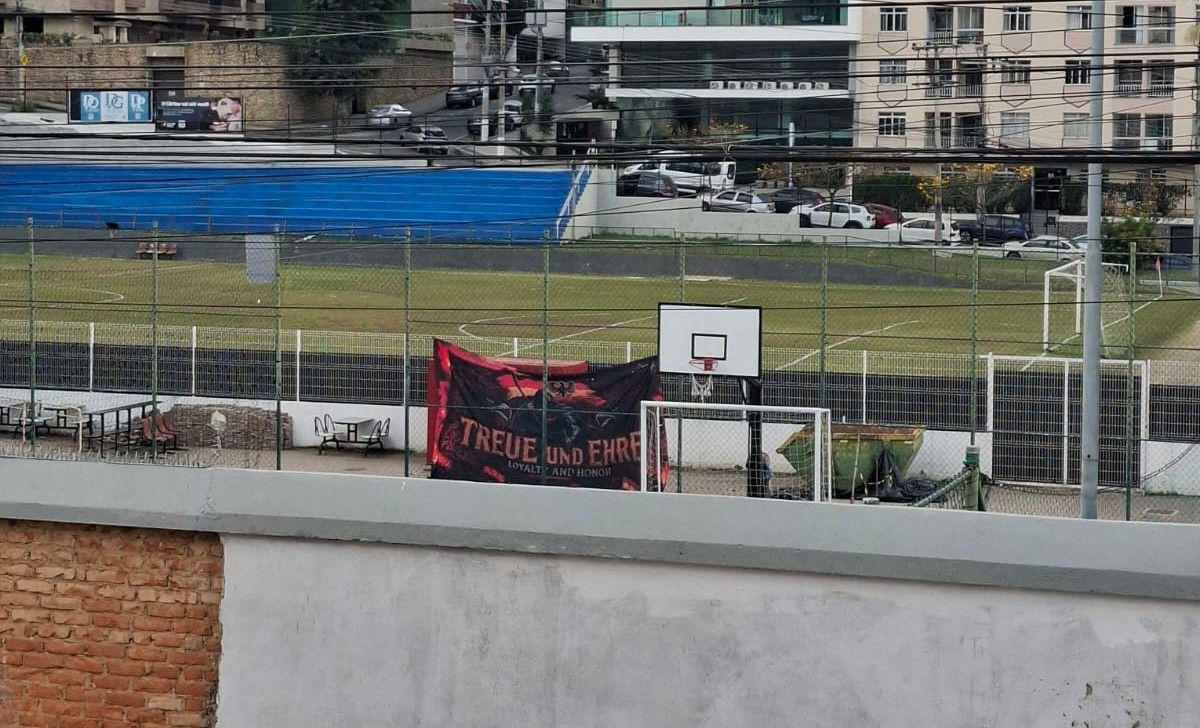
The Public Prosecutor's Office of Minas Gerais (MPMG) has requested the Civil Police to open an inquiry into suspected Nazi glorification at the Colégio Sesi/Granbery in Juiz de Fora. The investigation was prompted by the display of a flag with the German inscription "Lealdade e Honra" (Loyalty and Honor) and graphic elements perceived as references to Nazism. This occurred last week during an inter-school sports championship at the private institution.
Prosecutor Hélvio Simões Vidal signed the order on Wednesday, May 22nd, directing the Human Rights Defense Prosecutor's Office to initiate proceedings and the Civil Police to open a formal investigation. The Civil Police confirmed receipt of the procedure and assigned the case to the 7th Precinct for investigation, stating that preliminary analysis is underway. SESI Granbery issued a statement repudiating any form of apology for authoritarian or discriminatory ideologies. The school asserted that the flag was created by students without their knowledge or approval and that they are cooperating with authorities. The MPMG also requested the flag be seized for forensic examination, or an indirect examination based on available photographs if the item is not found. The investigation aims to determine if the act violates Brazil's Racial Crime Law (Law No. 7.716/1989), specifically Article 20, § 1º, which defines the glorification of Nazism as a crime of racism, considered unbailable and imprescriptible by the Supreme Federal Court.
The incident at Colégio Sesi/Granbery highlights the persistent challenge of addressing extremist ideologies, even within educational settings. Brazilian law, specifically Law No. 7.716/1989, criminalizes the glorification of Nazism as a form of racism, reflecting a societal commitment to preventing the resurgence of hate-based movements. The school's response, emphasizing its repudiation of such ideologies and commitment to educational initiatives, suggests a systemic approach to mitigate future occurrences. However, the incident also raises questions about the effectiveness of educational safeguards and student awareness regarding historical context and the impact of symbols. Moving forward, a critical examination of curriculum design and student engagement strategies will be crucial to foster a more robust understanding of democratic values and human rights, thereby inoculating against the appeal of extremist narratives in the digital age.
AI-generated to prompt reflection — not editorial opinion, not advice, not a statement of fact. How this works.