Brazilian Resident Films International Space Station Passing Over São Paulo
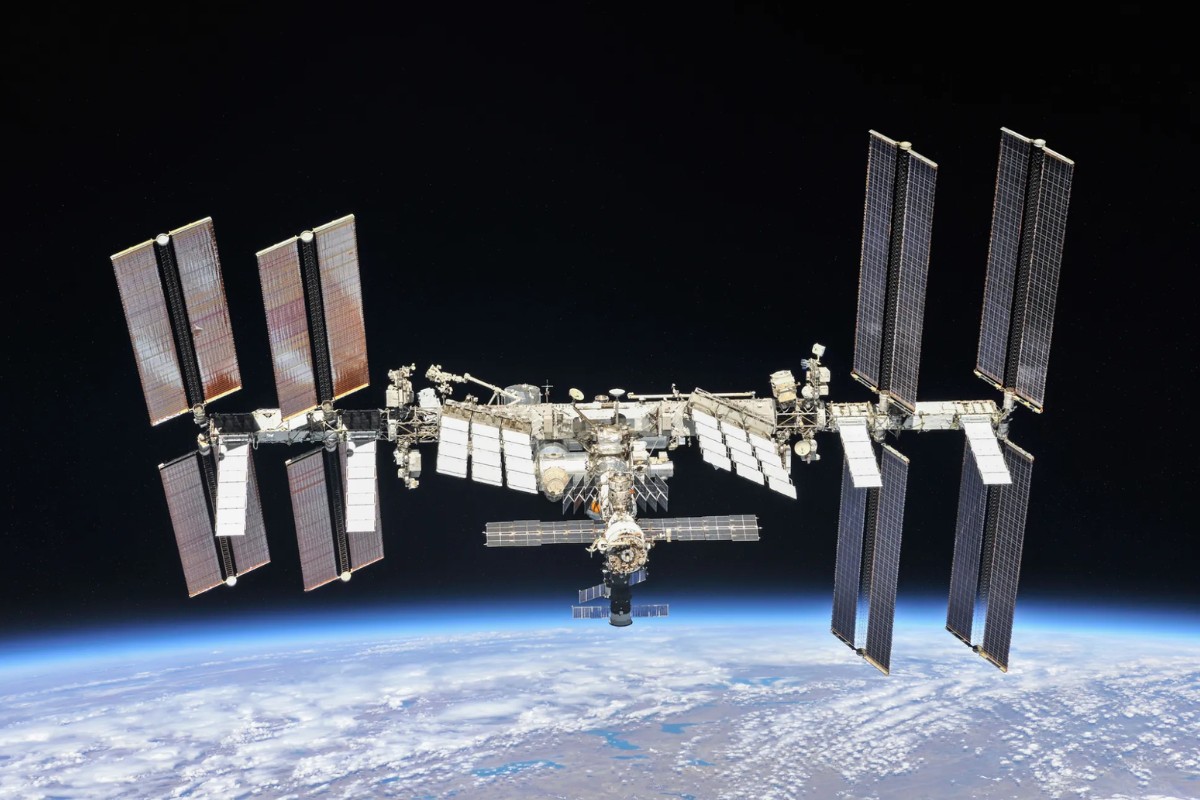
A resident of Caiuá, São Paulo, captured footage of a bright light in the night sky, which was identified as the International Space Station (ISS). Walter Bispo de Souza, who lives in a rural area, expressed his enthusiasm for observing such celestial events, noting this was his first time recording the ISS. The ISS orbits Earth at an altitude of approximately 400 km and was visible in the sky on Thursday, February 2, and was expected to be visible again on Friday, February 3, potentially between 6:16 PM and 6:22 PM. Astronomer Rodrigo Raffa of Clube Centauri explained that the ISS reflects sunlight during twilight, making it appear as an intensely bright object for a few minutes. Its speed is around 28,000 km/h, allowing it to circle the globe every 90 minutes. The ISS, a microgravity laboratory, has been continuously inhabited for over 25 years by astronauts from Russia, the United States, and France, representing five space agencies: NASA, Roscosmos, ESA, JAXA, and CSA. The station, measuring about 110 meters wide, is considered a stepping stone for future human presence in space, with data collected potentially aiding plans for a lunar station. The ISS and China's Tiangong Space Station are currently the only crewed satellites orbiting Earth. Crew access to the ISS is facilitated by SpaceX's Crew Dragon and Russia's Soyuz spacecraft.
The sighting of the International Space Station by a civilian highlights the increasing accessibility of space observation and the public's engagement with scientific phenomena. While such events can inspire awe, it is important to frame them within the context of ongoing international cooperation in space exploration. The ISS serves as a unique platform for scientific research, demonstrating the potential for collaborative endeavors between nations, even amidst geopolitical complexities. Its continuous operation for over 25 years underscores the long-term commitment required for sustained human presence in orbit, a critical factor for future deep-space missions. The technological advancements enabling such missions also raise questions about resource allocation and the ethical considerations of expanding humanity's footprint beyond Earth.
AI-generated to prompt reflection — not editorial opinion, not advice, not a statement of fact. How this works.