Brazilian schools explore AI's impact on students and teachers amid regulatory gaps
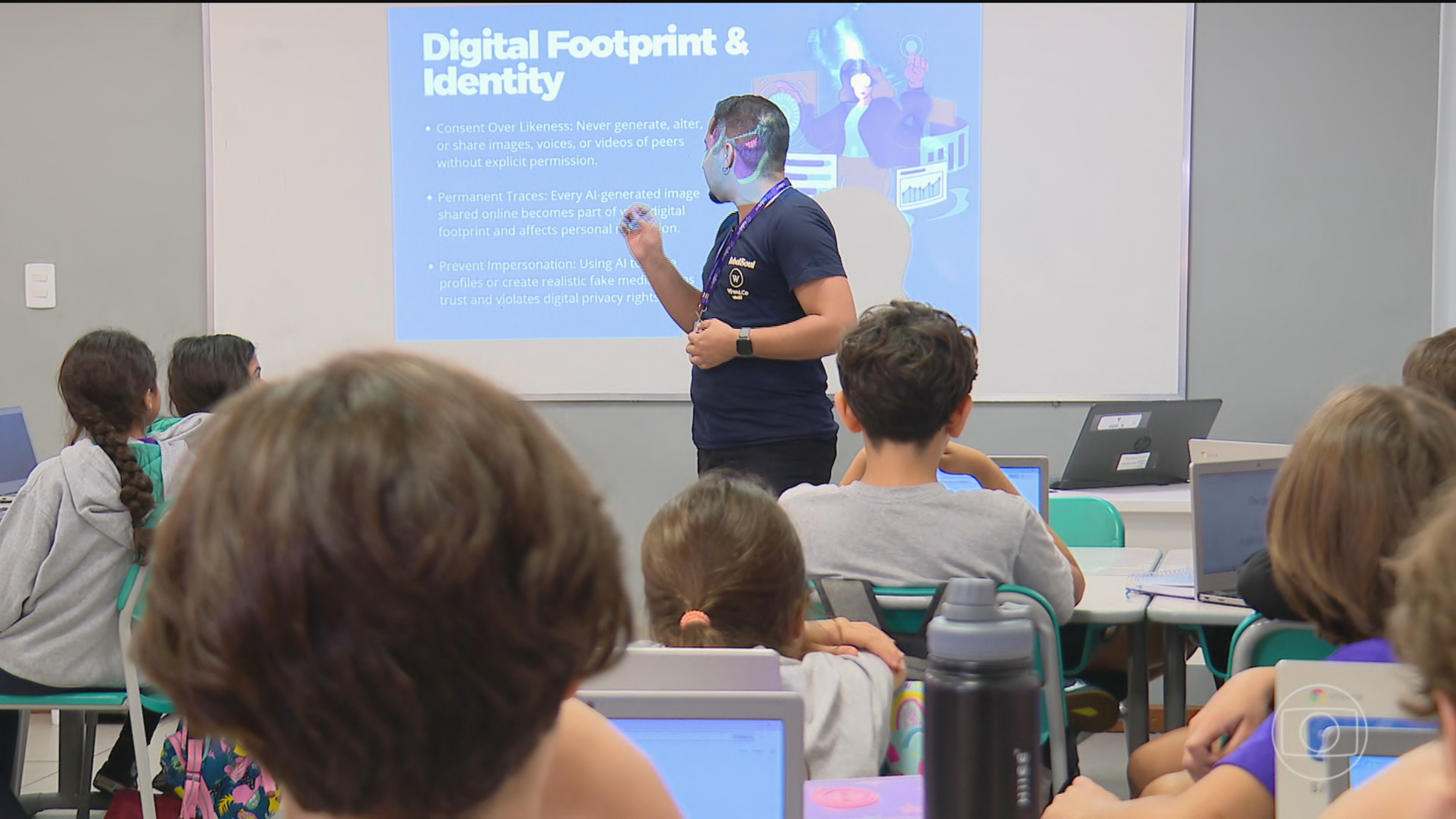
Researchers are actively measuring the influence of artificial intelligence on students and teachers within Brazilian educational institutions. Currently, there is a lack of specific regulations to guide the implementation of AI in teaching. To address this, teachers are undergoing training to navigate the challenges presented by new technologies, with 60 schools in one network already having completed this program. The goal is to provide teachers with digital literacy, helping them understand AI's capabilities and limitations. A study by cetic.br, recognized by UNESCO, reveals widespread concern about technology's impact, with eight out of ten Brazilian schools discussing the effects of screens on student mental health, a notable increase from previous years. For the first time, the research mapped the use of generative AI, finding that 53% of school administrators have utilized it for content creation, translation, and summarization, while nearly 40% of schools permit AI for academic tasks. Despite parental interest in children's development, a significant challenge is low family participation, cited by 75% of administrators. Furthermore, 64% of administrators point to a lack of essential resources like quality computers and reliable internet access. Experts emphasize that technological advancements outpace schools' and families' ability to adapt, highlighting the urgent need for policies that assess risks before AI is introduced to students. In one public school in Rio, a lab equipped with computers and a 3D printer teaches 400 students about responsible AI use, digital rights, and mental health. Students are learning to identify sensitive data and understand the importance of critical thinking over excessive AI reliance.
AI's integration into Brazilian education highlights a critical juncture where rapid technological advancement outpaces regulatory frameworks and institutional preparedness. While schools are experimenting with AI for content generation and task completion, a significant digital divide persists, exacerbated by insufficient resources and low parental engagement. The educational system faces the dual challenge of equipping educators and students with AI literacy while establishing robust policies to mitigate risks, particularly concerning data privacy and the potential impact on critical thinking skills. Future educational strategies must proactively address these systemic issues, fostering a balanced approach that leverages AI's potential without compromising pedagogical integrity or exacerbating existing inequalities. This necessitates a collaborative effort between policymakers, educators, parents, and technology developers to create an ethical and effective digital learning environment for the next decade.
AI-generated to prompt reflection — not editorial opinion, not advice, not a statement of fact. How this works.
