Brazilian Senate Committee Seeks Foreign Minister's Explanation on US Military Action Risk
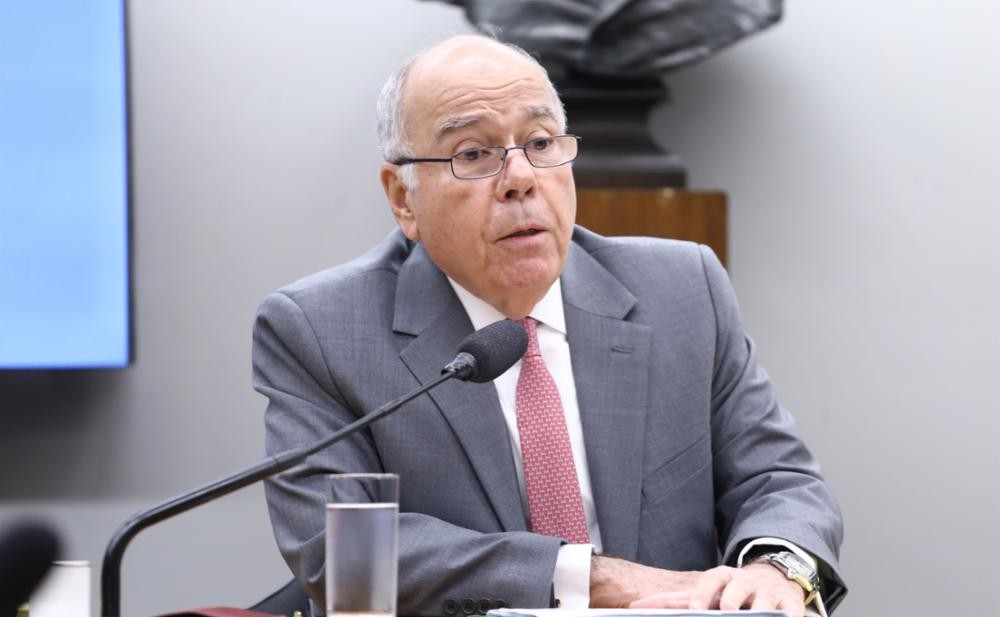
Brazil's Senate Foreign Relations Committee has approved a symbolic invitation for Foreign Minister Mauro Vieira to explain his recent statement regarding the potential for U.S. military action on Brazilian soil. The request stems from a document Vieira sent to the Chamber of Deputies, responding to a query from Congressman Evair Vieira de Melo. In this communication, Vieira warned of the risk of U.S. military intervention following Washington's designation of the criminal factions Primeiro Comando da Capital (PCC) and Comando Vermelho (CV) as terrorist organizations. Senator Hamilton Mourão proposed the invitation, emphasizing the need to understand the geopolitical and intelligence basis for the Foreign Ministry's (Itamaraty) alert, coordinated diplomatic measures, and strategies to safeguard Brazilian sovereignty against unilateral external actions. The committee's president, Nelsinho Trad, stated that any military operation in Brazil must respect the legal order and cooperation mechanisms, acknowledging the need for firmness against organized crime alongside state coordination. In his original statement to the Chamber, Minister Vieira detailed concerns about the broad discretion in U.S. counter-terrorism legislation, potential implications for Brazilian citizens in financial, migratory, and penal matters, and explicitly mentioned the possibility of U.S. military force being used on Brazilian territory. He also noted that the U.S. had not formally communicated its intention to designate these groups as foreign terrorist organizations, and that Brazil has expressed opposition to this unilateral measure, which Vieira believes poses concrete risks to national sovereignty.
The Brazilian Senate's inquiry into Minister Mauro Vieira's concerns highlights a critical geopolitical tension: the potential for unilateral U.S. counter-terrorism actions to impinge upon Brazilian sovereignty. The designation of domestic criminal factions as foreign terrorist organizations by the U.S. creates an ambiguous legal framework, potentially enabling extraterritorial actions that bypass established international legal norms and bilateral cooperation channels. This situation underscores the inherent challenge in balancing national security imperatives with the sovereign rights of other states, particularly when intelligence assessments and policy responses diverge. Future diplomatic frameworks may need to address such discrepancies proactively to prevent escalations and ensure mutual respect for jurisdictional autonomy in an increasingly interconnected global security landscape.
AI-generated to prompt reflection — not editorial opinion, not advice, not a statement of fact. How this works.