Brazilian Sign Language Interpreter Brings São João Music to Social Media
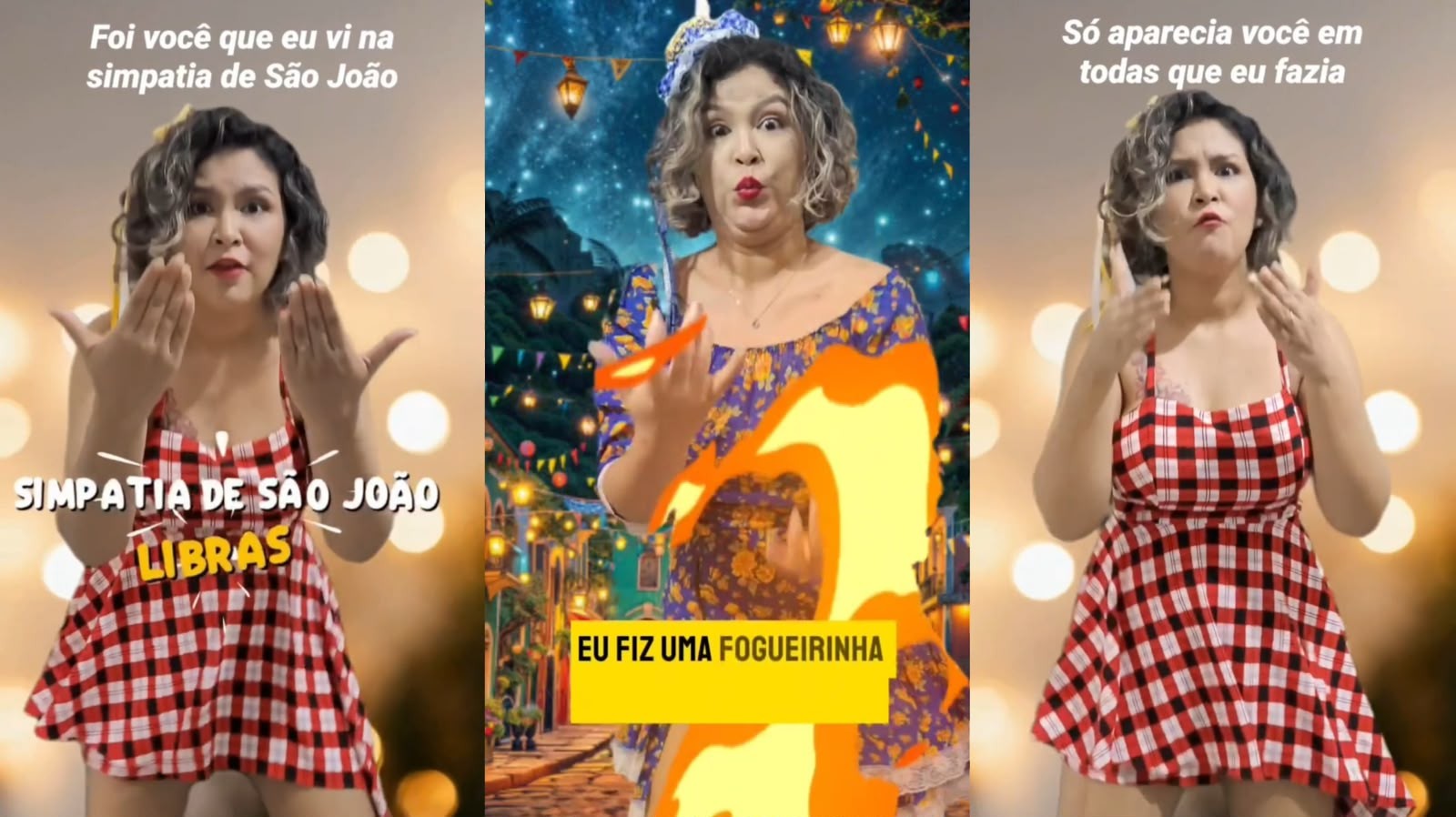
Ana Paula Martins, a 30-year-old Brazilian Sign Language (Libras) interpreter from Amapá, is gaining traction on social media by translating traditional São João and Marabaixo music into Libras. Her initiative aims to celebrate and reinforce cultural identity while fostering inclusion for the deaf community, emphasizing that enjoyment is for everyone. Martins performs popular São João songs like “Eu fiz uma fogueirinha” and “Simpatia de São João” in her videos, blending expressive gestures with cultural attire. She highlights social media's crucial role in disseminating Libras, promoting accessibility, and demystifying sign language for those unfamiliar with the deaf community. Martins believes these platforms raise awareness, strengthen her profession, and connect society with deaf individuals, also serving as a conduit for sharing Amapá's cultural heritage across Brazil. Inspired by her musician father, Martins initially interpreted songs she enjoyed but soon recognized a gap in Libras translations for music representing local cultural identity. This led her to focus on Amapá's popular music, Marabaixo, and regional artists, driven by the belief that deaf people are integral to the local culture and deserve access to its artistic expressions. She collaborates with educational pedagogue Kairon dos Santos, an expert in Special and Inclusive Education, Religious Education, and Libras Translation and Interpretation, to develop educational and communication accessibility initiatives. Beyond her online presence, Martins also interprets at private events and has participated in major cultural programs within Amapá.
This initiative by Ana Paula Martins highlights the critical intersection of cultural preservation, digital accessibility, and social inclusion. By translating traditional music into Libras, Martins is not merely providing entertainment but is actively dismantling communication barriers that exclude the deaf community from significant cultural events and expressions. The use of social media as a platform amplifies this effort, democratizing access to cultural heritage and fostering broader societal awareness of Libras and deaf culture. This approach demonstrates a powerful model for how digital technologies can be leveraged to enhance inclusivity and ensure that cultural traditions remain vibrant and accessible to all members of society, regardless of their hearing abilities. It also underscores the growing importance of specialized linguistic and cultural translation services in an increasingly interconnected world, particularly in bridging gaps in education and public life.
AI-generated to prompt reflection — not editorial opinion, not advice, not a statement of fact. How this works.