Brazilian Teen Wins International Economics Olympiad in China
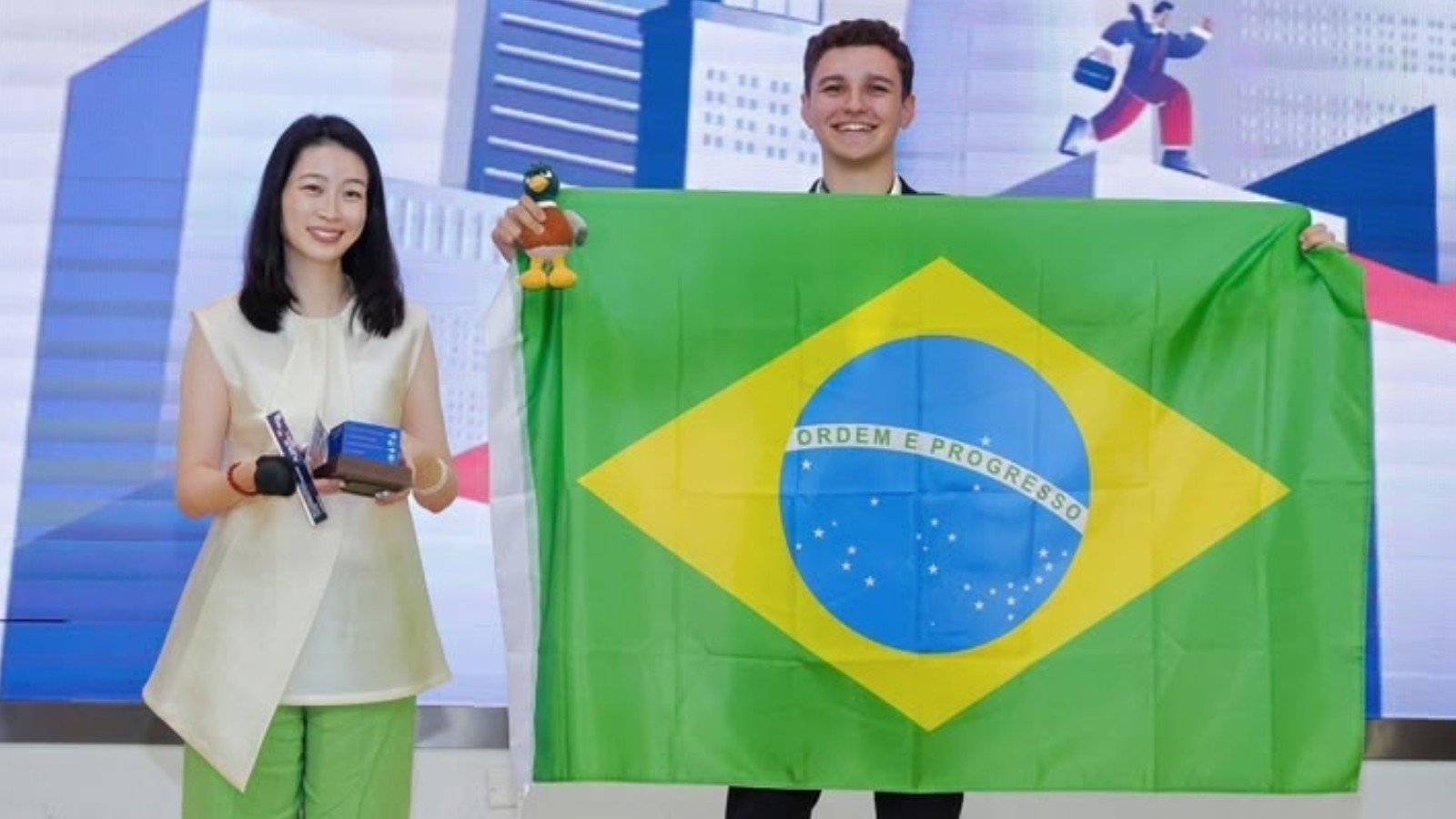
Arthur Alencar Spuri, a 16-year-old student from Fortaleza, Brazil, has achieved a gold medal and the "Overall Winner" title at the International Economics Olympiad (IEO) held in Shenzhen, China, in July. Arthur, a second-year high school student at Colégio Farias Brito, scored the highest overall points with 199.469. The Brazilian delegation secured three gold medals in total for individual events. Arthur, originally from São Paulo, moved to Ceará in 2017 and initially disliked studying, even crying over homework. His perspective shifted after encountering the Kangaroo Mathematics Olympiad, which, with his father Osvaldo Spuri's help, made learning enjoyable and less stressful. He now actively participates in competitions, finding them fun and a way to approach challenges lightly. Arthur has competed in approximately 12 olympiads, including the IEO, which assesses high school students' knowledge and analytical skills in economics, finance, and business. The competition features a theoretical exam and a practical 24-hour case study challenge for teams. Arthur also won a silver medal at the International Physics Olympiad in Bucaramanga, Colombia, prior to his economics victory. He believes olympiad study emphasizes logical reasoning over rote memorization, a method he finds ideal. These competitions have allowed him to travel globally, interact with diverse cultures, and gain a broader worldview, noting Brazil's recognition as a leader in economics. Arthur aspires to study engineering at MIT in the United States, pursue an MBA, and work in finance, with his ultimate goal being to make a positive impact on the world.
This achievement highlights the effectiveness of specialized academic competitions in fostering advanced analytical skills beyond traditional curricula. The narrative suggests that engagement-driven learning, where students find personal enjoyment and intellectual challenge, can unlock higher performance than rote memorization. The student's journey from disliking studies to excelling internationally underscores the impact of pedagogical approach and supportive mentorship. Looking ahead, such olympiads serve as critical incubators for future innovators, potentially shaping talent pipelines for global industries and research institutions. The emphasis on logical reasoning and problem-solving aligns with the evolving demands of an AI-driven economy, where adaptability and critical thinking are paramount. This success also positions Brazil favorably in international academic arenas, encouraging further investment in similar educational initiatives.
AI-generated to prompt reflection — not editorial opinion, not advice, not a statement of fact. How this works.