Brazilian Ultramarathoner Aims for 7-Day Treadmill World Record
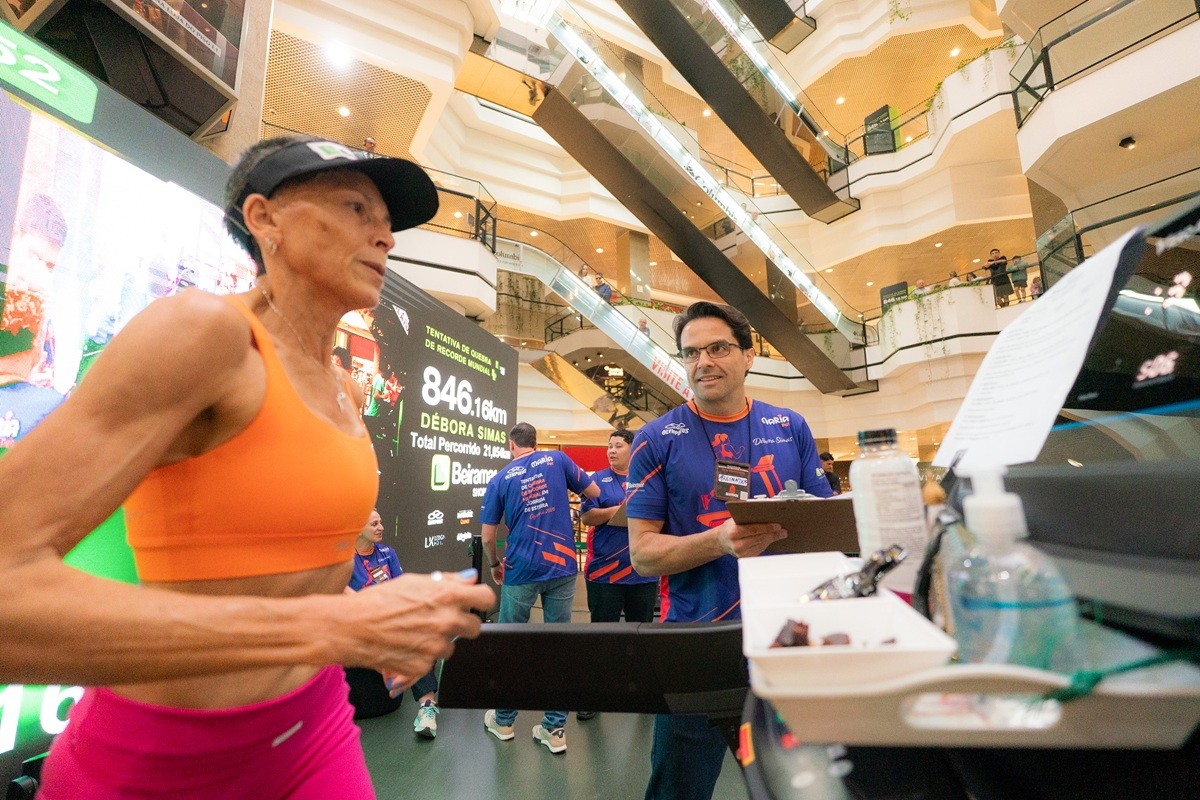
Débora Simas, a 55-year-old Brazilian ultramarathoner, is attempting to break the world record for the longest distance run on a treadmill. The challenge, taking place in Florianópolis, aims for her to cover 846 kilometers in seven days. Simas began the attempt on Sunday, June 2nd, at a local shopping mall. To achieve this feat, she will only leave the treadmill for sleep and restroom breaks. Her strategy involves meticulous planning of sleep, nutrition, and hydration, supported by a dedicated team of 110 people. She is currently sleeping approximately three hours per night, with this schedule being re-evaluated daily based on her physical condition and accumulated mileage. Simas's diet is carefully managed by a sports nutrition team to ensure constant energy replenishment. Meals are frequent and adapted to her running intensity and physical exertion. A crucial rule is that she cannot lose more than 2 to 3 kilograms, or she will be disqualified. To minimize interruptions, all food and hydration are delivered directly to her while she continues running. Her varied diet includes fruits, sandwiches, rice, pasta, potatoes, lean proteins, soups, sports supplements, carbohydrate gels, and energy bars. Hydration goes beyond water, incorporating isotonic drinks and other electrolyte-rich liquids to replace salts lost through sweat. The nutrition team has advised an intake of 2.5 liters per day of water and carbohydrate drinks. Simas, who has been running for 22 years and has an impressive record of nearly 300 races with 100% podium finishes, has previously achieved significant milestones, including being the first woman to run 1000 km in Brazil and completing the Volta à Ilha in a female duo. Her past accomplishments also include a three-time championship and record at BR-135, and participation in world championships.
This ultramarathon attempt highlights the extreme physiological and psychological demands of endurance sports, pushing the boundaries of human performance. The extensive support system, including a team of 110 professionals, underscores the complex logistical and medical considerations required for such an endeavor. The strict adherence to dietary and weight regulations, alongside the carefully managed sleep deprivation, points to the critical role of scientific planning in elite athletic pursuits. From a systems perspective, this event tests the efficacy of human adaptation to prolonged stress, with the athlete's performance intricately linked to the precision of her support network's execution. The challenge also implicitly raises questions about the sustainability of such extreme training regimens and their long-term health implications, a consideration that will likely gain prominence as AI and biomechanics offer deeper insights into human limits and recovery.
AI-generated to prompt reflection — not editorial opinion, not advice, not a statement of fact. How this works.
