Brazilian Ultramarathoner Aims for World Treadmill Record in Florianópolis
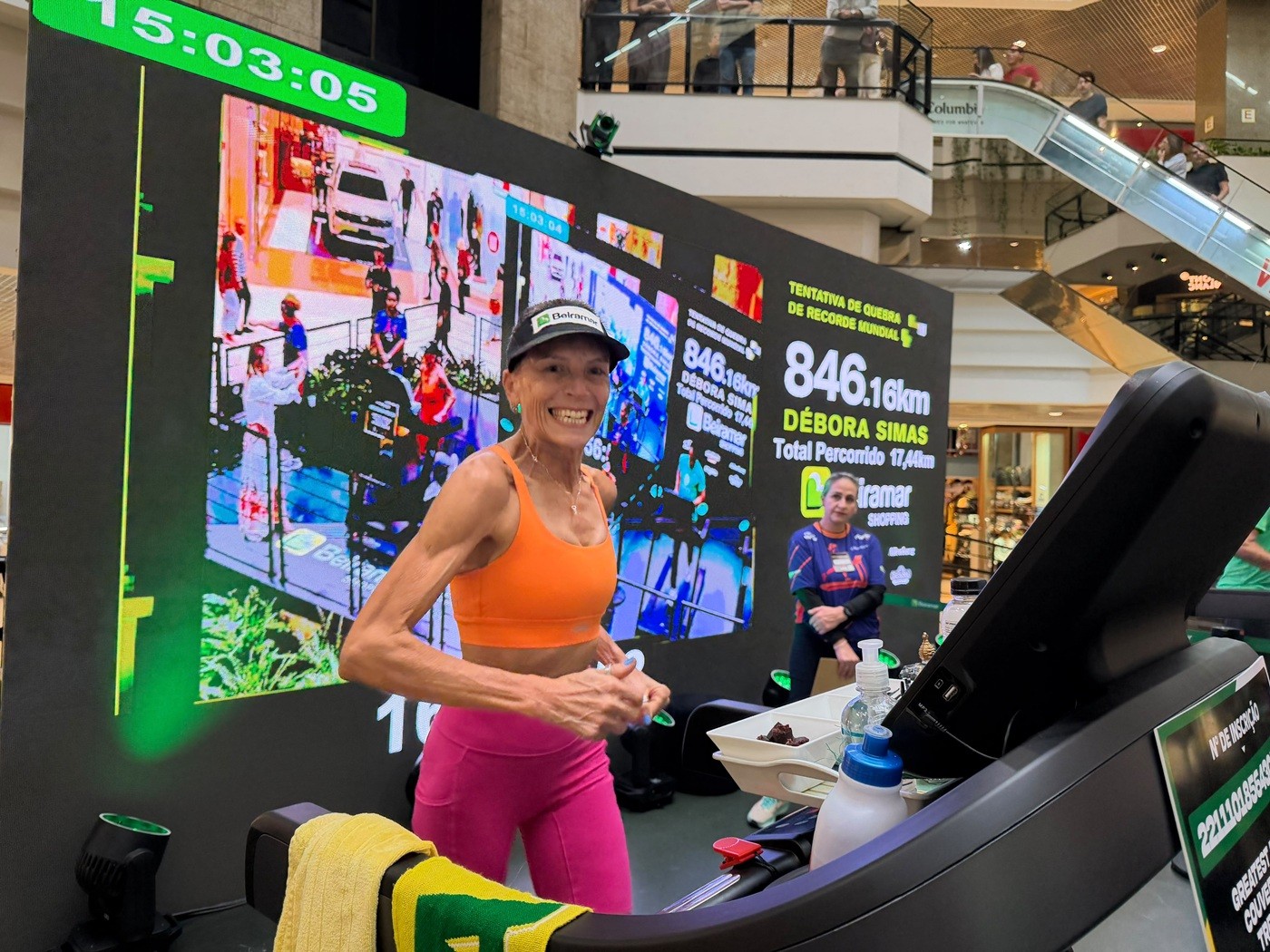
Brazilian ultramaratonista Débora Simas, 55, has embarked on a seven-day challenge to break the world record for treadmill running. The event, which began at noon on Sunday, October 2nd, is taking place at a shopping mall in Florianópolis, Santa Catarina. Simas aims to cover an impressive 846 kilometers, surpassing the current record held by New Zealand athlete Emma Timmis. To achieve this, she will only step off the treadmill for essential breaks for sleep and using the restroom. Her nutrition and hydration are being managed while she runs, with a tent set up nearby for rest periods. This is not Simas's first record attempt; in 2019, she set a South American record by running 800.61 kilometers on a treadmill at the same shopping center. With 22 years of experience in running, Simas has a remarkable track record, having participated in nearly 300 races and achieving a podium finish in every single one. Her career highlights include being the first woman to run 1000 km in Brazil, the first to complete the Volta à Ilha in a female duo, and holding a three-time championship and record for the BR-135 race, along with international participations in the Netherlands and Spain. The event also features two additional treadmills for public participation, with participants donating 1 kilogram of pet food per kilometer run or walked (up to 5 km) to local animal welfare organizations, Ecopet Tampas and Castra Ação. This charitable component is open to individuals aged 15 and over.
This endurance event highlights the human capacity for extreme physical and mental perseverance, pushing the boundaries of athletic achievement. The dual focus on a world record attempt and charitable giving demonstrates a growing trend where elite athletic endeavors are increasingly integrated with social responsibility initiatives. From a systems perspective, such challenges test not only individual physiology but also the logistical support structures required for prolonged, high-intensity activity, including nutrition, recovery, and psychological resilience. As technology advances, the intersection of human performance and biomechanical monitoring on specialized equipment like treadmills offers potential insights into optimizing athletic potential and understanding physiological limits. The integration of public participation through a donation mechanism also reflects a broader societal interest in connecting personal effort with collective well-being, particularly concerning animal welfare in this instance.
AI-generated to prompt reflection — not editorial opinion, not advice, not a statement of fact. How this works.
