Bride Falls Ill During Mass Wedding, Marries in Hospital Emergency Room in Acre
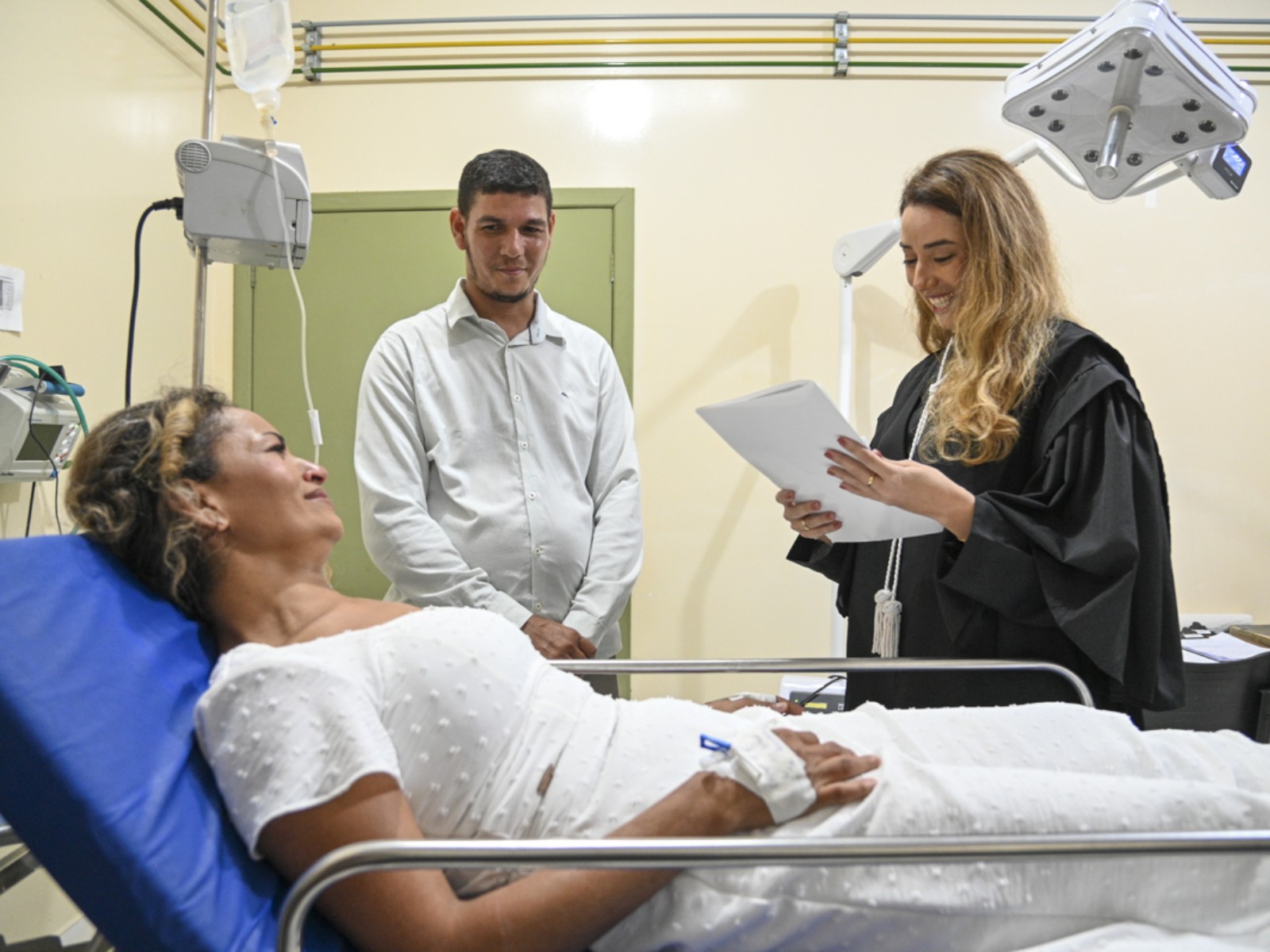
Francisca Mesquita da Silva, a 39-year-old manicurist, experienced a medical emergency on her wedding day during a mass collective wedding ceremony in Rodrigues Alves, Acre. While awaiting the ceremony on Thursday, May 30th, she suffered a severe headache, nausea, facial numbness, and loss of movement on her left side, prompting concerns of a potential stroke. She was transported to the city's Mixed Health Unit. Believing her wedding would be postponed, Francisca was surprised when Judge Mirella Ribeiro, who was officiating the collective wedding at Pedro Santana Stadium, traveled to the hospital to conduct the ceremony in the emergency room. The couple, Francisca and her partner Francisco Jander Costa Bezerra, 35, have been together for six years and were among 91 couples participating in the "Projeto Cidadão" initiative to legalize their union. A video captured the moment Francisca, in her white dress, exchanged vows with Jander from her hospital bed, with the judge presiding. The ceremony concluded with the exchange of rings and a kiss. Francisca recounted her health issues, including high blood pressure (160/110), and the fear of a stroke. The couple, residents of Cruzeiro do Sul, had been trying to formalize their marriage for some time but were deterred by civil wedding costs. Francisca had prepared for the wedding, spending the day at a beauty salon, and was determined to marry despite feeling unwell. Jander, concerned for his wife's health, immediately took her to the hospital. Judge Ribeiro stated that fulfilling the couple's dream was important, regardless of the location, marking her first time officiating a wedding outside a traditional venue. Francisca expressed deep gratitude for the judge's humaneness in realizing their dream. Francisca has a history of health challenges, including a high-risk pregnancy in June 2025 that ended with the loss of her baby due to a severe syndrome. Following complications, she underwent multiple procedures and was diagnosed with cervical cancer eight months ago, for which she is undergoing treatment in Rio Branco. Despite these battles, she maintains strong faith and hopes for a peaceful future. She has two children from a previous relationship and wishes to have another child with her current partner. After her treatment in Rodrigues Alves, she was transferred for further tests at the Regional Hospital of Juruá in Cruzeiro do Sul.
This event highlights the intersection of personal aspirations and unforeseen health crises, demonstrating how individuals and institutions can adapt to ensure significant life events are honored. The judge's decision to conduct the ceremony in the emergency room showcases a compassionate response to a unique situation, prioritizing the couple's long-held dream over logistical constraints. From a systemic perspective, the incident underscores the importance of accessible legal and ceremonial services, particularly for couples facing financial barriers or health challenges. It also implicitly raises questions about the preparedness of healthcare facilities to accommodate non-medical needs during emergencies, albeit in this case, it facilitated a positive outcome. The narrative of Francisca's ongoing health battles, including cervical cancer and past pregnancy complications, adds a layer of resilience to the story, framing the wedding as a moment of triumph amidst adversity. The collective wedding initiative itself points to a societal effort to provide formal recognition of relationships, potentially offering stability and support to participating couples.
AI-generated to prompt reflection — not editorial opinion, not advice, not a statement of fact. How this works.