BRT Project in Cuiabá and Várzea Grande: Finishing Works and Lane Closures Next Week
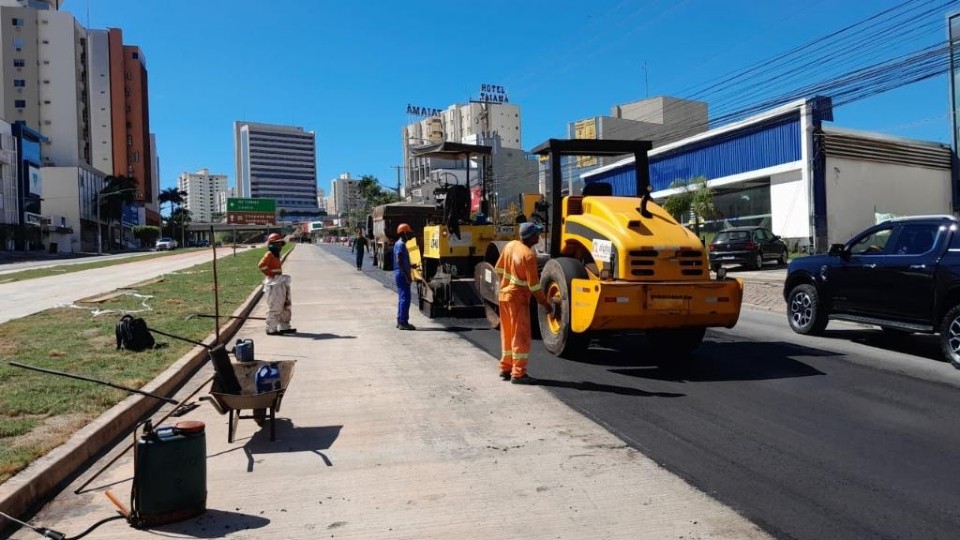
Construction on the Bus Rapid Transit (BRT) system in Cuiabá and Várzea Grande, Mato Grosso, continues with finishing work scheduled for the upcoming week. These tasks include the construction of sidewalks, curbs, signage, and the finalization of paving in various sections. Specific areas slated for asphalt completion are located between the Sefaz viaduct and the Public Defender's Office building, particularly in front of SBT, Sefaz, and the Federal Revenue corner. This segment will also receive curbs, gutters, sidewalks, and horizontal and vertical signage. Further along, between the CREA and Praça Ipiranga, work will focus on curbs, sidewalks, signage, and the installation of operational equipment for the BRT system. A localized asphalt repair is planned between Praça Ipiranga and Avenida XV de Novembro. In the Prainha and Avenida XV de Novembro regions, efforts will concentrate on road signage and the installation of traffic signs. The consortium managing the project is also progressing on the link between the airport and the new terminal in Várzea Grande, with earthmoving and paving set to begin there next week. Work on the BRT stations is ongoing at multiple points along the route, and occasional lane closures near the central reservation may occur. At the Complexo Leblon, earthmoving and paving of Rua Boa Vista are continuing, alongside the construction of retaining walls for the Rua Boa Vista underpass. Excavation for retaining structures and work on the viaduct structure at Rua Trigo de Loureiro are also underway.
The ongoing infrastructure development for the BRT system in Cuiabá and Várzea Grande highlights the complex logistical challenges inherent in large-scale urban transit projects. The planned lane closures and phased construction, while necessary for progress, indicate potential disruptions to daily commutes and local commerce. As these projects mature, the focus will shift from civil engineering to operational efficiency and integration with existing urban mobility networks. Future success will depend on robust public engagement, adaptive management of unforeseen site conditions, and sustained political will to ensure the system meets its intended goals of improving public transportation and reducing traffic congestion over the next decade.
AI-generated to prompt reflection — not editorial opinion, not advice, not a statement of fact. How this works.