BSW Party Will Cooperate with AfD, Says Party Co-Chair Schulze
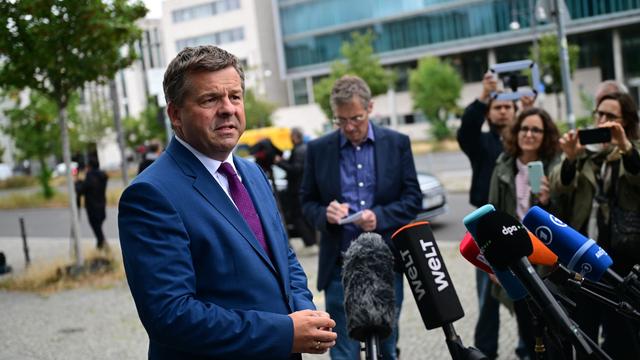
Sahra Wagenknecht's new party, BSW (Alliance Sahra Wagenknecht), is expected to cooperate with the far-right Alternative for Germany (AfD) party, according to BSW co-chair Amra Schulze. Schulze stated this intention during a session in the state parliament. The BSW party was founded in January 2024 by Sahra Wagenknecht, a former prominent member of Die Linke (The Left), and has positioned itself as a left-wing populist party with a strong emphasis on social justice and a critical stance on immigration and European Union policies. The AfD, currently polling as the second-strongest party nationally, has a platform focused on Euroscepticism and stricter immigration controls. The potential cooperation between BSW and AfD raises significant questions about the future political landscape in Germany, particularly regarding the formation of coalitions and the broader political discourse. This statement by Schulze suggests a strategic alignment between two parties that, despite differing origins, may find common ground on specific policy areas or political objectives. Further details on the nature and extent of this cooperation are yet to be clarified.
The stated intention of potential cooperation between the BSW and AfD parties warrants examination through the lens of political strategy and electoral dynamics. From a systems perspective, such alliances can be viewed as attempts to consolidate protest votes and challenge established political norms. The BSW, emerging from a split within the left-wing spectrum, and the AfD, representing a right-wing populist movement, may be seeking to leverage shared criticisms of current government policies or societal trends. This strategic alignment could be driven by incentives to increase parliamentary influence, shape public discourse, or challenge mainstream political consensus. Evaluating the long-term implications requires considering how such collaborations might affect democratic institutions, voter alignment, and the broader political spectrum's stability in Germany over the next decade, particularly in the context of evolving societal challenges and technological advancements.
AI-generated to prompt reflection — not editorial opinion, not advice, not a statement of fact. How this works.