Bubly Borna's Art Explores Motherhood's Physical and Social Transformations
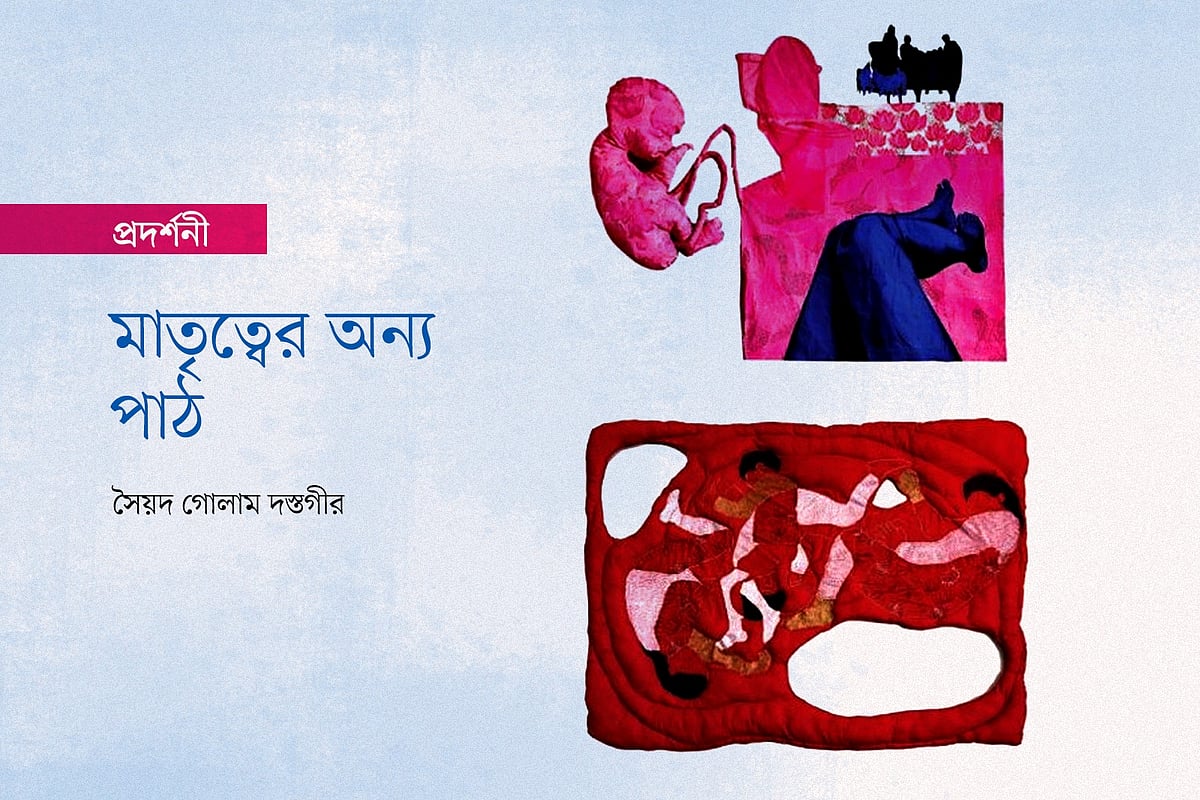
Artist Bubly Borna's solo exhibition, "Fragmented Yet Tangled: Living Within 2," running from July 4 to July 25, 2024, at the Kalakendra in Lalmatia, Dhaka, delves into the profound physical and identity shifts accompanying motherhood. Borna utilizes materials like fabric, sewing, soft sculptures, and fragmented body forms, engaging in a dialogue with established artists such as Louise Bourgeois, Eva Hesse, and Judy Chicago, while focusing on the often-unseen labor associated with maternal experiences. Her work moves beyond personal memory, addressing the broader societal implications of a mother's changing body and evolving identity.
Borna's artistic language is rooted in her personal experiences of pregnancy, childbirth, and recovery, particularly the physical fragmentation and subsequent healing. This transforms the 'wounded body' into a 'changed body,' which, while carrying personal memories, evolves into a 'social body.' The exhibition critically examines the romanticized and often idealized portrayal of motherhood in society and religion, highlighting how these narratives can overlook the physical transformations, identity crises, and invisible labor mothers undertake. Her sewing techniques serve not merely as a craft but as a testament to the repetitive, patient, and historically undervalued work often assigned to women.
A powerful element of the exhibition is the series of large, red hand installations. Initially appearing as nurturing and protective maternal hands, closer inspection reveals their exaggerated size, weight, and an underlying pressure, symbolizing the dualities of care and control, shelter and expectation, love and responsibility. These "expanded bodies" transcend static sculpture, interacting with the architectural space, breaking down boundaries between the artwork and the viewer's environment. This spatial engagement distinguishes Borna's work from artists whose bodies remain confined to personal psychology, instead emphasizing the social, relational, and spatial dimensions of the body. Borna's challenge lies in transforming familiar feminist art languages into an authentic expression of her lived South Asian maternal reality, posing questions about the societal burdens embedded within even the most protective maternal figures.
This exhibition critically examines the societal construction of motherhood, moving beyond simplistic emotional narratives to explore the complex interplay of physical transformation, identity shifts, and invisible labor. By engaging with established feminist art discourse while grounding her work in specific South Asian maternal realities, Borna highlights systemic contradictions. The art prompts reflection on how cultural ideals of nurturing can mask underlying social pressures and expectations placed upon women. The spatial expansion of the artwork suggests that maternal experiences are not solely individual but deeply embedded within and shape social environments. This approach encourages viewers to consider the broader societal structures that influence and are influenced by maternal roles, fostering a more nuanced understanding of care, responsibility, and autonomy in the context of evolving gender dynamics and societal expectations over the next decade.
AI-generated to prompt reflection — not editorial opinion, not advice, not a statement of fact. How this works.