Budapest Could Be Heated by Paks Nuclear Plant, a World First
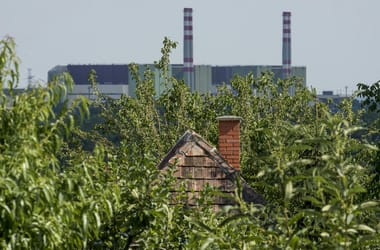
Due to rising Danube River temperatures during the late June heatwave, the Paks Nuclear Power Plant was again forced to reduce its output. This situation has revived discussions about the plant's potential to serve as a district heating provider, aiming for more efficient utilization of its blocks. While theoretically appealing, the concept faces practical challenges. The Paks plant, located approximately 100 kilometers south of Budapest, currently operates four VVER-440 V213 reactors. The idea of using its heat output for district heating in the capital city has been explored previously. Proponents suggest it could be a groundbreaking initiative, potentially making it the first nuclear power plant globally to supply heat to a major capital city. However, the technical and economic feasibility of transporting heat over such a distance, as well as the necessary infrastructure upgrades in Budapest, remain significant hurdles to overcome. The current operational constraints due to river temperatures highlight the environmental sensitivities that would need careful management in any expanded role.
The proposal to utilize the Paks Nuclear Power Plant for district heating in Budapest presents an intriguing juxtaposition of existing energy infrastructure and evolving urban needs. While the concept of a nuclear facility providing district heat to a major capital city could represent a novel approach to energy efficiency and carbon reduction, its implementation hinges on overcoming substantial logistical and environmental challenges. The necessity to curtail power generation during heatwaves underscores the sensitivity of such operations to climate fluctuations, raising questions about the reliability and scalability of this proposed dual-purpose function. Evaluating this initiative requires a forward-looking assessment of thermal transport technologies, grid integration, and the long-term environmental impact, particularly concerning water resource management in a changing climate. The economic viability, compared to alternative heating solutions, will be a critical factor in determining its practical application beyond theoretical appeal.
AI-generated to prompt reflection — not editorial opinion, not advice, not a statement of fact. How this works.