Buenos Aires Zoo Director's Ingenious Animal Transport Methods in 1912
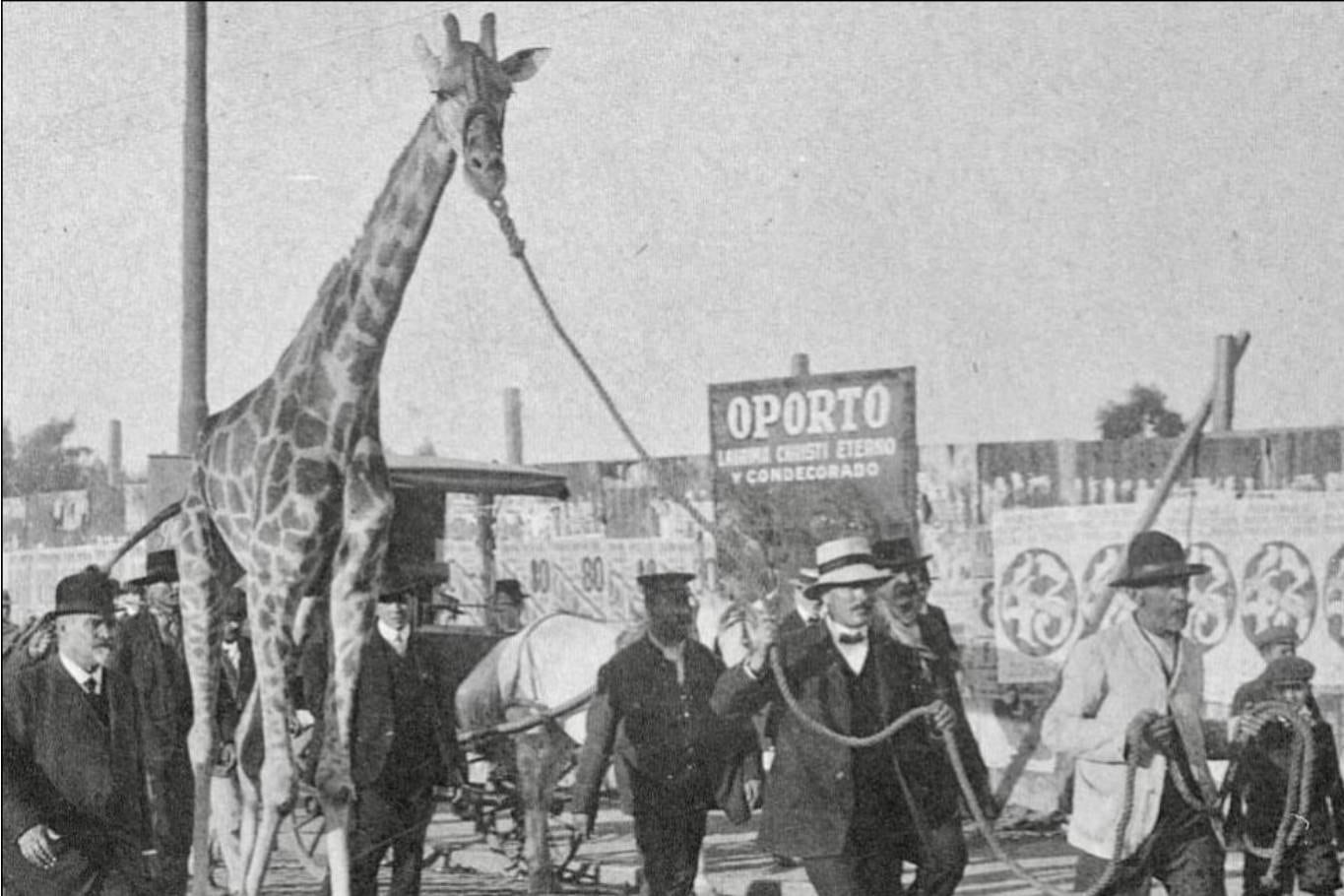
In May 1912, Buenos Aires witnessed a remarkable procession as Clemente Onelli, the Italian-born director of the Buenos Aires Zoo, personally escorted a giraffe named Mimí from the port to her new home. Mimí, recently acquired from Dakar, was walked through the city streets, tethered to Onelli, much to the astonishment of onlookers. This unique transport method was necessitated by the lack of suitable vehicles available upon Mimí's arrival with other exotic animals, including lions, a tiger, and a panther. Onelli, a naturalist, anthropologist, zoologist, writer, journalist, and paleontologist who led the zoo from 1904 to 1924, was known for his resourceful and often unconventional solutions.
Onelli's ingenuity extended to other animal welfare situations. He once found a surrogate mother for an orphaned, malnourished monkey that refused bottle feeding. In another instance, to satisfy public demand for the supposed good luck charms of caburé bird feathers, Onelli cleverly substituted sparrow feathers, which were abundant at the zoo, for the originals. He also managed a tiger with a history of attacking humans, famously posting a sensationalist warning sign that read "Beware! Tiger fed with human flesh!" This attracted large crowds and fueled local legends, which Onelli reportedly found amusing. Through such actions, Onelli significantly enhanced the Buenos Aires Zoo's educational value, fostering public fascination and learning about global wildlife, particularly among children.
The historical account highlights Clemente Onelli's innovative and unconventional management style at the Buenos Aires Zoo over a century ago. His methods, while effective in their time for animal transport and public engagement, reflect a different era's approach to zoo operations and public perception. The narrative emphasizes Onelli's resourcefulness in overcoming logistical challenges and managing public interest, even employing sensationalism to draw crowds. Evaluating these practices through a contemporary lens, one can observe a shift in ethical considerations regarding animal welfare, public safety, and the educational mission of zoological institutions. The story prompts reflection on how societal norms and scientific understanding evolve, influencing institutional practices and the public's relationship with wildlife. Future zoo management will likely continue to prioritize conservation, ethical treatment, and immersive educational experiences, moving beyond mere spectacle.
AI-generated to prompt reflection — not editorial opinion, not advice, not a statement of fact. How this works.
