Bumble Bees Demonstrate Unexpected Problem-Solving Skills on Intelligence Test
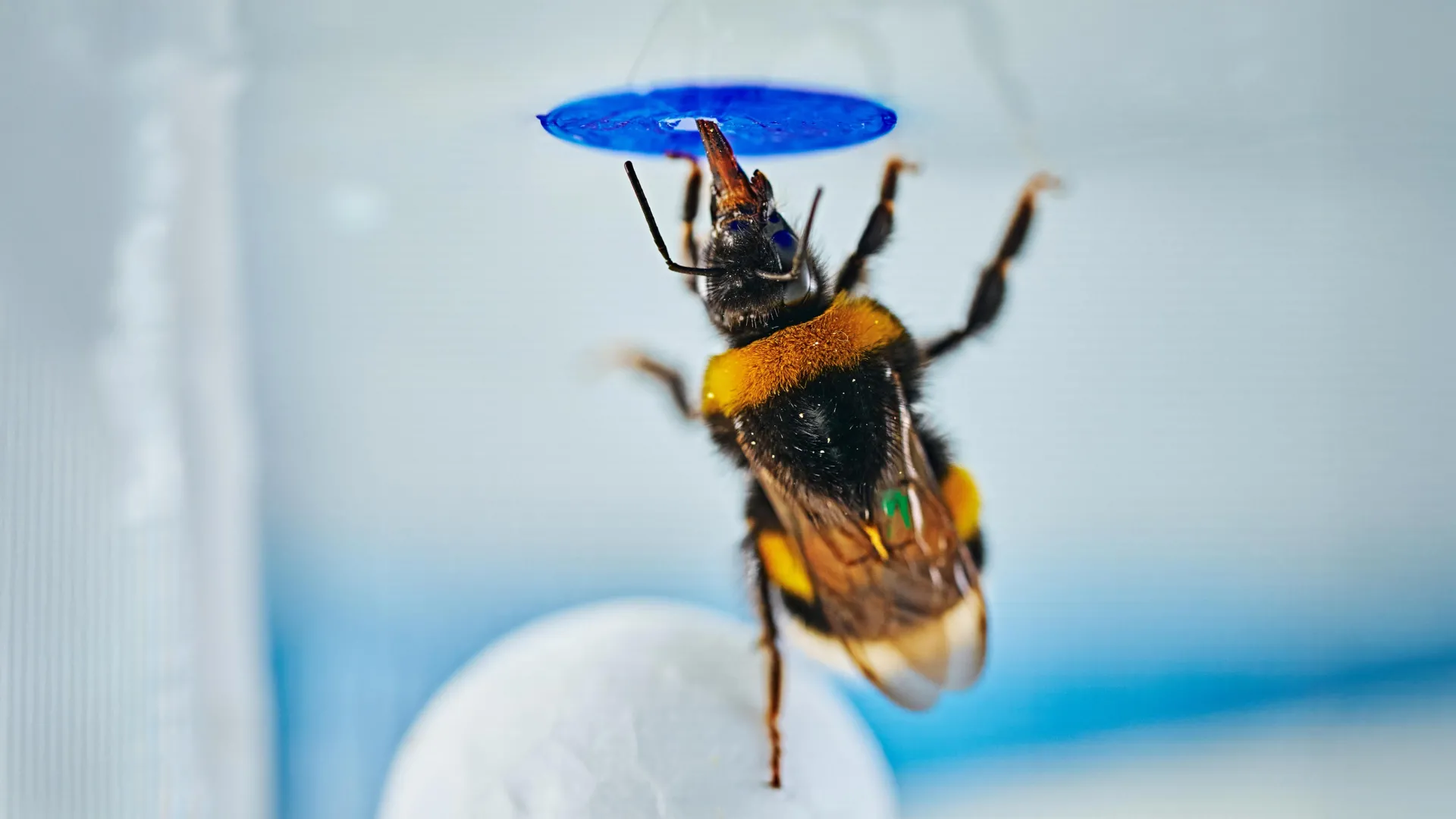
Researchers were astonished when bumble bees independently devised a novel method to access a hidden reward, a feat they had never been taught. This groundbreaking discovery further supports the burgeoning evidence that these small insects possess a level of intelligence and adaptability previously underestimated. The bees' ability to innovate and solve a complex problem without prior instruction highlights their cognitive capabilities. This finding challenges existing assumptions about insect intelligence and opens new avenues for understanding their learning processes. The experiment involved a classic intelligence test designed to assess problem-solving abilities. The bees' success suggests a capacity for abstract reasoning and planning. This research contributes significantly to the field of cognitive ethology, specifically concerning invertebrates. The implications extend to our understanding of evolution and the development of intelligence across species. The adaptability shown by the bumble bees is particularly noteworthy in the context of environmental changes.
This finding challenges conventional hierarchies of cognitive ability, suggesting that complex problem-solving may be more widespread across species than previously assumed. The bees' success in innovating a solution without explicit training underscores the importance of studying naturalistic problem-solving behaviors to understand cognitive evolution. Future research could explore the neural mechanisms underlying this emergent intelligence and whether similar capabilities exist in other invertebrate species. Understanding these systems could offer insights into developing more adaptable artificial intelligence, particularly in environments where pre-programmed solutions are insufficient.
AI-generated to prompt reflection — not editorial opinion, not advice, not a statement of fact. How this works.