Bumblebee 'liking' and 'disliking' behaviors observed in slow-motion video
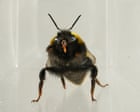
Scientists have captured slow-motion video footage of bumblebee behavior that suggests responses akin to 'liking' and 'disliking,' potentially supporting the idea of insect sentience. When bumblebees encounter a pleasant taste, such as a sweet treat, they extend their proboscis, or insect tongue, for a period afterward, resembling a 'licking lips' motion. Conversely, if the taste is unappealing, the bees exhibit head-shaking and mouth-wiping actions. These observed behaviors are consistent with 'liking' and 'disliking' responses previously documented in mammals. The findings were published in the scientific journal Proceedings of the National Academy of Sciences. This research may contribute to ongoing discussions about the cognitive abilities and subjective experiences of insects.
This study employs advanced video technology to explore the nuanced behavioral responses of bumblebees to different stimuli, moving beyond simple reward-seeking actions. By comparing these behaviors to mammalian expressions of pleasure and aversion, the research prompts a re-evaluation of our understanding of insect cognition and subjective experience. The findings highlight the potential for complex internal states in invertebrates, challenging anthropocentric views of sentience. Future research could investigate the neurobiological underpinnings of these behaviors and their implications for insect welfare and conservation strategies, particularly in light of environmental changes impacting pollinator populations.
AI-generated to prompt reflection — not editorial opinion, not advice, not a statement of fact. How this works.