Bumblebees Demonstrate Novel Problem-Solving Skills Without Prior Learning, Study Finds
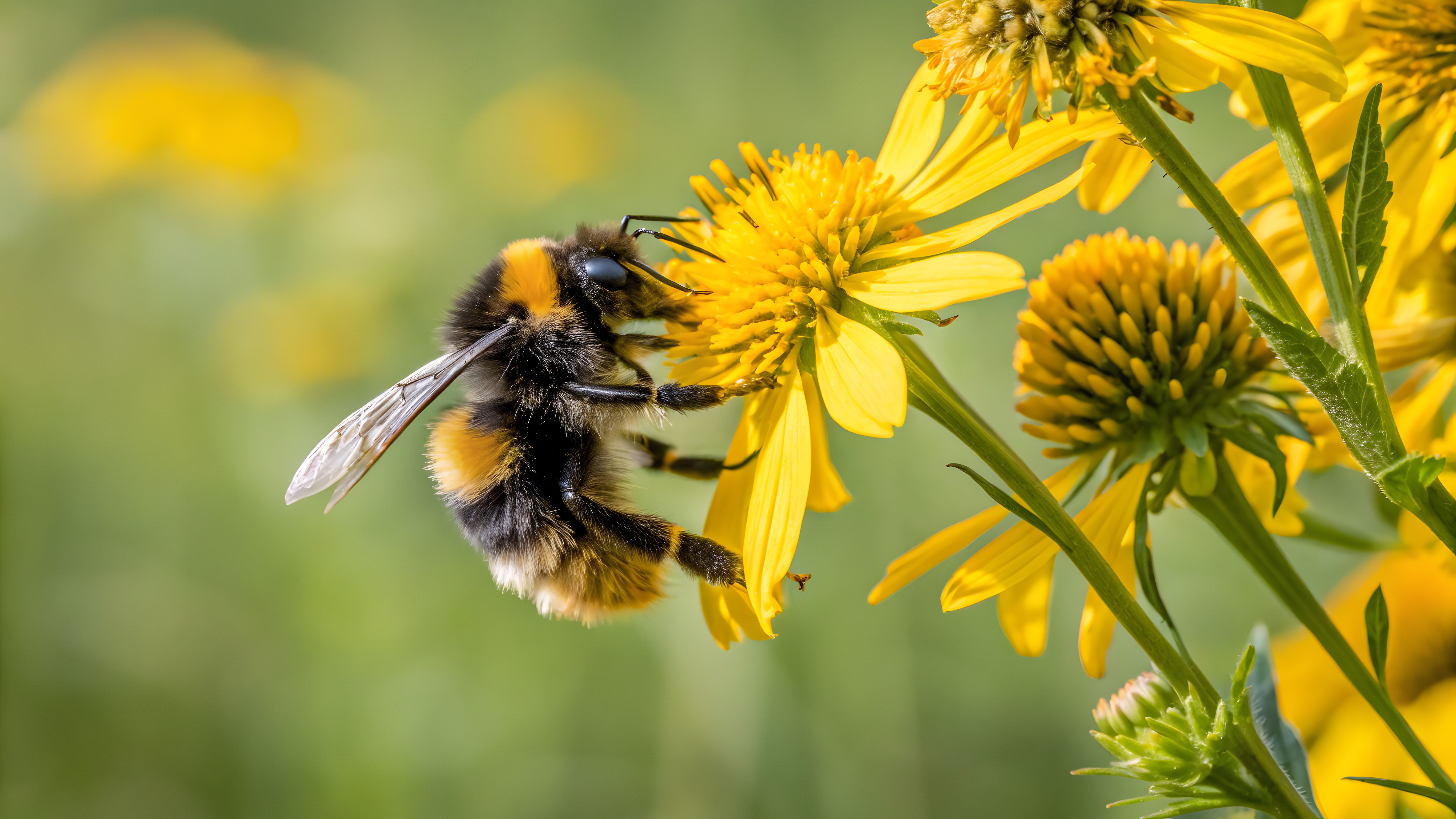
A recent study has revealed that bumblebees are capable of solving entirely new problems without any prior training, a cognitive feat previously thought to be exclusive to animals with significantly larger brains. Researchers designed an experiment where a bumblebee was placed in a box with a sugar-filled artificial flower positioned too high to reach on the ceiling. A small ball was provided on the floor, but no instructions or clues were given. Astonishingly, the bumblebee successfully utilized the ball by pushing it across the floor and positioning it directly beneath the flower. The bee then climbed onto the ball to access the sugar. This behavior was not an isolated incident; researchers tested numerous bumblebees, and the majority independently figured out the solution. In a further test, the flower was hidden before the ball was introduced, removing any visual cues. Despite this, most bumblebees still located the correct spot to place the ball. Scientists emphasize that this is not instinctual behavior but goal-oriented problem-solving. This groundbreaking research challenges previous assumptions about insect intelligence, as bumblebees are the first insects to be tested for such complex cognitive abilities.
This study challenges long-held assumptions about cognitive hierarchies in the animal kingdom, suggesting that complex problem-solving abilities may not be solely dependent on brain size. The bumblebees' capacity to devise a novel solution, using a tool (the ball) to achieve a goal (accessing sugar) without explicit instruction or prior experience, indicates a sophisticated level of cognitive flexibility. This finding prompts a re-evaluation of how we define and measure intelligence across species, potentially revealing more advanced capabilities in organisms often underestimated. Future research could explore the underlying neural mechanisms and evolutionary pressures that have led to such adaptive behaviors, offering insights into the broader principles of intelligence and learning in biological systems, especially in the context of environmental challenges and resource acquisition.
AI-generated to prompt reflection — not editorial opinion, not advice, not a statement of fact. How this works.