Business Leaders Urge Swift Aid for Flood-Hit Industries in Bangladesh
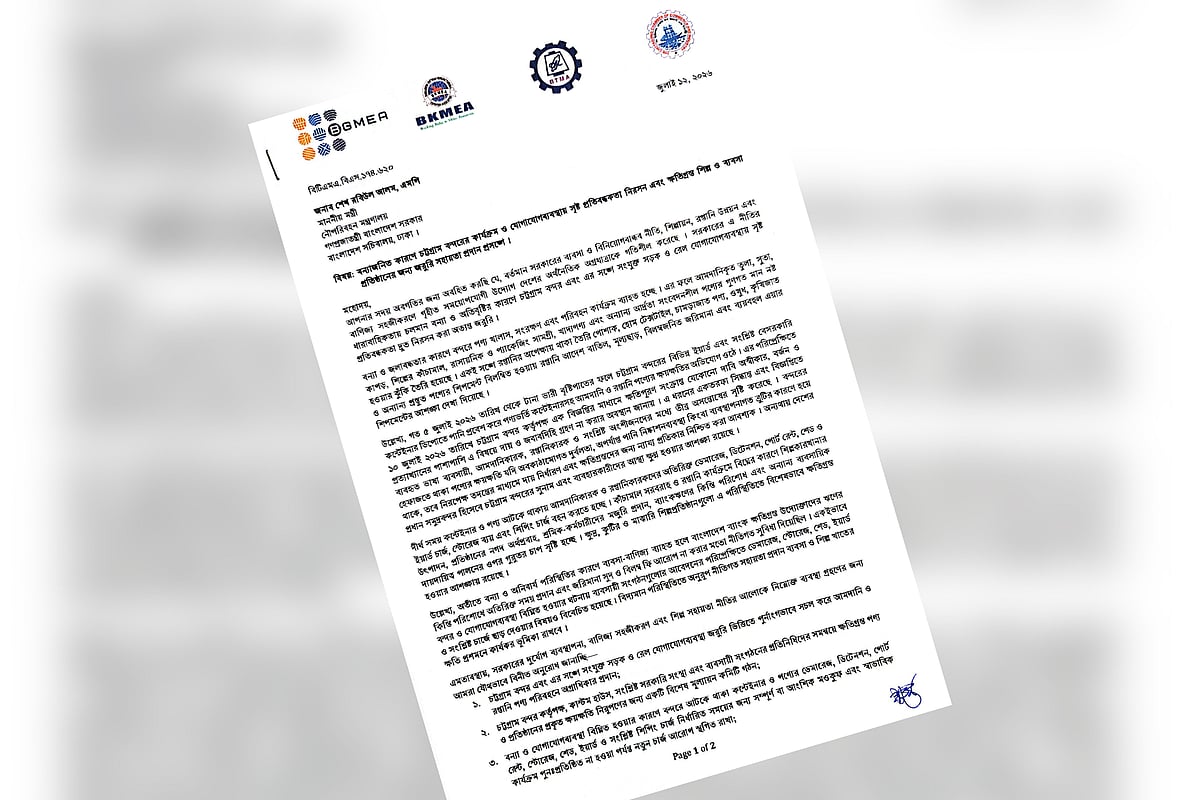
Leaders from four major Bangladeshi business organizations have urgently requested policy and financial assistance for industries and businesses impacted by recent floods and heavy rainfall. In a letter addressed to the Minister of Shipping, Sheikh Rabiul Alam, on Sunday, they highlighted the severe disruptions to the operations of the Chittagong port and its connected road and rail networks. The signatories included Mahmud Hasan Khan, President of the Bangladesh Garment Manufacturers and Exporters Association (BGMEA); Mohammad Hatem, President of the Bangladesh Knitwear Manufacturers and Exporters Association (BKMEA); Shaukat Aziz Russell, President of the Bangladesh Textile Mills Association (BTMA); and Mohammad Amirul Haque, President of the Chittagong Chamber of Commerce and Industry (CCCI).
The business leaders noted that while the government's policies have boosted the economy, the current flooding has critically damaged import-export activities. This has put moisture-sensitive goods like imported cotton, yarn, fabric, raw materials, chemicals, packaging, and food products at risk of quality degradation. Furthermore, delays in shipping finished goods for export, including ready-made garments, home textiles, leather products, pharmaceuticals, and agricultural items, could lead to canceled orders, price reductions, penalties, and costly air shipments.
The letter detailed that water entered various yards and private container depots at the Chittagong port starting July 5th due to continuous heavy rains, causing damage to both imported and exported goods within containers. The Chittagong Port Authority's July 10th notice disclaiming responsibility for compensation has caused significant dissatisfaction among traders and stakeholders. The business leaders called for a neutral investigation to determine accountability for any infrastructural weaknesses, inadequate drainage, or management failures and to ensure fair remedies for those affected.
They emphasized the financial strain on businesses due to prolonged delays, leading to additional demurrage, detention, port and storage charges, and increased shipping costs. This situation is particularly dire for small, cottage, and medium-sized enterprises, threatening their production, cash flow, ability to pay wages, and loan obligations. To mitigate these issues, the business leaders proposed measures such as rapidly restoring port and transport links, forming a special assessment committee to evaluate damages, and waiving or reducing various port-related charges. They also suggested fast-track customs for raw materials, low-interest refinancing and working capital loans for affected businesses, extended loan repayment periods, and adjustments to LC and trade deadlines. Additional proposals included extending utility bill and tax payment deadlines, special incentives for SMEs, and simplified customs and banking procedures for damaged goods.
Finally, the four business leaders proposed the formation of a high-level inter-ministerial task force comprising representatives from the Ministries of Commerce, Finance, and Shipping; the National Board of Revenue (NBR); Bangladesh Bank; the Chittagong Port Authority; the Customs House; Bangladesh Railway; the Roads and Highways Department; and relevant business organizations.
The recent flooding in Bangladesh has exposed critical vulnerabilities in the nation's trade infrastructure, particularly around the vital Chittagong port. The business leaders' plea highlights a systemic challenge: how to build resilience against increasingly frequent and severe climate-related disruptions. The proposed solutions, ranging from financial relief to infrastructure improvements and inter-ministerial coordination, address immediate needs and long-term strategic planning. The situation underscores the tension between economic growth objectives and the imperative to adapt to environmental realities, prompting consideration of how supply chain robustness can be integrated into national development strategies for the coming decade. The call for accountability and fair compensation also points to the need for clearer governance frameworks and risk-sharing mechanisms between public entities and private enterprise in the face of shared environmental risks.
AI-generated to prompt reflection — not editorial opinion, not advice, not a statement of fact. How this works.