Bystander Recounts Child Being Kicked by Father in Paraná, Brazil
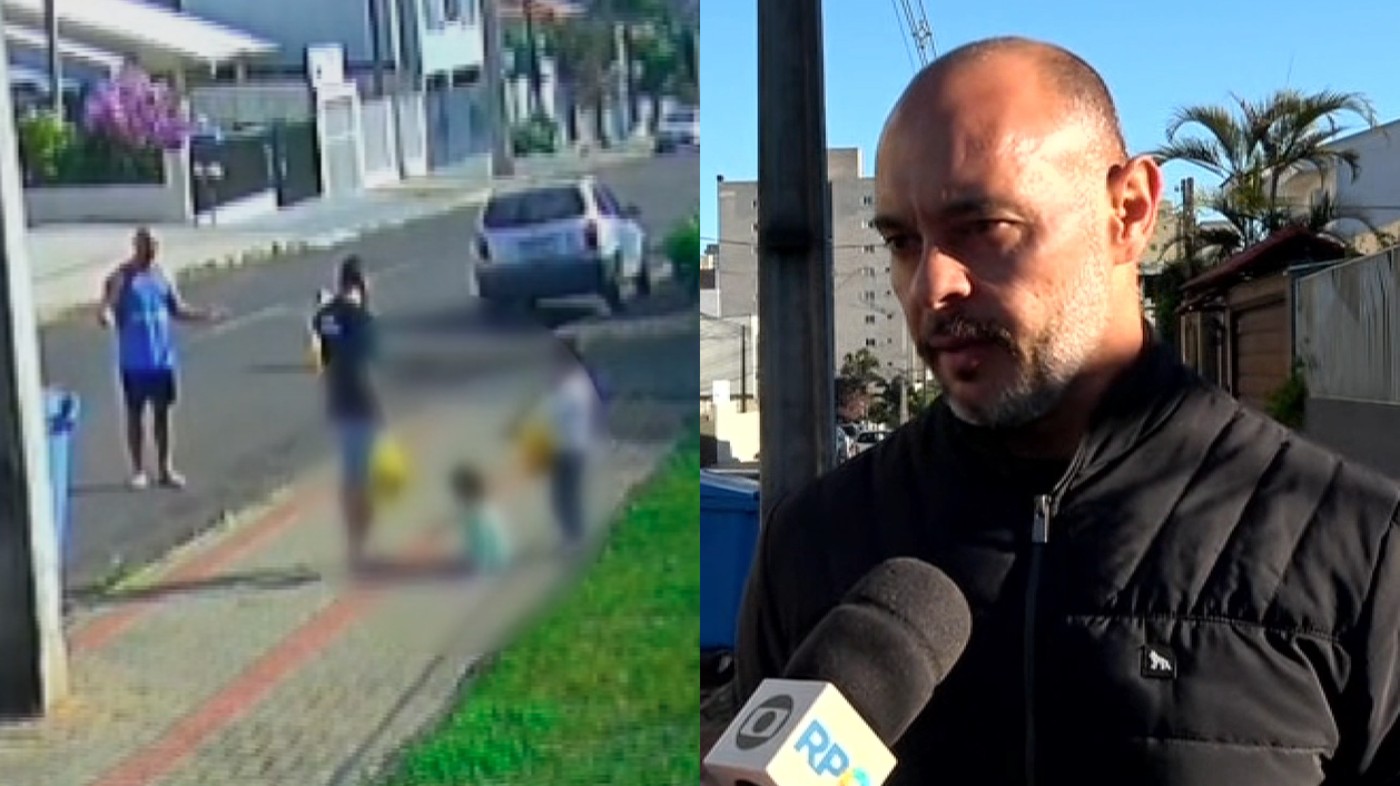
A bystander, businessman José Fernandes, became emotional while recounting the incident where a father kicked his three-year-old daughter in Francisco Beltrão, Paraná, Brazil. Fernandes, who owns a nearby gym, witnessed the assault on Sunday, May 5th. The security camera footage shows the father walking with his daughter and a five-year-old son, then stopping to kick the young girl, causing her to fall. Fernandes intervened, attempting to de-escalate the situation, concerned that a physical confrontation between him and the father might further traumatize the child. He questioned the potential long-term impact on the child if she witnessed both her father's violence and a subsequent fight. The father, who has not been officially named, told police he kicked his daughter because she was crying. He appeared before the Civil Police on Wednesday, May 8th, without legal representation, expressed remorse, and cried during his statement. He is under investigation for bodily harm, but was not arrested as the incident was not reported immediately. The mother, who learned of the assault through social media, filed a police report, prompting an investigation and requests for protective measures for the children and herself. The Tutelary Council is also involved. A Datafolha survey indicates that 29% of caregivers in Brazil admit to using violent disciplinary methods on children under three, with 58% resorting to punishment and 43% yelling.
This incident highlights the critical role of immediate bystander intervention and the subsequent legal and social support systems for child protection. The father's stated reason for the assault, the child's crying, points to a potential misunderstanding of appropriate child discipline and emotional regulation, a common societal challenge. The investigation into bodily harm and the implementation of protective measures underscore legal frameworks designed to safeguard vulnerable individuals. The referenced Datafolha survey suggests that violent disciplinary practices are not isolated incidents but may reflect broader societal norms or knowledge gaps regarding child development and non-violent parenting strategies. Future interventions could focus on public education campaigns and accessible resources to promote positive parenting techniques, thereby addressing the root causes of such aggressive behaviors and fostering healthier family dynamics in the long term.
AI-generated to prompt reflection — not editorial opinion, not advice, not a statement of fact. How this works.