Byzantine Naval Superiority: Unraveling the Mystery of Greek Fire
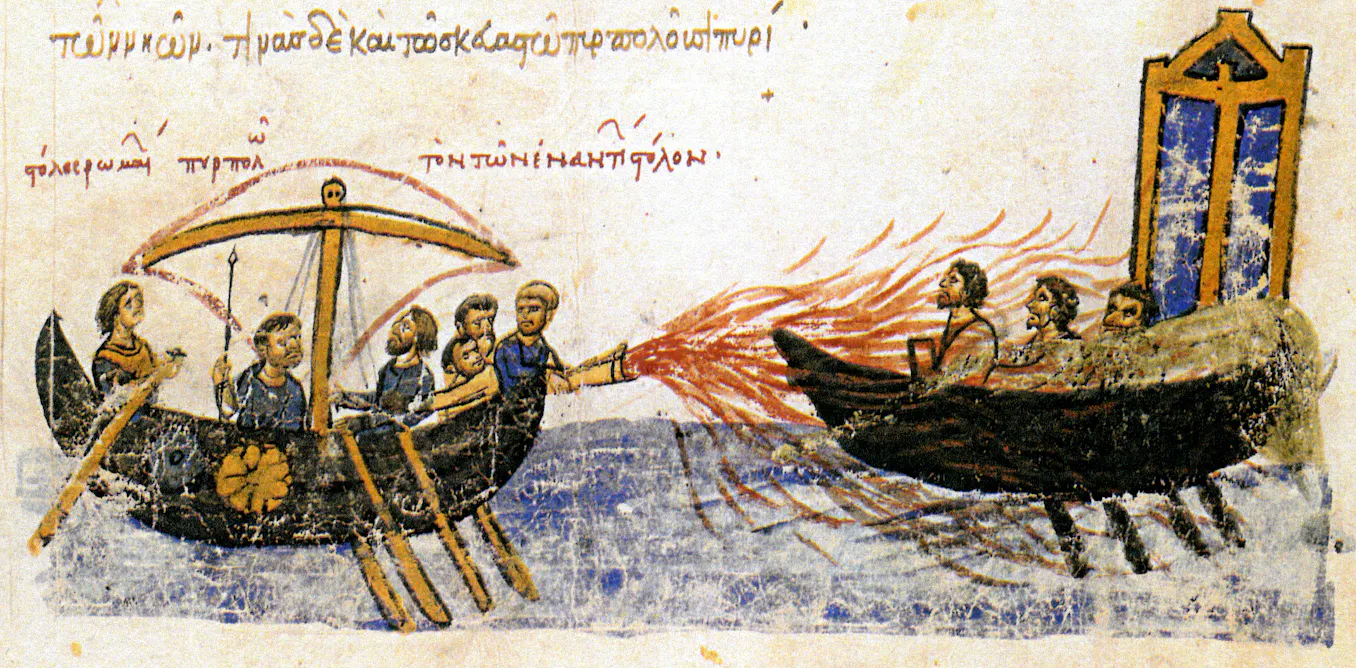
Greek fire was a formidable incendiary weapon utilized by the Eastern Roman (Byzantine) Empire, significantly enhancing the tactical capabilities of its fleets. This weapon, often described as a form of ancient napalm, provided a crucial advantage in naval engagements against enemy vessels. Its exact composition remains a historical mystery, contributing to its legendary status and the fear it inspired. The Byzantines employed Greek fire to defend their territories and assert dominance in the Mediterranean Sea. The weapon's effectiveness lay in its ability to burn even on water, making it particularly devastating in naval warfare. Historical accounts suggest it was a closely guarded state secret, passed down through generations of Byzantine military engineers. The strategic importance of Greek fire cannot be overstated, as it played a pivotal role in several key battles that shaped the course of Byzantine history. Its use highlights the advanced military technology and strategic thinking of the era.
The historical significance of Greek fire underscores the enduring impact of technological innovation on military strategy. Its effectiveness demonstrates how a unique, closely guarded weapon system could provide a decisive strategic advantage, influencing geopolitical outcomes for centuries. The enduring mystery surrounding its composition also serves as a case study in the importance of knowledge control and its role in statecraft. Examining such historical precedents offers valuable insights into the dynamics of asymmetric warfare and the perpetual arms race, particularly relevant in an era increasingly defined by rapid technological advancements and the potential for disruptive innovations.
AI-generated to prompt reflection — not editorial opinion, not advice, not a statement of fact. How this works.